EV Range-Boosting Electrostatic Speakers: 20-Mile Gain in 2026?
Electric vehicle range anxiety remains one of the most significant barriers to mainstream EV adoption, prompting automakers and suppliers to explore unconventional solutions beyond traditional battery and powertrain improvements.
While high-density battery packs, efficient motors, and aerodynamic designs have long been the focus of range enhancement strategies, a British audio technology company claims to have found an unexpected path to greater efficiency: the car’s sound system.
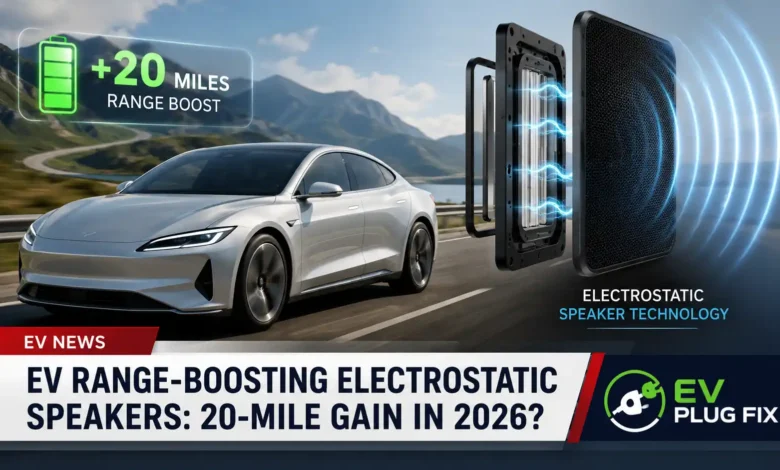
Warwick Acoustics, a pioneer in electrostatic audio technology, asserts that its revolutionary speaker systems can boost EV range by up to 20 miles compared to conventional audio setups, a claim that has captured the attention of the automotive world and could reshape the premium in-car audio landscape.
The company’s proprietary Electrostatic Audio Panels, developed over years of research and refinement, offer what appears to be a compelling value proposition for electric vehicle manufacturers: exceptional sound quality combined with substantial energy savings and weight reduction.
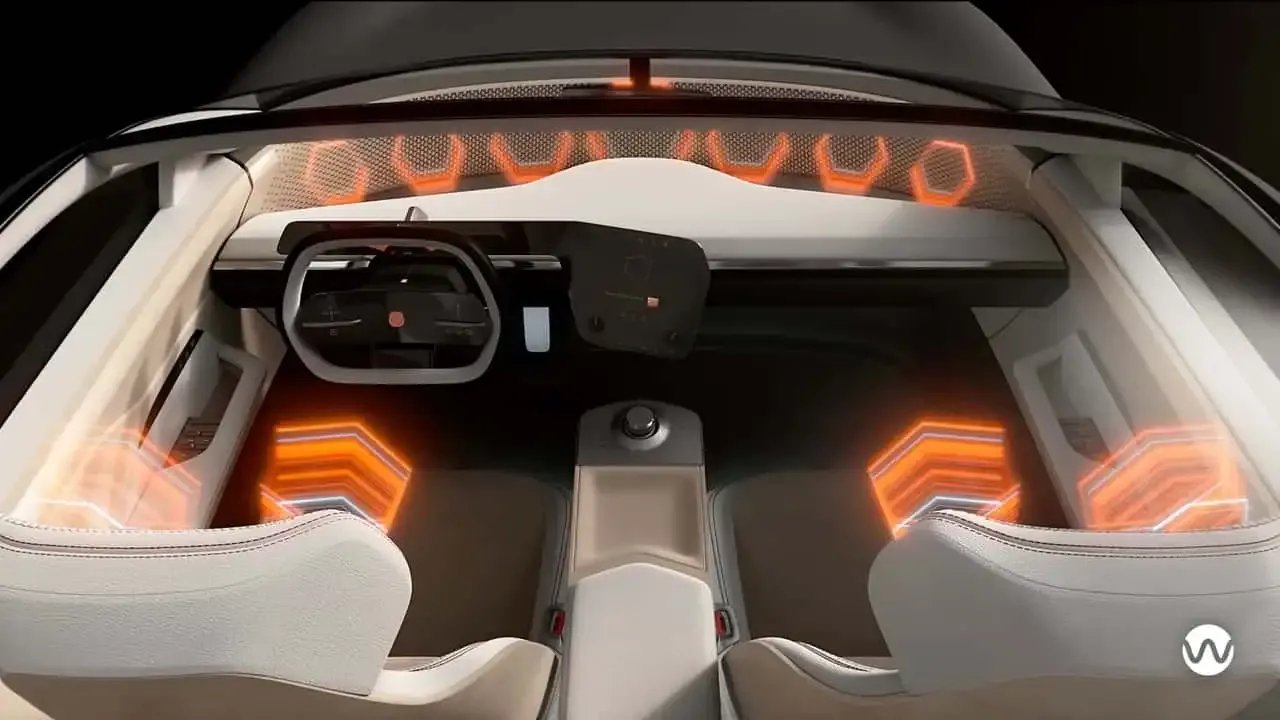
- Warwick Acoustics’ electrostatic speakers are 90% lighter and consume 90% less energy than conventional car audio systems
- The technology could extend EV range by up to 20 miles on a single charge for premium electric vehicles with 100kWh batteries
- Electrostatic speakers contain no rare earth elements and are manufactured from 100% upcycled and recyclable materials
- The system debuts in the 2026 Range Rover SV Ultra, with potential expansion to other luxury automakers
- Advanced “Virtual Headphone” technology creates personal audio bubbles for each passenger without sound overlap
The Science Behind Electrostatic Speaker Technology
To understand why Warwick Acoustics’ technology represents such a significant leap forward, it’s essential to examine the fundamental differences between conventional and electrostatic speaker designs.
How Traditional Speakers Work
Conventional dynamic speakers, which have remained largely unchanged for nearly a century, operate on electromagnetic principles. A coil of wire suspended within a magnetic field receives audio signals, causing it to move back and forth. This motion pushes a paper or polymer cone, creating sound waves by displacing air.
While this design has served audio systems well since the 1930s, it comes with inherent limitations:
- Mass and inertia: The moving components (coil, cone, suspension) have significant mass, creating mechanical inertia that slows response time and limits accuracy
- Distortion: At higher frequencies, cones begin to flex and resonate, introducing distortion
- Magnetic dependence: Powerful rare earth magnets are required, raising supply chain and sustainability concerns
- Energy inefficiency: Converting electrical signals to mechanical movement consumes considerable power
The Electrostatic Alternative
Warwick Acoustics’ electrostatic speakers take an entirely different approach. Instead of coils and magnets, they employ an ultra-thin, electrically charged diaphragm suspended between two perforated metal plates called stators.
When an audio signal passes through the stators, it creates a varying electrostatic field that repels or attracts the diaphragm, causing it to move and produce sound waves. This design eliminates virtually all mechanical components, resulting in remarkable performance characteristics:
- Lightning-fast response: The diaphragm is so light it can settle in just 0.12 milliseconds—ten times faster than conventional speakers—eliminating residual buzz or hum
- Exceptional clarity: With no heavy moving parts, distortion is virtually eliminated, producing sound with “jaw-dropping” levels of clarity
- Minimal footprint: The complete assembly measures just 1mm thick, compared to 50-80mm for conventional speakers, enabling placement in areas previously impossible
- Rare earth-free: No magnets or rare earth elements are required, eliminating supply chain vulnerabilities and environmental concerns
How Electrostatic Speakers Boost EV Range
The range-enhancing capabilities of Warwick Acoustics’ technology derive from two primary factors: significant weight reduction and dramatically lower power consumption.
Weight Reduction
In the quest for EV efficiency, every kilogram matters. Warwick Acoustics claims its electrostatic panels weigh 90% less than conventional speaker systems. This substantial weight saving translates directly to improved efficiency, as the vehicle requires less energy to accelerate and maintain speed.
The company’s ElectroAcoustic Panels achieve this remarkable reduction through their minimalist construction. Without heavy magnets, bulky coils, or rigid cones, the entire system can be integrated into thin panels that can be mounted virtually anywhere in the cabin—from door panels to headrests to roof linings.
Energy Efficiency
Perhaps even more significant than weight reduction is the system’s extraordinary energy efficiency. Warwick Acoustics states that its electrostatic speakers consume 90% less energy than conventional audio systems.
This reduction in auxiliary system power consumption has a measurable impact on overall vehicle efficiency. According to the company’s calculations, for a premium EV with a 100kWh battery and average WLTP consumption of 3.2 miles per kWh, the energy savings from the audio system could translate to approximately 20 miles of additional driving range.
This represents about a 5% reduction in total vehicle energy consumption—a significant gain achieved without any compromise in performance or comfort.
| Specification | Conventional Speakers | Warwick Electrostatic | Improvement |
|---|---|---|---|
| Weight | Baseline | 90% less | 90% reduction |
| Energy Consumption | Baseline | 90% less | 90% reduction |
| Thickness | 50-80mm | 1mm (diaphragm) | ~98% reduction |
| Response Time | Baseline | 0.12ms (10x faster) | 1,000% improvement |
| Recyclability | Limited | 100% by mass | Complete recyclability |
| Rare Earth Elements | Required (Neodymium, etc.) | None | Eliminated |
The Virtual Headphone Experience: Personal Audio Zones
Beyond range enhancement, Warwick Acoustics’ technology enables a revolutionary in-cabin audio experience that addresses one of the longstanding challenges of automotive sound systems: creating personalized listening zones without sound overlap.
Eliminating the “Sweet Spot” Problem
Traditional speakers suffer from what audio engineers call “beaming”—high frequencies project in narrow patterns, creating limited “sweet spots” where audio quality is optimal. When listeners move their heads or adjust their seating position, sound quality degrades noticeably.
This limitation has been particularly problematic with headrest-mounted speakers, which have become increasingly common in modern vehicles. The small drivers typically used in headrests have limitations regarding frequencies and the area they can cover, creating inconsistent audio experiences for passengers.
Electrostatic speakers solve this problem through their unique design. Because the diaphragm can be shaped to cover the entire headrest area, tessellated with small cells for consistent sound coverage, each passenger receives a perfectly balanced audio zone regardless of head position.
Creating Personal Audio Bubbles
This capability enables what Warwick Acoustics calls “Virtual Headphones”—the ability to create personal audio bubbles for each occupant without overlapping noise.
The practical implications are significant:
- Driver focus: The driver can take a hands-free phone call without disturbing passengers who continue enjoying their entertainment
- Personalized entertainment: Different occupants can listen to different audio content simultaneously without conflict
- Reduced cabin noise: Because sound doesn’t need to fill the entire cabin, overall noise levels can be lower, reducing fatigue on long journeys
- Improved privacy: Conversations and calls remain more private within each passenger’s audio bubble
This zoning capability represents a fundamental shift in how in-car audio systems function, potentially eliminating the need for occupants to compromise on entertainment choices or suffer through others’ calls.
First Production Vehicle: The 2026 Range Rover SV Ultra
After years of development and speculation, Warwick Acoustics’ electrostatic audio technology has made its production vehicle debut in the 2026 Land Rover Range Rover SV Ultra, a flagship luxury SUV that commands a starting price well into six figures.
This premium application makes strategic sense for the technology’s initial deployment. Luxury car buyers expect exceptional audio systems, and the ability to offer a “ten-times soundstage expansion” provides compelling differentiation in a competitive segment.
System Configuration
The Range Rover SV Ultra features 21 electrostatic speaker membranes distributed throughout the cabin. These are supplemented by five additional bass speakers and what the company calls “Body and Soul” seats and a “Haptic Floor” that provide tactile feedback, creating a fully immersive audio experience.
Notably, the speakers respond 1,000 times faster than conventional units while consuming 90% less energy and containing 90% less mass. The elimination of magnets and rare-earth materials further distinguishes the system from premium competitors.
Early Reviews and Impressions
Journalists who have experienced the system firsthand report transformative audio quality. According to early reviews, the system reproduces sound with exceptional precision and zero perceptible distortion, creating a sense of space that feels “beyond the cabin itself”.
One reviewer described hearing Susanne Vega’s “Tom’s Diner”: “You can hear her breathe,” with every inhale captured with jaw-dropping clarity. “Hotel California” was equally impressive, with acoustic guitar, electric guitars, bass, drums, and percussion all remarkably clear without overpowering each other.
While the technology is currently available at a significant premium—$12,570 as an option on lower trims—industry observers note that luxury buyers investing in quarter-million-dollar vehicles may consider the extraordinary audio experience a worthwhile investment.
Sustainability and Environmental Benefits
The environmental advantages of Warwick Acoustics’ technology extend well beyond energy efficiency. The company’s electrostatic speakers address several sustainability challenges facing the automotive industry.
Eliminating Rare Earth Elements
High-end automotive speakers typically rely on neodymium and dysprosium magnets, which are predominantly mined through processes that generate substantial environmental pollution. In some premium EVs, the audio system can account for up to 30% of the vehicle’s total rare earth content.
Warwick Acoustics completely eliminates this problem by using no magnets whatsoever, and consequently, no rare earth elements. The technology employs 100% upcycled and easily recyclable materials in production, resulting in a highly sustainable final product that’s easy to disassemble at the end of its life.
Manufacturing Sustainability
The company’s commitment to sustainability extends to its manufacturing processes. Warwick Acoustics has established its headquarters and manufacturing center at HORIBA MIRA Technology Park in Warwickshire, a 36,000-square-foot facility that began production in late 2024.
This facility positions Warwick Acoustics at the heart of the UK’s automotive innovation ecosystem and is powered entirely by renewable energy sources. The site is expected to create 150 high-skilled job opportunities in the West Midlands over the next three years.
Production Timeline and Market Impact
Warwick Acoustics has announced that volume manufacturing of its automotive electrostatic audio systems commenced in late 2024, with the first customer vehicles incorporating the technology reaching the market in 2026.
The company has secured 11 granted patent families establishing its position as a global leader in electrostatic audio, creating a significant barrier to entry for potential competitors. These patents cover both the core speaker technology and the manufacturing processes required to produce it at commercial scale.
Pricing and Accessibility
While the technology currently appears in the Range Rover SV Ultra at a premium price point, industry analysts expect it to gradually expand to other luxury vehicles before potentially reaching more accessible price points.
Warwick Acoustics executives have indicated that the company is in discussions with multiple vehicle manufacturers beyond Jaguar Land Rover, suggesting broader adoption may be on the horizon.
Initial pricing from Land Rover suggests the system represents a significant investment, available as a $12,570 option on lower SV trims and standard on the SV Ultra. However, as production volumes increase and manufacturing efficiencies improve, costs are likely to decrease.
Competitive Context
The automotive audio market remains highly competitive, with established premium brands including Burmester, Bowers & Wilkins, Bose, and Meridian already well-established in the luxury segment.
However, Warwick Acoustics’ combination of audio quality, energy efficiency, weight reduction, and sustainability presents a unique value proposition that could disrupt the established order. The company’s ability to offer range extension along with premium audio quality creates a compelling argument for EV manufacturers seeking to differentiate their vehicles. This is particularly relevant when considering AC vs DC Charging dynamics, where every kilowatt-hour saved contributes to more efficient charging sessions. Other industry developments suggest a broader shift toward more efficient audio systems. Panasonic, for example, has demonstrated EV-specific audio systems that reduce energy consumption by 65% while minimizing component count. Additionally, software-defined audio platforms from companies like QNX are enabling automakers to reduce weight and cost while improving audio quality.
Frequently Asked Questions
How do electrostatic speakers extend EV range?
Which vehicle will first feature these electrostatic speakers?
Do electrostatic speakers require rare earth elements?
What are personal audio bubbles or Virtual Headphones?
How much will the electrostatic audio system cost?
Is Warwick Acoustics the only company developing this technology?
The Future of Automotive Audio
As the automotive industry continues its transition toward electrification, the importance of efficient, high-performance auxiliary systems will only grow. Range anxiety remains a primary concern for potential EV buyers, and every incremental gain in efficiency helps address this barrier to adoption.
Warwick Acoustics’ electrostatic speaker technology represents a convergence of several important trends: sustainability, efficiency, and premium experience. By eliminating rare earth elements, reducing energy consumption, and enabling new audio experiences while extending range, the technology addresses multiple consumer and environmental priorities simultaneously.
Industry observers note that the luxury segment adoption makes strategic sense, but the technology’s true impact will be measured by its eventual reach beyond premium vehicles. As manufacturing costs decline and automakers seek competitive advantages in an increasingly crowded EV market, electrostatic speakers could become a differentiator across multiple vehicle segments.
In the meantime, the emergence of this technology signals a broader shift in how automotive engineers think about efficiency. Where once the focus was almost exclusively on powertrain and battery improvements, now every component—including the sound system—is being scrutinized for its potential to contribute to overall vehicle efficiency. This holistic approach to efficiency aligns perfectly with the broader Global EV Market Share trends, where sustainability and innovation drive consumer adoption.
The question is no longer whether audio systems can impact EV range, but rather how quickly this and similar technologies can scale to benefit the broader EV market.