EV Charging Load Balancing Guide 2026: Charge Two EVs Without Overloading Your Home
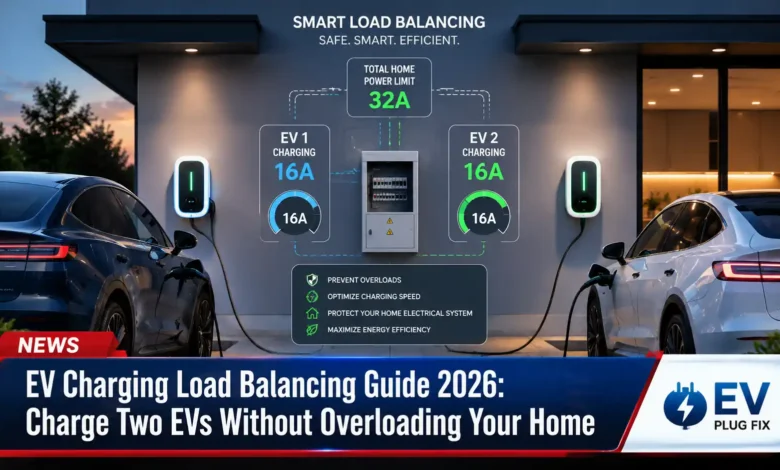
Load balancing for EV charging is the essential technology that enables households with multiple electric vehicles to charge simultaneously without tripping circuit breakers or overloading the main electrical fuse.
If the idea of upgrading your home’s electrical system sounds daunting, there’s good news. You can absolutely install two charging stations without major electrical overhauls. The solution lies in clever load management technology that intelligently distributes available power between multiple chargers. For a comprehensive understanding of your EV Charger Selection Guide options, understanding load balancing is a critical first step.
Load balancing essentially means telling your charging stations exactly how much power they can draw at any given moment. This prevents them from exceeding the capacity of your main fuse while keeping your home’s electrical system safe and stable. Even if your fuse isn’t currently a limiting factor, load management gives you granular control over your charger’s power consumption whenever you need it.
In the world of EV charging infrastructure, load balancing is more accurately described as power sharing between multiple charging stations. It’s a sophisticated communication system where chargers work together to distribute available electricity efficiently. This feature becomes absolutely essential when you’re planning to expand your charging capabilities for a multi-EV household. For those considering the latest EV technology, understanding power requirements is key, as seen with models like the IM L6 Review 2026 which highlights advanced battery systems.
How EV Charging Load Balancing Works
Modern EV chargers equipped with load balancing features communicate with each other continuously. They don’t chat about the weather—they discuss critical operational parameters like available power capacity, each vehicle’s current charging needs, and prioritization protocols. This communication relies on standard EV Charging Protocols that ensure seamless interoperability between devices.
This intelligent communication ensures that the combined power draw never exceeds the preset limit, regardless of how many vehicles are plugged in. Whether you have 11 kW or 22 kW home chargers, load balancing eliminates the worry of blowing your main fuse while running appliances and charging two EVs overnight. For a deeper dive into charger capabilities, you can explore the go-e Gemini vs Wallbox comparison which highlights flexible power management solutions.
Research from recent studies demonstrates that advanced load balancing algorithms can achieve remarkable efficiency gains. One study using the Whale Optimization Algorithm integrated with IoT sensors achieved a 38.5% reduction in peak load, improved charging response time by 29.2%, and increased load management accuracy by 91.6%. These statistics highlight just how far load balancing technology has advanced in recent years.
- Dynamic Power Allocation – Smart chargers continuously adjust power distribution based on real-time demand and available capacity.
- Priority Scheduling – Some systems allow you to designate which vehicle charges first or receives more power.
- Grid-Friendly Operation – Load balancing helps maintain grid stability by preventing sudden power spikes from multiple EVs charging simultaneously.
- Renewable Integration – Many systems can communicate with home solar installations for optimized green energy usage.
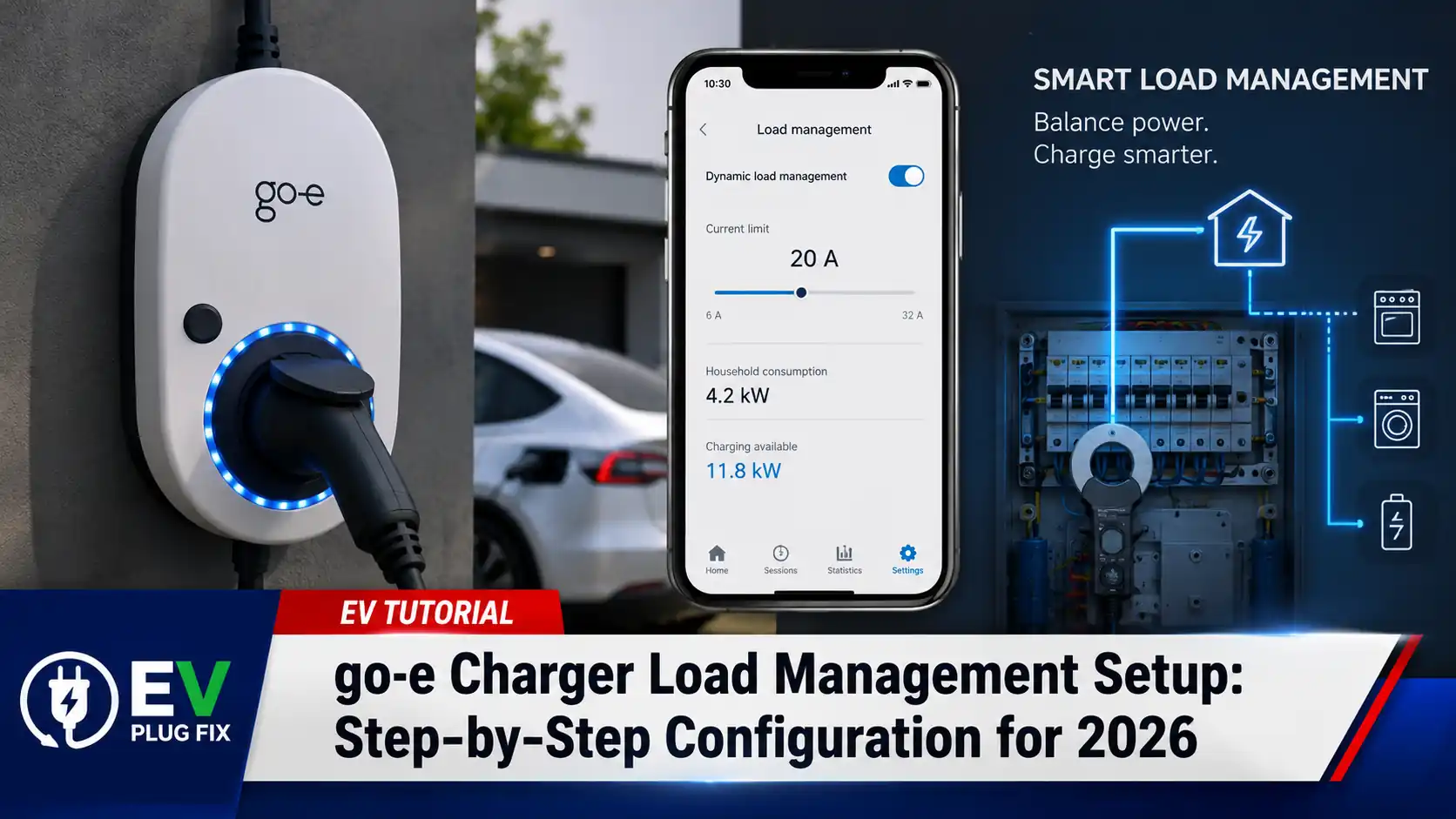
Depending on the specific load balancing implementation, your chargers can even integrate with other smart home systems. For example, they can communicate with solar panel installations to prioritize charging when solar production is highest. This creates a truly intelligent home energy ecosystem where all devices work in harmony. To learn more about setting up these advanced systems, check out this comprehensive go-e Charger Setup guide.
Types of EV Load Balancing Systems
EV load balancing technology comes in several configurations, each suited to different household needs and electrical infrastructure setups. Understanding these options helps you choose the right system for your multi-EV household.
Static Load Balancing
Static load balancing allocates a fixed amount of power to each charging point based on a predetermined maximum. While this approach offers simplicity, it lacks flexibility. If one EV is fully charged or not plugged in, its allocated power capacity remains unused because the system cannot dynamically redirect it to another vehicle.
Dynamic Load Balancing
This is where true intelligence comes into play. Dynamic load balancing continuously monitors available power and adjusts distribution in real-time. If you start using a high-power appliance like a washing machine or oven, the system automatically reduces charging power to prevent overloading. When the appliance finishes, the chargers ramp back up.
- Optimal for households with varying energy demands throughout the day
- Maximizes charging speed without exceeding electrical capacity
- Integrates seamlessly with smart home energy management systems
Delta and V1G/V2G Load Balancing
Advanced load balancing technologies include Delta implementation for precise power management and V1G (smart charging) protocols. The latest innovations even enable V2G (vehicle-to-grid) functionality, where EVs can supply power back to the home or grid during peak demand periods. The future of load balancing extends beyond simple charging to full bidirectional energy management. Understanding the fundamental differences between AC vs DC Charging is essential for grasping these advanced concepts.
Benefits of Load Balancing for Multi-EV Households
Installing a load balancing system for your EV chargers delivers multiple benefits beyond just preventing blown fuses. Understanding these advantages helps justify the investment in smart charging infrastructure.
Enhanced Electrical Safety stands as the primary benefit. By actively managing power draw, load balancing prevents dangerous overloads that could damage your electrical system or cause fires. Research shows that proper load balancing can reduce voltage fluctuation rates by up to 155% and cut network loss costs by nearly 46%.
Cost Optimization represents another significant advantage. Many utility companies charge higher rates during peak demand periods. Load balancing systems can be programmed to charge vehicles during off-peak hours, reducing electricity costs while ensuring both EVs are fully charged by morning.
- Protects your main electrical fuse from overload even during simultaneous charging of multiple EVs
- Extends charger lifespan by preventing operation under excessive strain
- Enables future expansion as your charging needs grow
- Enhances grid stability by reducing demand spikes that strain local infrastructure
Environmental benefits also accrue from proper load balancing. When integrated with renewable energy systems, load balancing maximizes the use of clean energy for vehicle charging. This synergy between EV charging and renewable energy production represents a significant step toward truly sustainable transportation.
Choosing the Right Load Balancing Charger
Selecting the right load balancing charger requires understanding your household’s current needs and future plans. Several leading manufacturers offer solutions tailored to different requirements.
Tesla offers integrated load management through their Wall Connector system, allowing up to multiple units to share a single circuit. ChargePoint provides load balancing features across their residential charger lineup, with cloud-based management for optimal scheduling and power distribution.
EVgo and Electrify America primarily focus on public charging infrastructure, but their load balancing technologies influence the development of residential solutions. For home installations, Wallbox has gained significant recognition for their smart load management capabilities that integrate with solar panels and home battery systems.
| Brand | Load Balancing Type | Max Stations | Key Feature |
|---|---|---|---|
| Wallbox | Dynamic | Up to 5 | Solar integration |
| ChargePoint | Cloud-based | Multiple | Smart scheduling |
| Tesla | Circuit sharing | Up to 4 | Fleet management |
| Blink | Static | Individual | Basic load control |
When evaluating load balancing systems, consider the total amperage available, number of vehicles you expect to charge, and whether you might install solar panels or home batteries in the future. A scalable solution that grows with your needs typically offers the best value. For expert guidance on the installation process, refer to this detailed EV Charger Installation Guide that covers essential safety and compliance considerations.
Installation and Setup Considerations
Installing load balancing chargers requires careful planning and proper professional installation. While smart chargers handle much of the complexity, the physical installation demands attention to detail and compliance with local electrical codes.
The first consideration is assessing your main electrical service capacity. A standard North American home typically has a 100 amp service. Two 48-amp EV chargers alone would consume nearly half of a 200-amp service before considering other household loads. This is precisely why load balancing becomes critical—it ensures that charging never pushes the system beyond safe limits.
Professional installation by licensed electricians familiar with EV charging equipment is strongly recommended. They can assess your panel capacity, ensure proper circuit protection, and verify that load balancing communication networks are correctly configured.
- Assess main electrical panel capacity and existing loads
- Select appropriate load balancing system for your needs
- Schedule professional installation by certified electricians
- Configure communication network between chargers
- Set power limits and prioritization preferences
- Test system with all appliances running simultaneously
Many load balancing systems offer smartphone apps for configuration and monitoring. These apps allow you to view real-time power distribution, set schedules, and receive alerts if something requires attention.