Electric Truck Incentives 2026: Toll Savings & Subsidies Slash Fleet Costs
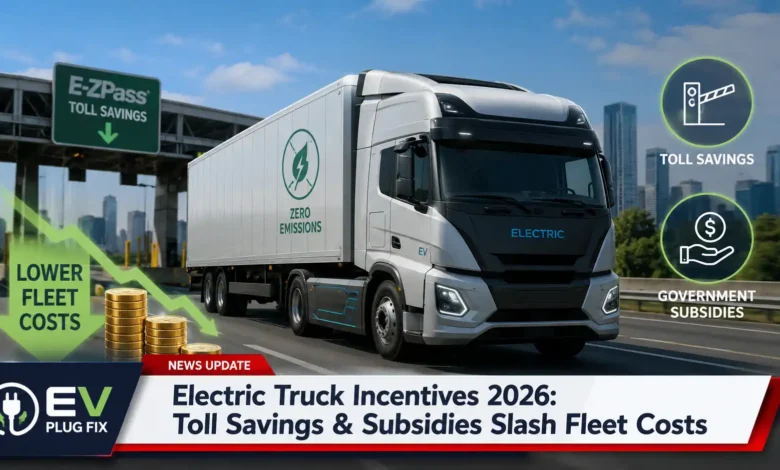
Electric truck incentives are fundamentally reshaping the financial landscape of the freight industry in 2026. Government policies across Europe are accelerating the shift to electric freight transport, creating a powerful economic case for fleet operators. From toll exemptions and purchase subsidies to urban access restrictions, these measures are working together to close the cost gap between diesel and zero-emission lorries.
⚡ Expert Insight: The combined effect of these incentives is driving the total cost of ownership (TCO) of e-trucks closer to, and in some cases already below, that of diesel vehicles. For fleet managers, the question is no longer if they should transition, but when to maximize these benefits.
⚡ Key Takeaways: 2026 Electric Truck Incentives
- Massive Toll Exemptions: EU Eurovignette directives extend zero-emission heavy lorry toll exemptions through at least 2031, saving fleet operators €11,000–€53,000 annually per truck.
- UK Plug-in Truck Grant: Up to £120,000 in direct purchase discounts for heavy lorries (26t and over) and £20,000 for medium commercial vehicles.
- Dutch AanZET Subsidies: Substantial purchase grants for N2/N3 category zero-emission freight trucks, backed by €14.5M in SPULA charging infrastructure funding.
- Zero-Emission Urban Zones: 18 major Dutch cities mandate zero-tailpipe emission freight lorries for urban deliveries.
Massive Road Toll Savings for Zero-Emission Trucks
One of the most immediate and significant financial benefits for e-lorry operators is the exemption from road tolls. The European Union has extended the possibility for member states to exempt zero-emission heavy-duty vehicles from road charges until at least 2031. This is not a minor perk; it translates into substantial annual savings.
A study commissioned by the European Clean Trucking Alliance (ECTA) reveals the staggering potential. Under current implementations, a battery-electric 5-axle articulated truck could achieve annual toll savings of between €11,000 and €23,000 compared to an equivalent diesel vehicle. In countries applying full toll exemptions, these annual savings could skyrocket to €37,000 – €53,000.
For a lorry driving 50,000 – 60,000 miles (100,000 km) per year, that can mean savings of £15,000 – £20,000 annually simply on tolls. Such savings make the switch far more compelling for fleet operators.
Purchase Subsidies Slashing Upfront Costs
The high upfront cost of electric trucks has long been a barrier to adoption. Recognizing this, governments across Europe are offering generous subsidies to bridge the price gap between diesel and electric models. Some programs cover up to 80% of the price difference, dramatically lowering the financial risk for early adopters.
United Kingdom: Plug-in Truck Grant
The UK government has boosted its Plug-in Truck Grant, offering discounts of up to £120,000 on new electric trucks as part of a £318 million plan for green freight. The grant levels are structured as follows:
- Smaller trucks (4.25t to 12t): Save up to £20,000
- Mid-sized trucks (12t to 18t): Save up to £60,000
- Larger trucks (18t to 26t): Save up to £80,000
- Largest lorries (26t and over): Save up to £120,000
Netherlands: AanZET Purchase Subsidy
The Dutch “AanZET” (Aanschafsubsidie Zero-Emissie Trucks) scheme encourages companies to acquire new zero-emission trucks. The subsidy design varies by company size and vehicle category, with smaller enterprises receiving higher subsidy percentages. This scheme is complemented by the SPULA subsidy for public charging infrastructure, which allocated €14.5 million for heavy EV charging.
Zero Emission Zones: Creating Regulatory Pressure
Zero Emission Zones (ZEZ) are making e-lorries unavoidable in some cities. Dutch cities—including Amsterdam, Rotterdam, and Utrecht—have implemented ZEZs for freight vehicles. These zones are only accessible to vehicles with zero CO2 tailpipe emissions, namely battery-electric and fuel-cell electric vehicles.
“If you want those contracts, you don’t really have a choice anymore,” one logistics expert noted. The regulatory pressure is creating a clear business imperative. To ease the transition, authorities have introduced staggered grace periods, but the message is clear: the future of urban freight is zero-emission.
| Incentive Type | Region | Details & Benefits | Estimated Annual Savings |
|---|---|---|---|
| Road Toll Exemption | EU (Eurovignette Directive) | Full or reduced tolls for zero-emission trucks until at least 2031 | Up to €53,000 per truck |
| Purchase Subsidies | United Kingdom | Plug-in Truck Grant: Up to £120,000 off new e-lorries | £20,000 – £120,000 (one-time) |
| Purchase Subsidies | Netherlands | AanZET: Covers a percentage of the price difference for N2/N3 trucks | Varies (up to €115,200 for larger trucks) |
| Urban Access | Netherlands (18 cities) | Zero Emission Zones for freight | Access to lucrative city contracts |
The findings closely reflect CLECAT’s longstanding position that CO2 differentiated road charging can provide an effective, market-based incentive for the uptake of zero-emission trucks. Such incentives must go hand in hand with investment in charging infrastructure, grid capacity, and other enabling conditions.
Calculating the Total Cost of Ownership (TCO) for E-Trucks
When evaluating the business case for electric freight, total cost of ownership (TCO) is the critical metric. The initial purchase price of an electric truck is higher, but the operating costs tell a different story. Here are the key factors fleet operators are using to calculate the actual cost of running e-trucks vs. diesel trucks:
Lower Running Costs
Electricity is significantly cheaper than diesel per mile. Day-to-day running costs are already lower for electric lorries compared to their diesel counterparts. Additionally, electric powertrains have far fewer moving parts, leading to reduced maintenance costs and less downtime.
Infrastructure Investment
While the cost of installing depot charging is a factor, the EU is providing substantial support. The Connecting Europe Facility (CEF) Transport call makes funding available for alternative fuels infrastructure, including megawatt charging systems for heavy-duty vehicles along major transit corridors. The Megawatt Charging System (MCS) is a revolutionary technology capable of delivering up to 3.75 MW, allowing a heavy truck to recharge in under 30 minutes.
🔴 Important Notice: Financial incentives are often time-limited and subject to budget availability. Fleet operators should act promptly to take advantage of current grant schemes like the UK’s Plug-in Truck Grant and the Netherlands’ AanZET scheme, which have specific application periods and funding caps for 2026.
Frequently Asked Questions About Electric Truck Incentives
How much can electric trucks save on EU highway tolls?
Under EU Eurovignette toll directives, zero-emission heavy electric lorries save between €11,000 and €53,000 per year in road tolls compared to equivalent diesel trucks.
What is the maximum UK Plug-in Truck Grant amount?
The UK Plug-in Truck Grant provides up to £120,000 off the purchase price for heavy electric trucks (26 tonnes and over), £80,000 for 18t–26t trucks, and £20,000 for smaller 4.25t–12t commercial vehicles.
What is a Megawatt Charging System (MCS) for electric lorries?
The Megawatt Charging System (MCS) is an ultra-high-power charging standard delivering up to 3.75 MW, enabling heavy commercial electric trucks to fully recharge in under 30 minutes during mandatory driver rest breaks.
The Road Ahead: A Compelling Business Case
The electrification of heavy-duty transport is no longer just an environmental goal; it is a compelling business decision. Measures like toll exemptions, purchase subsidies, and zero-emission zones are lowering upfront costs, reducing operational expenses, and creating regulatory pressure that makes electric trucks the smart choice for forward-thinking fleet operators. By aligning fiscal incentives with infrastructure development and stringent CO₂ targets, the EU is paving the way for a cleaner, more efficient freight sector.