EV Charger Maintenance Costs in 2026: Data-Driven Analysis for Operators
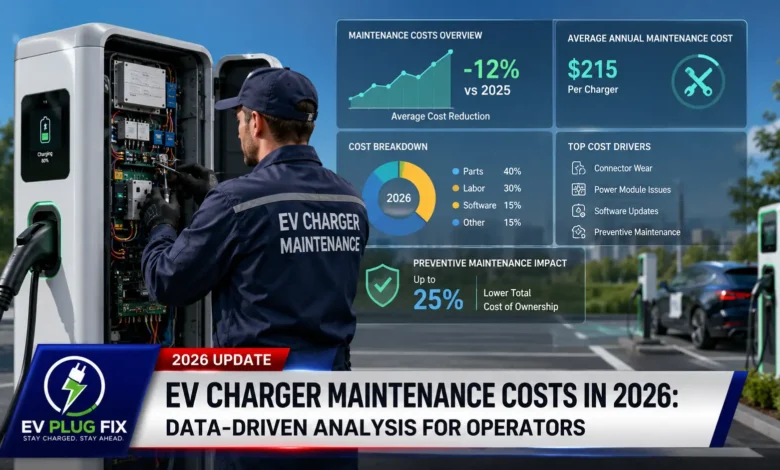
⚡ 2026 Cost Alert: EV charger maintenance costs are surging as networks expand. Operators who master cost allocation can save up to $2,500 per charger annually. This investigative breakdown exposes exactly where your maintenance budget is disappearing—and how to plug the leaks.
EV charger maintenance costs are emerging as the silent budget killer for commercial operators, fleet managers, and property owners across the United States in 2026. While the initial equipment purchase and installation often dominate financial projections, ongoing maintenance expenses frequently eclipse expectations—with some DC fast charger installations racking up $6,000 or more per unit annually. The charging infrastructure landscape has matured rapidly, and the operators who treat maintenance as a strategic function rather than an afterthought are the ones building sustainable, profitable networks.
Our investigative analysis draws from service provider pricing models, real-world operator data, and industry expert interviews to deliver a comprehensive EV charger maintenance cost breakdown for 2026. From basic Level 1 residential units to 350 kW high-power DCFC installations, we’ve mapped exactly where money flows—and where it gets wasted.
2026 EV Charger Maintenance Cost Profiles by Type
The gap in EV charger maintenance costs between basic residential units and industrial-grade fast chargers is staggering. Understanding these differences is the foundation of any effective cost-control strategy.
| Charger Type | Power Output | Annual Maintenance Cost | Primary Cost Drivers |
|---|---|---|---|
| Level 1 (AC, 120V) | 1.4 – 1.9 kW | $50 – $150 | Minimal — cable inspection, occasional GFCI replacement |
| Level 2 (AC, 240V) | 3.3 – 19.2 kW | $150 – $600 | Cable replacement, network subscriptions, hardware failures |
| DC Fast Charger (50 kW) | 50 kW | $1,500 – $3,500 | Power modules, cooling systems, software licensing, specialized labor |
| High-Power DCFC (150 kW+) | 150 – 350+ kW | $3,000 – $6,000+ | Advanced cooling, power electronics, utility demand charges |
Expert Insight: Level 1 chargers remain virtually maintenance-free, ideal for residential applications. However, commercial operators deploying Level 2 and DCFC units should anticipate EV charger maintenance costs that can exceed $500 per unit annually—and plan their budgets accordingly from day one. For property owners and landlords, understanding these costs is essential—check out our Best Rental Property EV Charger guide for installation and maintenance considerations.
Hardware Component Replacement: The Largest Cost Center
Physical component wear represents the heaviest EV charger maintenance cost burden across all charger types. Repeated usage, weather exposure, thermal cycling, and electrical stress gradually degrade critical components—and replacement expenses compound quickly across multi-unit networks.
Level 2 Charger Hardware Failure Patterns
Level 2 charging stations, despite their relative simplicity, present recurring hardware challenges that catch many operators off guard:
- Charging cable and connector degradation — Cables endure daily bending, UV radiation exposure, rain, freezing temperatures, and occasional vehicle run-overs. Replacement cable assemblies typically cost $50 to $200, making this the most frequent EV charger maintenance cost for Level 2 installations. For a deeper look at cable selection and durability, see our EV Charging Cable Guide.
- EVSE circuit board failures — The controller boards that manage charging sessions occasionally fail, with replacement costs ranging from $200 to $600 depending on manufacturer and unit sophistication.
- Display screen and interface deterioration — Outdoor touchscreens and display panels are particularly vulnerable to moisture ingress and UV damage. Replacement screens generally run $100 to $300.
DC Fast Charger Component Expenses
DCFC unit maintenance costs dwarf Level 2 expenses, reflecting industrial-grade complexity and specialized part requirements:
- Power modules — The core power conversion units represent the single most expensive EV charger maintenance cost item, priced at $1,000 to $3,000 each. Heavy-use DCFC installations may require module replacement every 3 to 5 years, representing a significant long-term financial commitment. The underlying AC to DC Conversion process is what makes these modules so critical to charger performance.
- Active cooling systems — High-power DCFC units generate enormous heat and rely on sophisticated thermal management. Fan motor replacements cost $150 to $400, while liquid cooling component repairs frequently exceed $1,000.
- High-amperage DC cable assemblies — These specialized cables are significantly more expensive than AC equivalents, with replacement costs ranging from $300 to $800 per assembly.
“The power module is the heart of every DC fast charger. When it fails, operators face not only the replacement cost but also significant downtime revenue loss. We strongly recommend proactive inspection schedules for these critical components.”
Software, Firmware, and Network Service Fees
Modern EV chargers are essentially networked computers with high-voltage electrical components. Software maintenance represents a recurring EV charger maintenance cost that grows proportionally with portfolio size—and one that many operators underestimate.
For Level 2 chargers, software costs are typically bundled into network service subscriptions ranging from $100 to $300 per unit annually. These subscriptions include firmware updates, remote monitoring dashboards, payment processing integration, and customer support access. Operators with 50 or more units may find themselves spending $10,000 to $20,000 annually on network fees alone. Advanced management platforms like the go-e Portal Review demonstrate how comprehensive software solutions can optimize network performance while controlling these recurring expenses.
DC fast charger software costs run significantly higher. OCPP compliance updates, cybersecurity patches, and utility demand response integration add complexity. Advanced software features often carry separate licensing fees, potentially adding $500 to $1,500 per year per unit to the EV charger maintenance cost equation.
⚠️ Critical Warning: When manufacturers discontinue software support for older charger models, operators face a difficult choice: pay for expensive extended support contracts or invest in premature hardware upgrades. This scenario has become increasingly common as the industry evolves rapidly—and it’s hitting operators hard in 2026.
Electrical Infrastructure and Grid Connection Maintenance
Many operators overlook the EV charger maintenance costs associated with supporting electrical infrastructure. While largely considered upfront installation expenses, ongoing maintenance of electrical systems is essential and can be unexpectedly expensive.
- Panel and breaker maintenance — Dedicated circuit breakers and electrical panels serving EV chargers require periodic inspection and may need replacement after electrical surges or overloads. Inspections typically cost $100 to $500 per cycle.
- Transformer maintenance — DCFC installations frequently require dedicated transformers, which represent a high-cost maintenance item. Transformer issues can result in repair costs exceeding $10,000.
- Ground fault and surge protection — These protective devices require testing and eventual replacement, adding $50 to $200 per unit annually to EV charger maintenance costs. Compliance with EV Charger EMC Standards ensures these protective systems meet regulatory requirements.
Utility demand charges represent a hidden but significant operational expense for DCFC operators. High-power chargers can trigger peak demand charges that add hundreds of dollars monthly to electricity bills. Some operators have reported demand charges exceeding their actual energy consumption costs—a critical factor in overall charger operating economics.
Physical Site and Enclosure Maintenance
EV charger maintenance costs extend beyond electrical and electronic components to the physical environment surrounding charging stations. These often overlooked expenses can accumulate significantly over time.
- Enclosure and cabinet integrity — Outdoor DCFC units with steel or aluminum enclosures can rust, crack, or sustain vandalism damage. Repainting or panel replacement costs $200 to $1,000.
- Holster and mounting hardware — Cable management systems, mounting posts, and brackets degrade over time. While generally inexpensive at $50 to $150, these components require regular inspection and replacement.
- Signage and lighting — Maintaining clear visibility and safety features adds modest but ongoing costs to charging station operation.
- Regular cleaning — Charger surfaces, screens, and connectors require regular cleaning to prevent premature degradation and maintain user satisfaction.
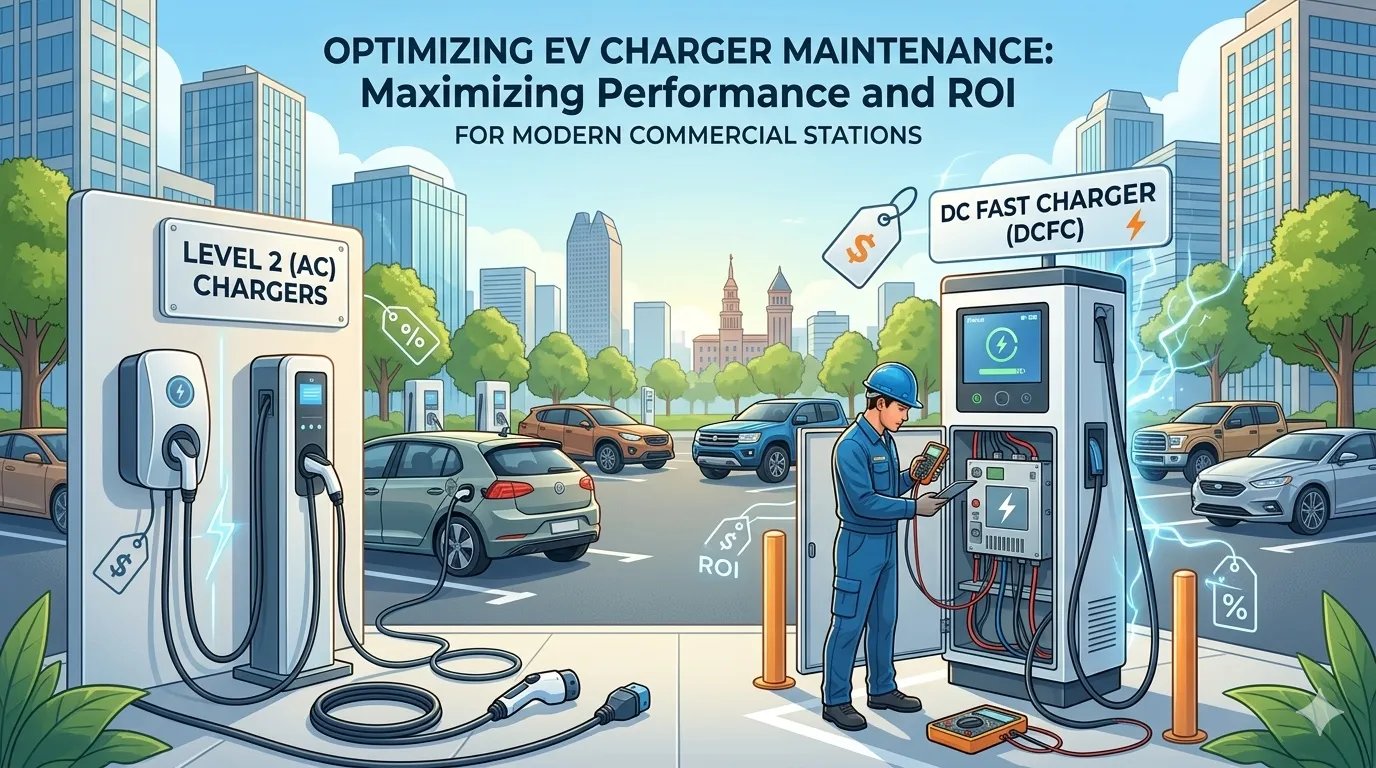
Cable and connector replacement consistently ranks among the highest EV charger maintenance costs across all charger types
Vandalism, Damage, and Insurance Considerations
Publicly accessible EV chargers face unique risks that significantly impact EV charger maintenance costs. Cut cables, broken screens, and graffiti are unfortunately common occurrences at unprotected charging stations. Cable theft has emerged as a particularly disruptive and costly problem, especially for DCFC units with expensive DC cable assemblies—some operators report theft-related losses exceeding $5,000 annually per high-traffic location.
Operators should budget for occasional repairs driven by vandalism. More importantly, comprehensive commercial property insurance covering EV charging equipment is essential. Based on portfolio size and risk profile, insurance premiums for charging station coverage typically add $200 to $800 per unit annually to total EV charger maintenance costs. Understanding your overall operational costs, including EV Insurance Costs 2026, provides a more complete financial picture for your charging business.
Proactive Measure: Installing security cameras, adequate lighting, and anti-vandalism features like cable retractors and locking holsters can significantly reduce damage-related EV charger maintenance costs. The upfront investment typically pays for itself within 12 to 18 months—a compelling ROI for any commercial operator.
Service Contracts, Labor, and On-Site Service Visits
Labor consistently ranks as the highest variable EV charger maintenance cost. Service technician visits for troubleshooting, parts replacement, or preventive maintenance typically command rates of $75 to $200 per hour, with travel charges frequently added for remote locations.
Many operators opt for service contracts with manufacturers or third-party maintenance providers. These agreements offer predictable budgeting and typically include:
- Scheduled preventive maintenance visits (one to two times annually)
- Priority response times for emergency repairs
- Parts coverage at reduced or no additional cost
- Remote monitoring and diagnostic support
For Level 2 chargers, service contracts generally cost $150 to $400 per unit annually. DCFC units command substantially higher contract rates of $1,000 to $3,000 per unit annually, reflecting their complexity and specialized parts requirements.
Highest-Cost Areas: Where EV Charger Maintenance Money Actually Goes
Across all charger types, several categories consistently represent the largest portions of EV charger maintenance spending:
Power Electronics (DCFC)
Power modules are the single most expensive maintenance item for fast chargers. A multi-gun DCFC unit with multiple power modules may require $5,000 to $10,000 in module replacement costs over a 5-year period under heavy usage—often the largest single EV charger maintenance cost component.
Cable and Connector Systems
Across all charger types, cables and connectors are the most frequently replaced components. High-traffic commercial sites may replace Level 2 cables every 2 to 3 years and DCFC cables every 3 to 4 years, representing a steady drain on maintenance budgets.
Unplanned Downtime
While not a direct EV charger maintenance cost, unplanned downtime leads to emergency service calls at premium rates. For revenue-generating DCFC operators, each day of downtime represents $500 to $2,000 in lost revenue—a hidden cost that amplifies maintenance expenses significantly.
Software and Network Services
Annual software and connectivity fees are recurring costs that grow with portfolio size. Operators managing 50 or more Level 2 chargers may spend $10,000 to $20,000 annually on network fees alone, making this a substantial EV charger maintenance cost category.
Proven Strategies to Control EV Charger Maintenance Costs
EV charger maintenance does not need to break the bank. Operators who implement the following strategies consistently report lower costs and higher equipment reliability:
- Invest in quality equipment upfront — Lower-cost chargers often come with higher long-term maintenance burdens. Reputable brands with strong warranty and support ecosystems deliver better value over time. Consult our Home EV Charger Guide for insights on selecting durable, reliable charging equipment.
- Implement proactive preventive maintenance — Scheduled inspections catch small issues before they become expensive failures. For DCFC units, bi-annual professional servicing is strongly recommended.
- Leverage remote monitoring capabilities — Networked chargers provide real-time performance and fault data. Early fault detection can prevent costly emergency service calls and minimize downtime. Learn more about integrated solutions with our Networked EV Chargers guide.
- Negotiate multi-unit service contracts — Operators with multiple chargers should negotiate bulk service agreements to significantly reduce per-unit EV charger maintenance costs.
- Protect physical installations — Anti-vandalism features including cable retractors, locking holsters, and surveillance cameras dramatically reduce damage-related costs.
- Plan for software lifecycle — Choose chargers with clear manufacturer software support commitments. OCPP-compliant devices offer flexibility and avoid vendor lock-in issues.
“The operators who succeed in controlling EV charger maintenance costs are those who treat maintenance as a strategic priority rather than an afterthought. They invest in quality, monitor proactively, and negotiate service agreements from a position of strength.”
The 2026 Outlook for EV Charger Maintenance Costs
The EV charger maintenance cost landscape is evolving rapidly. As charger technology matures, manufacturers are investing in more reliable designs and sophisticated remote diagnostic tools. The long-term trajectory suggests maintenance costs will gradually decrease as equipment becomes more robust and service providers develop more efficient maintenance methodologies—but the transition will take years.
For operators willing to invest in quality equipment, preventive care, and smart monitoring systems, EV charger maintenance presents a manageable operational expense rather than a budget-breaking liability. Understanding where costs concentrate and implementing targeted strategies makes the difference between profitable charging operations and financial strain.
As the EV market continues its exponential growth through 2026 and beyond, charging infrastructure operators who master these maintenance fundamentals will gain significant competitive advantages. The key takeaway remains clear: EV charger maintenance does not need to break the bank for those who approach it strategically.