Wallbox Installation Costs in 2026: Home EV Charger Pricing Breakdown
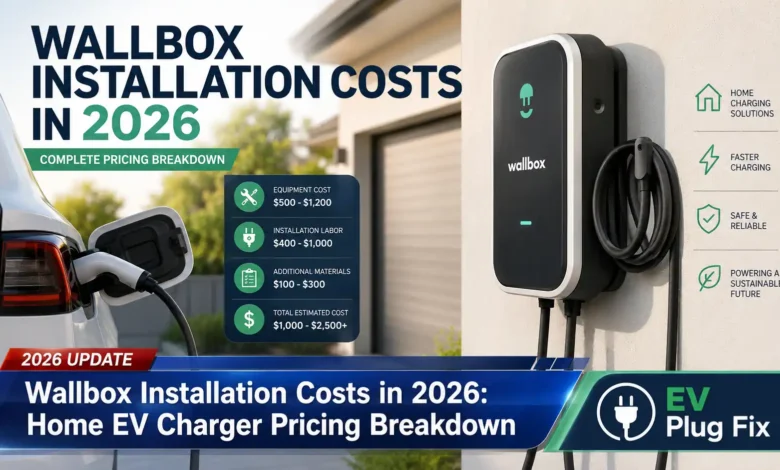
Wallbox installation costs in 2026 typically range from $800 to $2,700 for a standard residential Level 2 charger, but the final price can climb much higher depending on your home’s electrical infrastructure and specific installation requirements. Whether you’re a new electric vehicle owner or upgrading your existing home charging setup, understanding the full financial picture—from hardware prices to labor fees and potential panel upgrades—is essential for making an informed investment in your EV charging infrastructure.
The Real Cost of Wallbox Installation in 2026: Breaking Down the Numbers
Investing in a home EV charger requires careful consideration of multiple cost components. While the charger hardware itself represents a significant portion of the budget, the installation expenses often match or exceed the equipment cost. According to recent market analysis, the average fully installed cost for a Level 2 home charging station in 2026 falls between $3,000 and $9,000, reflecting the wide variance in installation complexity and regional labor rates .
For European homeowners, the financial picture looks somewhat different but equally varied. In Germany, the total investment for a wallbox installation typically ranges from €800 to €3,000, with the device itself costing €400 to €1,000 and professional installation adding €400 to €900 for single-family homes . Italian homeowners can expect to budget between €1,000 and €2,400 for a complete wallbox setup, including both hardware and standard installation work .
Hardware Costs: What You’re Paying for the Charger Itself
The wallbox unit price depends heavily on its charging capacity and smart features. Basic 11 kW devices start around €300, while premium 22 kW models with advanced capabilities can reach €2,000 or more . In the United States, Level 2 chargers typically range from $400 to $1,200 for most homeowners, with smart chargers commanding premium pricing for their Wi-Fi connectivity, energy tracking, and load management capabilities .
The Wallbox Pulsar Plus, a popular compact EV charger for UK homes, retails at £550 to £700 before installation . Similarly, competitors like ChargePoint offer the Home Flex unit in the same $400 to $700 price bracket, known for its flexible amperage settings and advanced app control features .
| Charger Tier | Power Output | Typical Hardware Cost | Key Features |
|---|---|---|---|
| Entry-Level | 3.7 – 7.4 kW | $200 – $500 | Basic charging, limited smart features |
| Mid-Range | 7.4 – 11 kW | $500 – $1,000 | App control, Wi-Fi, scheduling |
| Premium | 11 – 22 kW | $1,000 – $2,000+ | Load management, solar integration, RFID |
Installation Labor: Where the Real Costs Add Up
Professional installation represents one of the largest and most variable cost components of wallbox installation. Hiring a licensed electrician is not just recommended—it’s mandatory for safety and code compliance, and attempting a DIY installation of a Level 2 charger carries serious risks, including fire hazards, property damage, and voided insurance coverage .
In the United States, installation labor and materials typically range from $800 to $2,500, with the national average landing around $1,700 for standard setups . Electrician hourly rates vary significantly by region, with metro areas like San Francisco or New York charging roughly double the rates of rural locations .
European installation costs show similar variability. In Germany, certified electricians charge between €70 and €120 per hour, with total installation costs averaging €500 to €1,500 depending on complexity . The German automobile club ADAC estimates installation expenses between €500 and €2,300, reflecting the wide range of potential site-specific work .
Key Cost Drivers: What Makes Installation More Expensive?
Several factors can significantly increase your wallbox installation costs beyond the basic estimate:
- Distance from the electrical panel: The further your charger sits from the main service panel, the more copper cabling and labor are required. A 50-foot conduit run can add $1,000 to $2,500 compared to a simple garage install adjacent to the panel .
- Detached garages and trenching: Running power to a separate structure requires underground conduit installation, easily adding $1,000 to $3,000 over standard installation costs .
- Wall cutouts and cable management: Routing cables through finished walls, drywall repairs, and drilling through masonry all add labor time and material costs.
- Permitting and inspection fees: Most municipalities require permits for 240V EV charger installations, costing between $100 and $500 depending on location .
The Panel Upgrade Question: The Hidden Wallbox Installation Cost
Perhaps the most significant variable in wallbox installation costs is whether your home requires an electrical panel upgrade. Many older homes built before 2000 have 100-amp service panels, which often lack the capacity to safely support a Level 2 EV charger drawing 40 to 60 amps .
Upgrading to a 200-amp panel typically costs $2,000 to $5,000 in the United States, with service line upgrades potentially adding another $3,000 to $8,000 . In Europe, panel modifications and main fuse upgrades can add similarly significant expenses to the total project cost.
However, homeowners should be aware of more cost-effective alternatives before committing to a full panel replacement. Modern smart chargers with dynamic load management (DLM) can automatically throttle charging when other appliances are in use, avoiding the need for expensive service upgrades while remaining fully code compliant . These intelligent load-balancing systems typically cost $600 to $1,800—a fraction of a full panel upgrade. For commercial properties, EV Peak Shaving strategies can further optimize energy usage and reduce infrastructure costs.
Portable vs. Wallbox: Understanding Your Home EV Charging Options
Not all home EV charging solutions require professional wallbox installation. Portable chargers offer a plug-and-play alternative that can significantly reduce upfront costs, particularly for renters or those with limited off-street parking.
Basic Level 1 portable chargers, often included with the vehicle purchase, plug into standard household outlets and add approximately 3 to 5 miles of range per hour—adequate for drivers with short daily commutes under 30 miles . More advanced portable Level 2 units, like the go-e Charger Gemini flex, can plug into dedicated CEE industrial sockets and deliver up to 7.4 kW without requiring permanent installation, though they do require compatible outlets. To learn more about leveraging this technology with solar energy, explore our guide on go-e PV Surplus Charging.
The trade-off is clear: portable chargers offer lower upfront costs and maximum flexibility, while wallboxes provide superior charging speeds (20-45 miles of range per hour), enhanced safety features, and seamless integration with home energy management systems . Most EV owners eventually transition from portable to wallbox charging as their daily reliance on the vehicle grows. Understanding the Smart EV Charging Benefits can help you decide which solution best fits your long-term needs.
Regional Installation Costs: A Global Comparison
Wallbox installation costs vary dramatically across different regions and countries due to differences in labor rates, electrical codes, and local regulations. Understanding these regional variations helps you benchmark your quote and identify potential savings.
United States
Typical Total Cost: $3,000 – $9,000
Panel upgrades are the primary cost driver. Federal tax credits cover 30% of installation costs up to $1,000 .
United Kingdom
Typical Total Cost: £700 – £1,050+
Simple installations start around £700. OZEV grants (for flats) cover up to 75% of costs, but homeowners no longer qualify for EVHS grants .
Germany
Typical Total Cost: €800 – €3,000
Easier in single-family homes, more complex in multi-unit buildings. Regional programs offer additional funding .
Italy
Typical Total Cost: €1,000 – €2,400
Installation includes Di.Co. declaration. Multi-unit buildings require 2-3x the cost of single-family homes .
Frequently Asked Questions
How much does a wallbox cost to install in 2026?
In 2026, wallbox installation costs typically range from $800 to $2,700 in the United States and €800 to €3,000 in Europe, depending on hardware choice, installation complexity, and whether panel upgrades are required. The average fully installed Level 2 home charger costs approximately $3,000 to $9,000 in the US and €1,000 to €2,400 in Europe.
Is a portable EV charger cheaper than a wallbox?
Yes, portable chargers have significantly lower upfront costs, often $0–$400 for Level 1 units (frequently included with the vehicle) and $200–$600 for portable Level 2 chargers. They require no professional installation and offer flexibility for renters or travelers. However, wallboxes provide much faster charging speeds, better safety features, and long-term convenience—advantages that justify the higher initial investment for many homeowners. For Tesla owners, you can check specific charging metrics in our Tesla Model 3 Charging Time guide.
Do I need a panel upgrade for wallbox installation?
Not always. While many older homes with 100-amp panels may require upgrading to 200-amp service ($2,000–$5,000), modern smart chargers with dynamic load management can often avoid this expense by automatically throttling charging when other appliances are running. Your electrician will perform a load calculation to determine if an upgrade is necessary.
Can I install a wallbox myself?
No, Level 2 wallbox installation requires a licensed electrician for safety and code compliance. DIY installation is not recommended and often violates local building codes, insurance policies, and manufacturer warranties. Professional installation also includes necessary permits, inspections, and the declaration of conformity required in many jurisdictions. Regular Home EV Charger Maintenance is also essential for long-term safety and performance.
Are there government incentives for wallbox installation in 2026?
Yes, various incentives exist in 2026. In the US, the federal Alternative Fuel Infrastructure Tax Credit provides 30% of installation costs up to $1,000. The UK offers OZEV grants of up to 75% (capped at £350) for flat-owners and renters, though standard homeowners no longer qualify. Germany’s KfW 440 program has ended, but regional programs like Bayern’s €500 grants and NRW’s €1,000 support remain available.
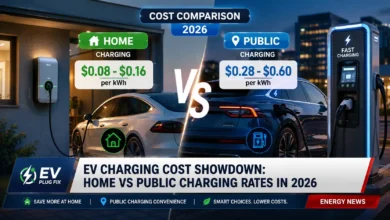
“Installing a wallbox in 2026 represents a significant investment, but one that pays back through convenience, lower energy costs compared to public fast charging, and increased property value. The key to avoiding surprise costs is getting a thorough site assessment before purchase.”
The decision to install a wallbox requires weighing the significant upfront investment against the long-term convenience and cost savings of reliable home charging. With 83% of EV owners relying on at-home charging, understanding the full cost picture—from hardware and labor to potential panel upgrades and available incentives—ensures you can make the most informed decision for your home and electric vehicle .