EV Winter Charging Guide 2026: Maximize Battery Range with Smart Charging Tips
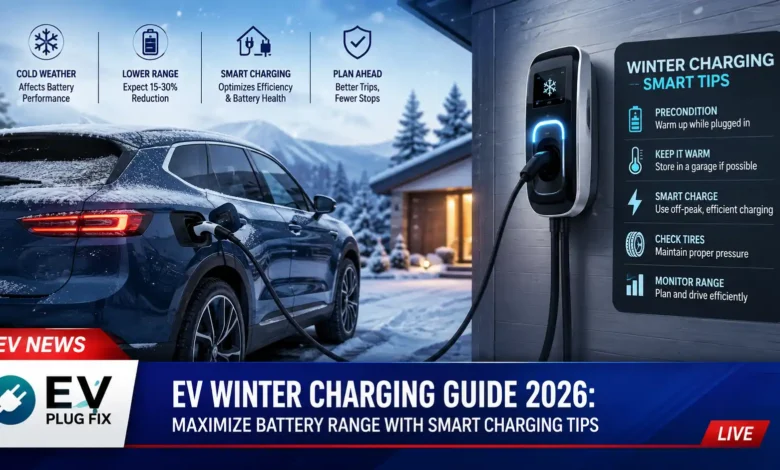
Electric vehicle winter charging presents unique challenges that every EV owner must understand to maintain optimal battery performance and range during the coldest months of the year. As temperatures plummet, the chemical processes within lithium-ion batteries slow down, causing internal resistance to increase and reducing the battery’s efficiency in delivering energy. This phenomenon isn’t a defect in your vehicle but rather physics at work, and understanding how to adapt your charging strategy is essential for winter driving success. With range losses of up to 30% at°C and as high as 55% in extreme°C conditions according to a study by Argonne National Laboratory, knowing how to properly charge your EV during winter can make the difference between a stress-free journey and being stranded in the cold.
For first-time EV owners navigating their initial winter season, the shift in charging habits required can feel overwhelming. Unlike internal combustion engine vehicles that generate waste heat as a byproduct, EVs must actively produce heat for both the cabin and the battery pack, drawing directly from the energy store that would otherwise propel you forward. This additional drain, combined with reduced battery efficiency, means that charging to a higher level becomes not just a recommendation but a necessity for many winter journeys. SINTEF senior researcher Fride Vullum-Bruer explains that the battery voltage drops faster in the cold, and when it reaches a certain cut-off level, the battery will stop delivering power even though energy remains, as a protective mechanism to prevent damage.
When planning winter trips that extend beyond short local errands, charging your EV to 100% provides a crucial buffer against the unpredictable nature of cold-weather driving. However, if your daily commute consists of short journeys of just 1 kilometers, maintaining a charge level between 80% is more prudent, as leaving the vehicle idle for extended periods with a fully charged battery can accelerate battery degradation. The key principle to remember is that lithium-ion batteries perform best within a relatively narrow state-of-charge window, ideally between 30%, but winter conditions may necessitate temporarily exceeding these guidelines for practical range needs.
One of the most significant advantages of modern smart wallbox technology is the ability to precisely manage your EV charging schedule, ensuring your battery reaches the desired level at the optimal time. Smart wallboxes like the go-e Charger Gemini and Gemini flex offer app-based scheduling that allows you to set exact charge limits and timers, eliminating the guesswork from winter charging. This capability becomes particularly valuable when you need to time your charge completion for maximum efficiency, as charging immediately after a drive when the battery is still warm is far more efficient than charging a cold-soaked battery the following morning. The go-e Charger Gemini flex, with its IP65 weatherproof rating and operating temperature range down to°C, is specifically engineered to perform reliably in harsh winter conditions. For those considering the latest advancements, exploring go-e Flexible Tariffs can help you maximize savings while keeping your battery optimally charged during the coldest months.
Understanding the Chemistry Behind Winter EV Battery Drain
To effectively manage winter EV charging, you must first understand what happens inside your battery when temperatures drop. The lithium-ion cells that power your EV rely on electrolyte solutions to facilitate the movement of lithium ions between the anode and cathode. In cold weather, this electrolyte becomes thick and sluggish, much like honey on a cold day, dramatically slowing the ionic movement and reducing the battery’s ability to generate electricity. This slowdown is the primary driver of reduced range and slower charging speeds during winter months.
When a battery becomes too cold, the battery management system (BMS) acts as a protective gatekeeper, limiting the amount of power the battery can accept or deliver to prevent damage. Vullum-Bruer warns that charging a cold battery, especially with fast charging, can cause lithium ions to plate on the anode surface as metallic lithium instead of intercalating properly between graphite layers. This phenomenon, called plating, leads to a loss of active lithium and can eventually form dendrites, needle-like structures that may create short circuits and even fires. This is why preconditioning your battery before charging is not just about speed but about preserving long-term battery health.
The temperature at which batteries operate significantly impacts their performance and longevity. The ideal temperature range for most EV batteries is between 15°C and 35°C, where chemical reactions occur efficiently without excessive stress on the cells. At temperatures below freezing, the battery management system must allocate energy to warm the pack, further reducing available driving range. Research from the Norwegian Automobile Federation’s El Prix winter test showed that even with preconditioning, vehicles experienced an average range loss of 38% in temperatures reaching°C, highlighting the immense impact of extreme cold.
Interestingly, some of the most dramatic winter effects can actually be mitigated through proper preconditioning. When batteries are preconditioned before fast charging, many vehicles can match their quoted 10% charging times, and in some cases, even beat them. In the El Prix test, 14 out of 24 preconditioned vehicles achieved their rated charging speeds despite the brutal conditions, while the Xpeng X9 set a record of 12 minutes 5 seconds for a 10% charge, faster than its own summer performance. This demonstrates that the key to successful winter EV charging lies not in fighting the cold but in working with your vehicle’s thermal management systems.
Mastering Smart Charging Strategies for Maximum Winter Range
When winter arrives, your standard charging routine requires significant adjustment to account for reduced battery efficiency and increased energy demands. The first principle of winter EV charging is to keep your vehicle plugged in whenever possible, even after reaching your desired charge level. This practice allows the car to draw grid power for battery thermal management rather than using precious stored energy to maintain optimal battery temperature. For daily commuting, experts recommend charging to between 80% for routine use, but when you anticipate longer journeys or severe weather conditions, charging to 100% provides essential range buffer.
Using a smart wallbox like the go-e Charger Gemini flex transforms winter charging from a chore into a precisely managed process. Through the go-e app, you can schedule charging sessions to coincide with off-peak electricity rates, significantly reducing your charging costs while ensuring your battery reaches the optimal level exactly when needed. The wallbox’s built-in scheduler allows you to set specific energy limits, automatically stopping the charging process once your target is reached. This feature is particularly valuable for winter driving when you want to avoid leaving your battery at 100% for extended periods but still need maximum range for upcoming trips. Understanding go-e Controller 2026 capabilities can further enhance your ability to manage solar integration and dynamic load balancing during winter months.
The go-e Charger Gemini flex offers additional intelligent features that provide significant benefits during winter. Its ability to continuously monitor electricity prices and initiate charging during the most cost-effective periods can lead to substantial savings over the winter season when energy consumption increases. With integrated electricity provider capabilities, the wallbox automatically adjusts charging to take advantage of lower electricity prices, making sustainable winter EV ownership more affordable. This dynamic energy management is particularly valuable when combined with the charger’s other features, such as static and dynamic load balancing, which protect your home electrical system from overload.
Another critical consideration is timing your charging sessions for maximum efficiency. Rather than waiting until morning to charge a cold battery, plug in immediately after returning from a drive when the battery is already at operating temperature. This practice reduces the energy required to warm the battery and significantly improves charging efficiency. The car’s battery management system will also be less likely to limit charging speeds because the thermal conditions are already favorable. In a study by Argonne National Laboratory, preconditioning while plugged in reduced cold-weather energy consumption by up to 7% for short trips. For multi-EV households, implementing Dynamic EV Load Balancing ensures your home’s electrical system remains protected even when multiple vehicles need charging during peak winter demand.
- Charge immediately after driving: Take advantage of warm battery temperatures for more efficient charging.
- Use scheduled charging: Leverage smart wallbox apps like go-e Charger to charge during off-peak electricity rates.
- Precondition while plugged in: Warm both cabin and battery before departure using grid power, not battery energy.
- Adjust charge levels based on need: Charge to 80% for daily driving, 100% for long trips.
- Keep your EV plugged in: Maintain battery temperature using grid power even after reaching target charge.
Understanding the interaction between your daily driving patterns and charging needs is crucial for optimizing winter EV operation. Drivers with shorter commutes may find that maintaining a lower state of charge, such as 60%, is sufficient for daily needs while preserving long-term battery health. According to research by Argonne National Laboratory, limiting operation to partial SOC windows can significantly increase charging frequency in cold weather. For those with longer commutes or unpredictable winter weather, a higher daily charge level provides essential peace of mind and range security. When choosing the right equipment for your needs, consulting a comprehensive EV Charger Comparison Guide can help you select the optimal power rating for your winter driving requirements.
Preconditioning: The Essential Winter EV Superpower You Need to Use
Preconditioning is arguably the most powerful tool in the winter EV owner’s arsenal, yet it remains underutilized by many drivers. This feature, available on most modern EVs, warms both the cabin and the battery while the vehicle is still connected to a charger, drawing power from the grid rather than depleting the battery pack. The benefits are twofold: you step into a warm, frost-free car, and your battery begins its journey at an optimal temperature, preserving range and improving efficiency from the first kilometer.
At its core, preconditioning addresses the twin challenges of winter EV driving: heating the cabin and maintaining battery efficiency. When you precondition while plugged in, the grid supplies the energy needed to warm the interior, defrost windows, and heat the battery pack. This means that range you would otherwise lose to these functions remains available for driving, effectively preserving up to 20% of your battery capacity that would otherwise be consumed by climate control and battery warming. The 2026 El Prix winter test demonstrated this dramatically, with preconditioned vehicles achieving charging speeds comparable to summer conditions even in°C temperatures.
There are two distinct types of preconditioning that serve different purposes. Cabin preconditioning, which most drivers discover first, warms the interior for comfort and visibility. Battery preconditioning, however, is the less visible but equally important process of bringing the high-voltage battery pack to its optimal charging temperature. Proper battery preconditioning is essential for fast charging in winter, as a cold battery simply cannot accept high power levels without risking damage. By routing to a fast charger, many modern EVs automatically initiate battery preconditioning, ensuring the pack is ready to accept maximum charging power on arrival.
In the El Prix winter test, the impact of battery preconditioning was particularly striking. The test cars had their batteries warmed for roughly two hours prior to the charging run after a night in the open had left the packs cold-soaked at°C. Most of them then charged from 10% in close to their rated times despite the freeze, with the Xpeng X9 even posting an all-time record quicker than its own summer run. However, vehicles without battery preconditioning showed significantly slower charging speeds, highlighting the importance of this feature for those living in cold-weather regions.
- Precondition every morning: Set a scheduled departure time in your EV or app to warm both cabin and battery before your daily commute.
- Navigate to chargers: When planning a fast-charging stop, set the charger as your destination in your car’s navigation to trigger automatic battery preconditioning.
- Allow 20 minutes: Battery preconditioning typically requires 20 minutes to raise the pack to optimal temperature, especially in extreme cold.
- Always precondition while plugged in: This ensures that grid power, not battery power, is used for the process.
- Use seat and steering wheel heaters: These target warming consumes far less energy than cabin heating, preserving range.
At home, proper preconditioning can be automated using your vehicle’s built-in scheduling features or through the go-e Charger app. The go-e Charger Gemini flex allows you to manage your charging and preconditioning schedules from a single interface, ensuring your EV is always ready to go when you are. By setting a departure time in the app, you can ensure that both your charging and cabin preconditioning are coordinated, warming the interior from grid power at the time you specify. This level of integration makes winter EV ownership significantly more convenient and efficient.
Optimizing Winter Efficiency with Smart Wallbox Technology
The evolution of smart wallbox technology has transformed winter EV ownership from a potentially frustrating experience into a manageable, even pleasant, routine. Leading devices like the go-e Charger Gemini flex integrate features specifically designed to address cold-weather challenges, providing EV owners with unprecedented control over their charging experience. This mobile wallbox, which can be used both stationary and on the go, offers the flexibility to maintain charging efficiency regardless of weather conditions. For homeowners looking to install a permanent solution, following a comprehensive Home EV Charger Guide ensures your setup is winter-ready and properly integrated with your electrical system.
The go-e Charger Gemini flex’s IP65 weatherproof rating ensures reliable performance in the harshest winter conditions, with an operating temperature range from°C to +40°C. This durability means you can install the wallbox outdoors without worrying about damage from freezing temperatures, snow, or ice. The charger’s ability to be used either as a fixed wallbox or as a mobile charging station provides additional flexibility for winter road trips. When traveling to holiday homes or camping sites, you can bring your charger along, ensuring you always have reliable charging capabilities in winter conditions.
One of the most innovative features of the go-e Charger Gemini flex is its ability to monitor electricity prices and automatically schedule charging during off-peak periods. This functionality becomes particularly valuable in winter when heating demands increase electricity consumption across the grid. By charging when electricity demand is lowest, you can significantly reduce your charging costs while helping to balance grid load. The charger can also be paired with the go-e Controller for dynamic load management and solar surplus charging, allowing you to maximize your use of renewable energy even in winter.
Safety features in modern smart wallboxes are particularly important during winter when electrical demands are higher. The go-e Charger Gemini flex includes multiple protection mechanisms, including DC fault current protection (6 mA DC, 20 mA AC) and static/dynamic load balancing. These features protect both your home electrical system and your vehicle from damage, providing essential peace of mind during winter charging. The integrated electricity meter also allows you to track your charging consumption, helping you monitor and optimize your winter energy usage patterns.
| Charging Strategy | Daily Driving (Short Commutes) | Long Trips/Winter Road Trips | Best Practice |
|---|---|---|---|
| Charge Level | 80% | 100% | Adjust based on trip distance and weather conditions |
| Charging Timing | Night off-peak rates (scheduled via app) | Charge immediately after driving while battery warm, plus overnight for full capacity | Use smart wallbox scheduling to optimize cost and efficiency |
| Preconditioning | Essential for range preservation and comfort | Critical for fast-charging performance | Always precondition while plugged in to save battery |
| Heating Strategy | Use seat/steering wheel heaters over cabin heat | Preheat cabin while plugged in, use cabin heating moderately | Heat pumps are more efficient than resistive heaters |
Essential Winter Driving Habits to Protect Your EV Battery Range
Beyond charging strategy, your driving habits in winter significantly impact EV battery performance and range. One of the most effective techniques for preserving range is using seat and steering wheel heaters instead of relying solely on cabin heating. While cabin heating in an EV can consume 1 kWh per hour of driving, seat and steering wheel heaters draw considerably less power while providing targeted warmth where it matters most. For a typical 75 kWh battery, this represents a difference of approximately 2% energy loss versus the 20% range loss that can occur in°C conditions.
Regenerative braking, typically a great friend to EV range, requires careful adjustment in winter conditions. Cold batteries cannot accept regen power as effectively, which can result in inconsistent braking performance and potential handling issues on icy roads. EV expert recommendations suggest dialing back regenerative braking or using winter/snow modes if available. These settings modify throttle response and braking behavior to reduce the likelihood of wheel spin on slippery surfaces, improving both safety and efficiency. Smooth, steady driving with gentle acceleration and early braking helps maintain traction and maximizes range in challenging winter conditions.
Strategic parking also contributes significantly to winter EV performance. Parking in a garage or under a carport protects your EV from extreme cold, reducing the battery’s need to expend energy on self-warming. Even a few degrees of temperature difference can reduce the energy required for heating and battery conditioning. When public parking in winter, choosing a covered parking structure over an open lot can meaningfully preserve battery temperature and range. For overnight parking, keeping your EV plugged in even after reaching full charge allows the vehicle to draw grid power for thermal management, preserving battery energy for driving.
Maintaining proper tire pressure becomes particularly important during winter, as cold air naturally reduces tire pressure, increasing rolling resistance and reducing efficiency. Regular tire pressure checks during winter months ensure your tires remain properly inflated, optimizing both range and safety. For those living in areas with snow and ice, winter tires provide not only superior traction but also can reduce rolling resistance compared to all-season tires in cold conditions. The EVgo charging network recommends checking tire pressure at least weekly during winter and keeping the battery state of charge above 20% to ensure the battery management system can maintain proper thermal conditions.
Essential Questions & Expert Answers About Winter EV Charging
How much range will my EV lose in winter?
Should I charge my EV to 100% in winter?
Can I leave my EV plugged in all winter?
What's the ideal charge level for winter road trips?
How does the go-e Charger Gemini help with winter EV charging?
What is battery preconditioning and why is it important?
Mastering winter EV charging in 2026 requires a combination of understanding battery chemistry, adopting smart charging strategies, and leveraging modern technology. By implementing the techniques outlined in this guide, you can significantly reduce the impact of cold weather on your electric vehicle’s performance and range. The key takeaways include charging to appropriate levels based on your journey, using preconditioning to preserve battery energy, and considering smart wallbox technology such as the go-e Charger Gemini flex to optimize your charging efficiency.
Remember that winter driving with an EV is not about fearing the cold but about working with your vehicle’s systems to maintain optimal performance. By charging when the battery is warm, scheduling your charging sessions to take advantage of off-peak rates, and protecting your battery health through careful state-of-charge management, you can enjoy reliable, efficient winter driving. As the EV market continues to evolve, features like preconditioning and heat pumps are becoming more common, further reducing winter range anxiety and making electric vehicles viable year-round transportation solutions.