Multi-EV Household Charging Solutions & Smart Home Setup Tips (2026)
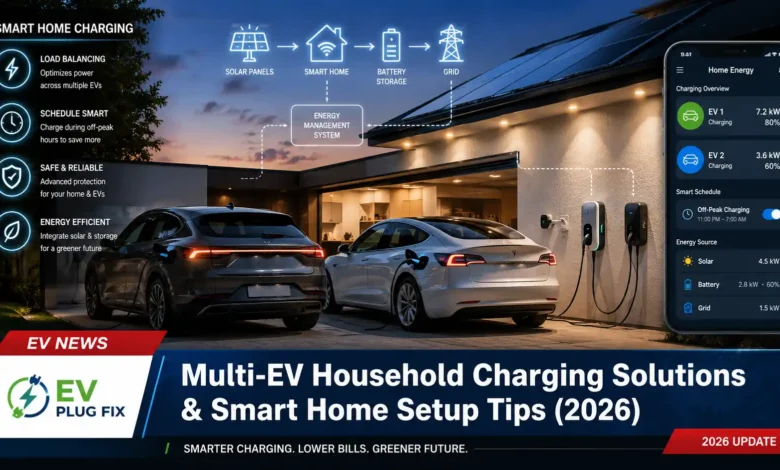
Multi-EV household charging solutions have become the defining challenge for families embracing the electric revolution. As more homes welcome two, three, or even four electric vehicles, the nightly question of who gets to charge can quickly escalate from a minor logistical puzzle into a genuine source of household friction. But here’s the good news: whether you’re working with a single plug or considering a full infrastructure upgrade, there are practical, cost-effective ways to keep every EV in your garage ready for the road ahead. Understanding EV Charging Levels Guide can help you determine the right setup for your specific needs.
Assessing Your Family’s Real-World EV Charging Needs
Let’s start by looking honestly at your household’s driving patterns. If your family owns two EVs and both drivers commute modest distances — say, 30 to 40 miles daily — a single Level 2 home charger might serve you perfectly well. Modern EVs typically offer 250 to 350 miles of range on a full charge, meaning most vehicles can easily go two or three days between plug-in sessions under typical commuting conditions. Knowing your EV Charging Time requirements will help you plan your nightly rotation schedule more effectively.
This opens up simple rotation strategies. Perhaps Car A charges on Monday and Wednesday nights, while Car B takes Tuesday and Thursday. Weekends offer built-in flexibility for catching up or accommodating spontaneous trips. However, households with long-distance commuters, rideshare drivers, or three or more EVs quickly discover the limitations of a single charging point.
Smart Scheduling: Optimize Your Single Charger Setup
Before calling an electrician, consider how much you can squeeze from your current setup. Successful charger sharing requires treating it like any other shared household resource — with clear communication, reasonable expectations, and a little technology.
Create a Visual Charging Calendar: A shared digital calendar or a simple whiteboard in the garage can eliminate confusion. Mark who needs the charger on which nights, taking into account each vehicle’s battery level and next day’s driving plans. Factors to consider include:
- Each driver’s daily commute distance and route
- Planned evening or weekend trips requiring a full battery
- Each EV’s charging speed and battery capacity
- Work-from-home days offering more flexible charging windows
Leverage Time-of-Use Scheduling: Most modern chargers and EVs offer built-in scheduling capabilities. Set one vehicle to charge from 6 PM to midnight and the other from midnight to 6 AM. This overnight relay system works effectively for many households, ensuring both vehicles reach full charge by morning without any manual intervention.
Track Your Actual Usage: Your EV’s mobile app likely provides detailed charging history. Use these insights to understand your real needs versus perceived needs. Many families discover they’re charging more frequently than necessary, which opens up more sharing opportunities once they adjust their habits.

Smart scheduling apps turn charger-sharing logistics into a simple, conflict-free routine.
Warning Signs: When One Charger Simply Isn’t Enough
Despite best efforts at scheduling, some households will hit a wall. Here are the telltale signs that your single charger setup is reaching its limits:
- Weekly arguments over charging access and priority
- One or more vehicles frequently arriving home with a critically low battery
- Combined daily mileage consistently exceeding what one overnight charge cycle can replenish
- Growing resentment or stress around charging logistics within the family
- Regular reliance on expensive public fast chargers due to home scheduling failures
If these signs feel familiar, it’s probably time to consider expanding your home charging infrastructure. Understanding the fundamental differences between AC vs DC Charging can help you make more informed decisions about your expansion options.
| Household Scenario | Daily Mileage (Combined) | Recommended Solution | Estimated Cost |
|---|---|---|---|
| Two EVs, routine commutes | Under 150 miles | Single charger + smart scheduling | $0 (optimization only) |
| Two EVs, one long commute | 150–200 miles | Single charger + load management | $200–$500 |
| Two EVs, heavy daily use | Over 200 miles | Dual Level 2 chargers | $1,000–$2,500 |
| Three or more EVs | Varies significantly | Dual chargers + load management + public charging integration | $2,000–$4,000 |
Installing a Second Home EV Charger: What You Need to Know
For many multi-EV households, adding a second Level 2 charger represents the sweet spot between convenience and cost. However, this upgrade involves more than just purchasing another unit and plugging it in.
Electrical Panel Capacity and Upgrades
Your home’s electrical panel has finite capacity. Most Level 2 chargers draw 40 to 50 amps, so adding a second one is a significant electrical commitment. Before scheduling installation, have a licensed electrician assess your panel’s remaining capacity. Many homes with 100-amp panels will struggle to support two high-amperage chargers simultaneously, potentially requiring a panel upgrade to 200 amps, which adds $1,500 to $3,000 to your project cost. Your electrician may recommend a dedicated EV Charger Circuit Breaker to safely handle the increased electrical load.
Load Management Systems: A Smarter Alternative
If your panel can’t safely support two chargers running at full power simultaneously, consider a dynamic load management system. These intelligent devices monitor your home’s total electrical draw and automatically distribute available power between your EV chargers and other major appliances. Products from manufacturers like Wallbox, ChargePoint, and Tesla offer these capabilities, often for under $500 per charger. For households in Austria, understanding Austria Wallbox Installation requirements and load management options can help navigate local regulations and building constraints.
“The most elegant solution isn’t always two high-powered chargers — it’s two chargers that intelligently share your home’s available electrical capacity.”
Staggered Installation for Budget-Conscious Families
If immediate full capacity isn’t critical, you might install your second charger on a lower-amperage circuit, such as 30 amps instead of 50. This slower charging speed is often perfectly adequate for a second vehicle with lower daily mileage. This approach allows you to spread installation costs over time while still eliminating most scheduling conflicts. Consider reviewing Choose the Right EV Charger guide to find the most cost-effective solution for your second unit.
Alternative Solutions for Multi-EV Households
Not every household needs to install a second permanent charger. Consider these practical alternatives that can reduce pressure on your primary charging station:
Keep a Level 2 Portable Charger as Backup: A quality portable charger can plug into various outlets, including NEMA 14-50 receptacles. While generally slower than hardwired units, they provide invaluable flexibility during scheduling conflicts or when one family member is traveling. Be aware of Portable EV Charger Limits to avoid overloading your home’s circuits when using this as a backup solution.
Integrate Public and Workplace Charging: If someone in your household has convenient access to workplace charging or nearby public Level 2 stations, incorporate these into your routine. Even one or two sessions per week at work can significantly reduce home charging demand and eliminate most conflicts.
DC Fast Charging for Emergencies: While not a daily solution due to higher costs and potential battery degradation, knowing the locations of nearby DC fast chargers provides a safety valve for scheduling emergencies. A 15- to 20-minute fast-charging stop can add 100+ miles of range, giving you breathing room during busy weeks. You can explore EV Fast Charger Types to understand the capabilities available at public stations near you.
Cost-Benefit Analysis: Does a Second Charger Make Financial Sense?
Let’s examine the numbers honestly. A second Level 2 charger installation typically costs between $1,000 and $2,500, depending on your home’s electrical configuration and the charger model you choose. This might seem significant, but compare it to the ongoing costs of not having adequate home charging:
- Regular public charging sessions at $5 to $15 per visit
- Time lost waiting at charging stations, which many value at $20 to $50 per hour
- Increased stress and family conflict, which has real quality-of-life costs
- Lost spontaneity and reduced flexibility in daily planning
For most multi-EV households, a second charger effectively pays for itself within one to two years through time savings, convenience, and eliminated public charging costs. The improvement in household harmony is an additional, intangible benefit worth considering.
Practical Decision Framework for Your Household
Here’s a straightforward framework to help you decide the right charging infrastructure for your family:
Stick with one charger if:
- Total daily household mileage stays under 150 miles
- Driving patterns are predictable and routine
- Your household has access to alternative charging options (workplace, nearby public stations)
- All drivers can consistently coordinate schedules without stress
Install a second charger if:
- You encounter weekly scheduling conflicts despite optimization efforts
- Combined daily mileage regularly exceeds 200 miles
- Your household includes three or more electric vehicles
- Spontaneous long trips or variable work schedules are common
- You place a premium on convenience, flexibility, and eliminating charging anxiety
Building Your Multi-EV Future, One Charge at a Time
Sharing a car charger doesn’t have to become a source of household tension. With thoughtful planning, clear communication, and perhaps some modest infrastructure investment, multiple EVs can coexist harmoniously under one roof. Start by optimizing what you have, track your actual usage patterns honestly, and make infrastructure decisions based on real data rather than anxiety.
Remember that the goal isn’t to achieve perfect charging independence for every vehicle at every moment. It’s to create a charging ecosystem that meets your household’s actual needs while respecting your budget constraints. For some families, one well-managed charger remains perfectly adequate. For others, a second charger transforms the EV ownership experience from stressful negotiation to seamless convenience.
The beauty of electric vehicle charging infrastructure is its flexibility. Unlike gas stations, your home charging solution can evolve with your needs. Start simple, assess honestly, and upgrade when the math and convenience factor align. Your future self — and your family — will thank you for taking the time to get it right.