EV Charging vs Petrol Cost Comparison 2026: Which One Saves You More?
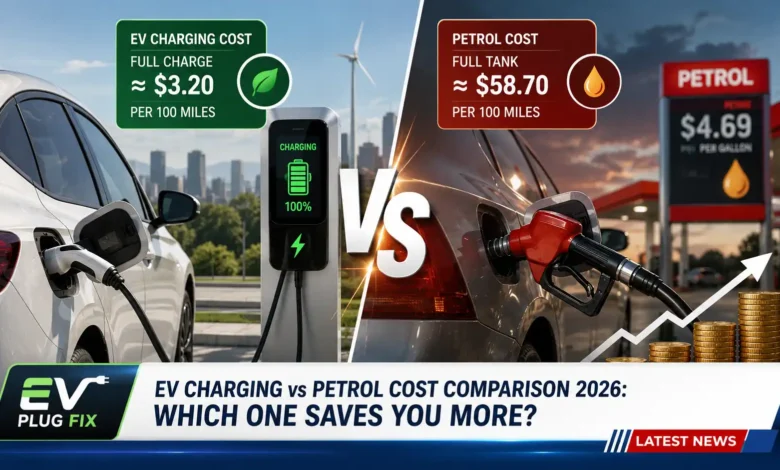
EV charging vs petrol fuelling represents one of the most critical financial decisions for modern drivers, with energy costs reshaping how motorists calculate their monthly transport budgets. As global fuel prices surge and charging infrastructure expands, understanding the true cost difference between electric and internal combustion engine vehicles has never been more important.
Filling up a petrol car remains straightforward—glance at the price sign, pump, and pay. But EV charging presents a far more complex landscape of pricing models, payment methods, and hidden fees that can either deliver substantial savings or create unexpected costs. For beginners and experienced EV owners alike, navigating this terrain requires understanding the economics behind each option.
Expert Insight: The 53% Advantage
Recent data reveals that home EV charging costs roughly €6.50 per 100 kilometers, while petrol vehicles require about €13.25 for the same distance—making home charging 53% cheaper than fueling at the pump.
Understanding EV Charging vs Petrol Pricing Models
Petrol stations operate with refreshing simplicity. You see the price displayed on a large sign, know it includes all taxes and fees, and can pay with cash or card without complication. The transparency is built into the system.
EV charging stations tell a different story. Pricing structures vary dramatically depending on the network operator, location, and even the time of day. Some stations charge per kilowatt-hour (kWh), others per minute, and many combine both with additional session fees or subscription requirements.
How EV Charging Pricing Breaks Down
- Per-kWh pricing: The most transparent model, similar to buying petrol by the liter. You pay for the energy you actually consume.
- Per-minute charging: Often found at older or slower stations. This model can become expensive if your vehicle charges slowly, as you’re paying for time rather than energy.
- Session fees: Fixed charges added to every charging session, regardless of how much energy you take.
- Subscription plans: Some networks offer membership programs that reduce per-session costs but require monthly commitments.
- Idle fees: Penalties for leaving your car plugged in after charging completes, designed to free up chargers for other drivers.
The Hidden Costs: Idle Fees and Service Charges
When examining EV charging vs petrol costs, idle fees represent a financial trap that petrol drivers never encounter. These penalties can accumulate rapidly—one documented case saw a driver charged 438.4 yuan (approximately $65) for just 94 minutes of overstay at a Shanghai supercharger.
Industry experts warn that combining grid-balancing smart charging with idle fees creates a perverse incentive. “EV drivers are penalized which can go over 10 Euro additional penalties per charge session” due to charging taking longer when the grid operator constrains power delivery—exactly the kind of system that should be encouraged, not punished.
Petrol: Simple and Transparent
- Fixed price displayed upfront
- All taxes included
- Cash or card accepted
- No session fees
- No idle penalties
EV Charging: Complex but Savable
- Variable pricing by provider
- Multiple pricing models (kWh, per-minute)
- App-based payments required
- Subscription options available
- Idle fees for overstaying
Home Charging vs Public Charging: The Cost Divide
The biggest factor in the EV charging vs petrol equation is where you charge. 80% of EV owners charge at home, waking up to a “full tank” every morning and saving significantly compared to petrol.
For a typical 300-mile monthly driving pattern, home charging costs approximately $16 at off-peak rates of $0.17/kWh, while public charging stations can run $34 or more before additional fees. That’s more than double the cost, narrowing the advantage over petrol. To maximize your home savings, explore a Home EV Charger Guide that covers installation and optimization tips.
| Charging Option | Pricing Method | Cost per 100km (approx.) | Key Factors |
|---|---|---|---|
| Home Charging (Off-peak) | Utility $/kWh | €6.50 | Time-of-use rates, charging efficiency |
| Home Charging (Peak) | Utility $/kWh | €11-14 | Higher daytime rates |
| Public Level 2 AC | $/kWh or per-hour | €15-22 | Parking rules, idle fees |
| Public DC Fast Charging | $/kWh or per-minute tiers | €25-34 | Peak demand, battery taper |
| Petrol (2026 average) | $/liter | €13.25 | Global oil prices, taxes |
Why EV Charging Feels More Complicated
Part of the friction in EV charging vs petrol comes from payment friction. Unlike petrol stations where you simply tap your card, many EV chargers require downloading an app and creating an account before you can start a session. Charging cards offer an alternative but must be ordered in advance.
Charger screens and interfaces vary dramatically between networks, creating confusion for new users. This complexity is one reason why industry observers argue we should stop comparing EV charging to the petrol station experience.
“We need to stop thinking about EV charging as if it’s just another version of refuelling. Charging becomes something that happens while you’re doing something else, not a separate chore you need to plan your day around.” — Jordan M., EV Industry Analyst
Real-World Savings: What Drivers Actually Pay
For those who can charge at home, the savings are substantial. One Ethiopian EV rider reports spending just 10 birr (about 6 US cents) per day to charge an electric motorcycle, compared to roughly 1,000 birr per day for fuel—a ratio of more than 100 to 1.
European drivers report similar benefits. A full EV driver making the London-Rome trip annually saves approximately 40% on “fuel” costs even when using only fast chargers. The time spent is comparable, but the financial difference is significant.
Important Notice: Public Charging Costs Are Rising
While home charging remains dramatically cheaper than petrol, public rapid charging costs have increased. In some regions, public fast charging now costs 106p per kWh, putting the per-kilometer cost on par with petrol. Always check the price before starting a charging session. Keeping your battery healthy can also improve efficiency—learn more about EV Battery Degradation and how it impacts long-term costs.
Simplifying Your EV Charging Experience
Despite the complexity, several strategies can make EV charging vs petrol comparisons easier and more favorable:
- Install a home charger—it pays for itself in 6-8 months for regular drivers
- Use transparent charging apps like Tap Electric or MobilityPlus that show real-time costs before you plug in
- Sign up for networks you use frequently to access better rates and avoid roaming fees
- Set charging limits in your app to automatically stop at your desired cost or energy level
- Compare charge card pricing—some networks offer significant discounts to their cardholders
The Future of EV Charging vs Petrol
As oil prices remain volatile, the economics increasingly favor EVs. The Allstar AllCosts Report shows that with home charging rates dropping as low as 1.91p per kWh on some off-peak tariffs, the savings over petrol have become impossible to ignore. New EV enquiries have surged 125% year-on-year as consumers recognize these benefits. For those managing multiple vehicles or properties, understanding the Best Rental Property EV Charger options can be a game-changer for cost-effective installations.
However, the charging industry must address its complexity issues. As one industry observer put it: “The goal isn’t to switch from one inconvenience (going to a petrol station) to another (sitting at a rapid charger). The goal is to maximise uptime by charging when the car is parked anyway”. Leveraging Networked EV Chargers can help automate and optimize this process, making it even more seamless.
“Charging should be as easy as ordering a pizza. Whether at home, at work, or on the road, the experience should simply work—intuitive, smart and frictionless.” — Swisscharge
For the millions of EV drivers already making the switch, the EV charging vs petrol comparison increasingly favors electric—provided you understand the pricing landscape, choose the right charging locations, and take advantage of the substantial home-charging savings. The petrol station remains simpler, but the financial mathematics tell a story that’s increasingly difficult to ignore. Exploring Solar EV Charging can further reduce costs by harnessing renewable energy directly from your property.