Mercedes EQS 450 4MATIC Charging Costs, Speed & Home Setup Explained
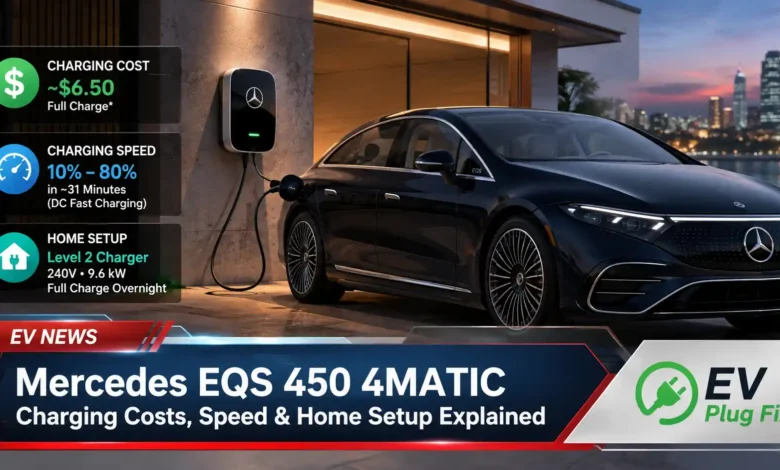
Mercedes EQS 450 4MATIC charging infrastructure is the cornerstone of a seamless ownership experience, yet understanding its nuances is often the biggest hurdle for prospective buyers. While the allure of a 739 km WLTP range is undeniably attractive, the day-to-day reality of keeping this luxury electric vehicle powered involves a more complex interplay of battery capacity, charger types, and energy costs. This deep dive cuts through the marketing jargon to deliver an exhaustive, journalistic examination of what it truly costs and how long it takes to charge the Mercedes EQS 450 4MATIC.
- Core Answer: The Mercedes EQS 450 4MATIC charges from 10% to 80% in approximately 31 minutes on a 200 kW DC fast charger, while a full home charge using a 22 kW AC wallbox takes about 6 hours.
- Key Highlight: Real-world range is closer to 575 km, significantly influenced by weather conditions and driving style.
- Practical Advice: Invest in a 22 kW home wallbox to maximize the vehicle’s onboard AC charging capacity and minimize charging time.
Decoding Real-World Mercedes EQS Charging Speeds
The Mercedes EQS 450 4MATIC’s charging capability is a significant selling point, but understanding the distinction between AC and DC charging speeds is crucial. For daily commuting and routine top-ups, AC charging at home or work is the most common and cost-effective method. When equipped with a 22 kW AC wallbox, the EQS can charge from 0% to 100% in approximately 6 hours, thanks to its capable onboard charger This makes overnight charging a seamless part of the daily routine.However, the speed of AC charging can vary. While the vehicle supports up to 22 kW, many public AC chargers are limited to 11 kW, which would extend a full charge time to around 11 hours and 45 minutes For owners using standard 240V home outlets, charging times are significantly longer, with a full charge potentially taking up to 13 hours This highlights the importance of installing a dedicated high-power wallbox to truly unlock the EQS’s full home-charging potential. For those looking to understand how home charging times compare across different EV models, reviewing data on Renault ZOE home wallbox charging times provides an interesting contrast in capabilities.
The DC Fast Charging Experience: 31 Minutes to 80%
For long-distance travel, DC fast charging is where the Mercedes EQS 450 4MATIC truly shines. The vehicle is engineered to accept up to 200 kW of DC power, allowing for incredibly rapid top-ups. The most critical metric for road-trippers is the time required to charge from 10% to 80%, and the EQS performs admirably here. Estimates and tests place this time at approximately 31 to 32 minutes on a high-powered 200 kW DC chargerThis translates to adding roughly 233 miles of range in just over 30 minutes This convenience allows drivers to take a short break for coffee and rest while the vehicle replenishes its energy. It’s worth noting that charging power tapers off after reaching 80% State of Charge to protect battery health, so the strategy for road trips is to plan stops around charging from a low percentage up to 80% for optimal efficiency. For those interested in the broader landscape of rapid charging, exploring the current benchmarks for DC fast charging station speeds reveals how the EQS stacks up against the latest industry advancements.
Optimizing Home Charging: The 22 kW Wallbox Advantage
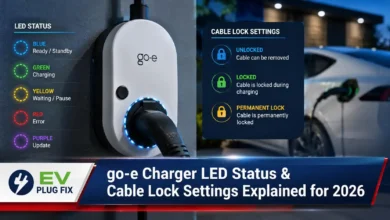
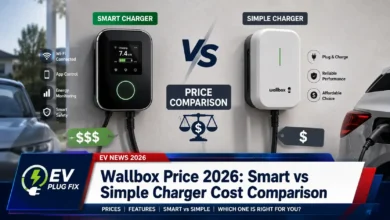
For the majority of EQS owners, the home charging setup will define their daily experience. The vehicle’s support for 11 kW and 22 kW 3-phase AC charging is a major advantage, but it requires a compatible wallbox and a home electrical supply capable of handling such power A 22 kW charger, such as the go-e Charger Gemini or the Mercedes-Benz Flexible Ladesystem Pro, can fully charge the vehicle’s 118 kWh battery in roughly 6 hoursWhen choosing a home charging solution, owners should consider the vehicle’s Type 2 charging port and the power output of the wallbox. While the EQS’s maximum charge rate is 11 kW, a 22 kW cable is often recommended as it is backward compatible and will enable charging on 22, 11, and 7 kW chargers, providing more flexibility This investment not only future-proofs the home setup but also ensures the vehicle can take full advantage of any high-power AC chargers encountered away from home.
The True Cost of Charging Your EQS 450
The cost to charge a Mercedes EQS 450 4MATIC varies considerably depending on the charging location. At home, costs are tied to the local electricity tariff. A full charge on a typical residential plan might cost significantly less than public charging. For example, based on an average tariff, a full home charge could be around £23.96 if the vehicle has a 108.4 kWh usable battery This cost is dramatically lower than using public rapid chargers, which can be a primary reason for the high total cost of EV ownership if public charging is the only option.Public DC fast-charging networks, while quicker, come at a premium. They are subject to pricing models that can be based on time or energy (kWh), typically with higher per-kWh rates than home electricity. Using a public rapid charger from 10% to 80% would cost more than a full home charge, but the added speed is a trade-off for the convenience on long trips. Ultimately, a home wallbox is the most economical way to fuel an EQS on a daily basis.
Troubleshooting Common Mercedes EQS Charging Issues
Even with premium engineering, issues can arise during the charging process. A common point of confusion for new owners is locating and operating the charging port, which is situated on the rear right side of the vehicle To stop a charging session, owners can navigate to the “Charging” or “Energy” menu in the MBUX system and select “Stop Charging,” which will unlock the cableAnother key feature is the battery preconditioning, which can be controlled through the MBUX system. This function prepares the battery for an upcoming DC fast-charging session by bringing it to the optimal temperature, ensuring maximum charging speeds. If an EQS is charging slower than expected, it could be due to a cold battery, a high State of Charge, or a power limitation from the charger itself. For public charging, many networks now support the “Plug and Charge” feature, which allows for authentication and billing without the need for an app or RFID card, simplifying the process for compatible vehiclesUnderstanding the nuances of battery management is crucial for long-term performance; reviewing best practices for EV battery overcharging and over-discharging prevention is essential for any owner looking to maximize their vehicle’s lifespan and maintain optimal charging efficiency.Was your Mercedes EQS not charging to the expected rate? Check the battery’s State of Charge, as speeds taper after 80%. Also, ensure battery preconditioning is active when navigating to a DC fast charger via the MBUX navigation system for optimal performance.
Mercedes EQS Range Efficiency and Battery Tech
The Mercedes EQS 450 4MATIC’s impressive range is a product of advanced battery technology and aerodynamic design. The 118 kWh battery pack, which saw a capacity increase for the 2025 model year, is a key factor This allowed the 2025 model to match the 400-mile range achieved in highway tests by its lighter, rear-wheel-drive predecessorHowever, real-world efficiency, such as the 4.32 km/kWh achieved in a grueling 2,300 km journey across extreme climates, demonstrates the vehicle’s capability This particular trip, which spanned a 51.2°C temperature swing, resulted in a real-world range of over 600 km on a full charge This rigorous real-world data underscores that while the official numbers are a good starting point, the EQS’s range is robust and reliable under various conditions. For drivers concerned about the disparity between official and actual figures, a closer examination of WLTP range testing and real-world EV range differences provides valuable context for setting accurate expectations.