EV Battery Overcharging and Over-Discharging: Prevention, Protection, and Best Practices for Maximum Lifespan
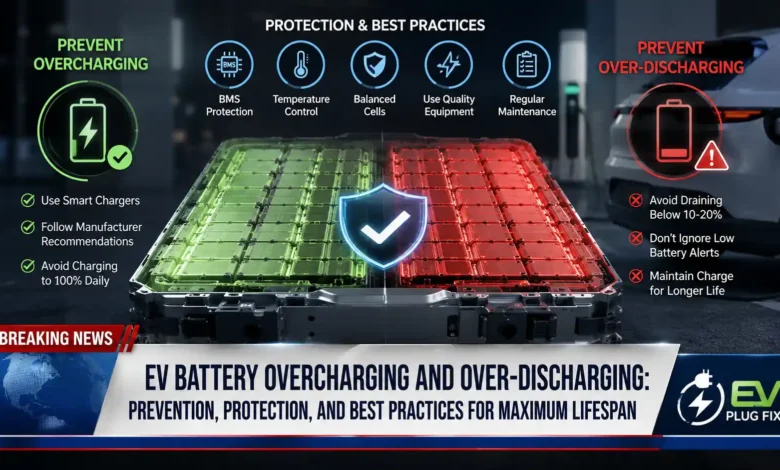
Electric vehicle battery overcharging and over-discharging represent two of the most significant yet preventable threats to modern EV powertrain longevity. While lithium-ion technology has revolutionized sustainable transportation, the sophisticated electrochemical systems powering today’s electric vehicles remain vulnerable to improper charging practices that can accelerate degradation, reduce usable range, and ultimately lead to premature battery replacement. Understanding the mechanisms behind battery damage and implementing proven prevention strategies are essential for protecting what typically constitutes 30% to 40% of an EV’s total value. With average replacement costs ranging from $5,000 to over $20,000 depending on vehicle model, mastering proper charging techniques isn’t merely technical advice—it’s a critical financial imperative for every EV owner.
- Core Answer: Prevent EV battery overcharging by limiting daily charges to 80% using smart charger settings, and avoid over-discharging by plugging in when the state of charge drops below 20%.
- Key Highlight: Maintaining a battery at 100% state of charge can degrade capacity twice as fast as keeping it at 80%, with annual losses potentially reaching 2% instead of 0.5%.
- Practical Advice: Invest in a Wi-Fi-enabled smart EV charger with app control to set custom charge limits, schedule off-peak charging, and monitor battery health in real-time.
Modern EV batteries are sophisticated systems incorporating hundreds of individual cells, each requiring precise voltage and temperature management to ensure optimal performance over hundreds of thousands of miles. The lithium-ion chemistry that powers these vehicles operates through the movement of ions between cathode and anode, a process that naturally generates stress with every charge cycle. However, when a battery is overcharged, the voltage climbs beyond design specifications, forcing ions to move inefficiently and causing oxygen release at the cathode that creates instability and excessive heat. Simultaneously, excess ions plate onto the anode surface, forming lithium metal deposits through a process known as lithium plating, which creates internal resistance that permanently blocks ion movement and reduces future capacity. The damage extends further as electrolyte decomposition occurs, with the liquid medium between electrodes breaking down to produce gas and further compromise conductivity.
Research indicates that the state of charge plays a dramatically outsized role in determining battery degradation rates. Studies have demonstrated that maintaining a battery at 100% state of charge can degrade capacity twice as fast as keeping it at 80%, with annual losses potentially reaching 2% instead of the 0.5% experienced by properly managed batteries. This degradation manifests not only as reduced range but also as diminished charging acceptance, requiring longer charging sessions to achieve the same energy transfer. The Department of Energy emphasizes that thermal management and charging habits directly influence battery longevity, with proper practices potentially doubling the usable life of traction batteries.
Over-discharging presents an equally serious threat that often receives less attention from EV owners. When the state of charge falls below 10% to 20%, the anode voltage can drop so dramatically that the copper current collector begins dissolving into the electrolyte. This process is fundamentally irreversible—even if the battery is later recharged, the dissolved copper does not reconstitute, resulting in permanently reduced capacity. Deep discharges also place tremendous stress on the cathode structure, creating lattice distortion that makes subsequent charging cycles progressively less efficient. The consequences of habitual over-discharging are severe, with a battery repeatedly discharged to near zero potentially losing 5% to 10% of its capacity within just a few months, compared to years of reliable service with proper management.
The Critical Role of Smart EV Chargers in Battery Protection
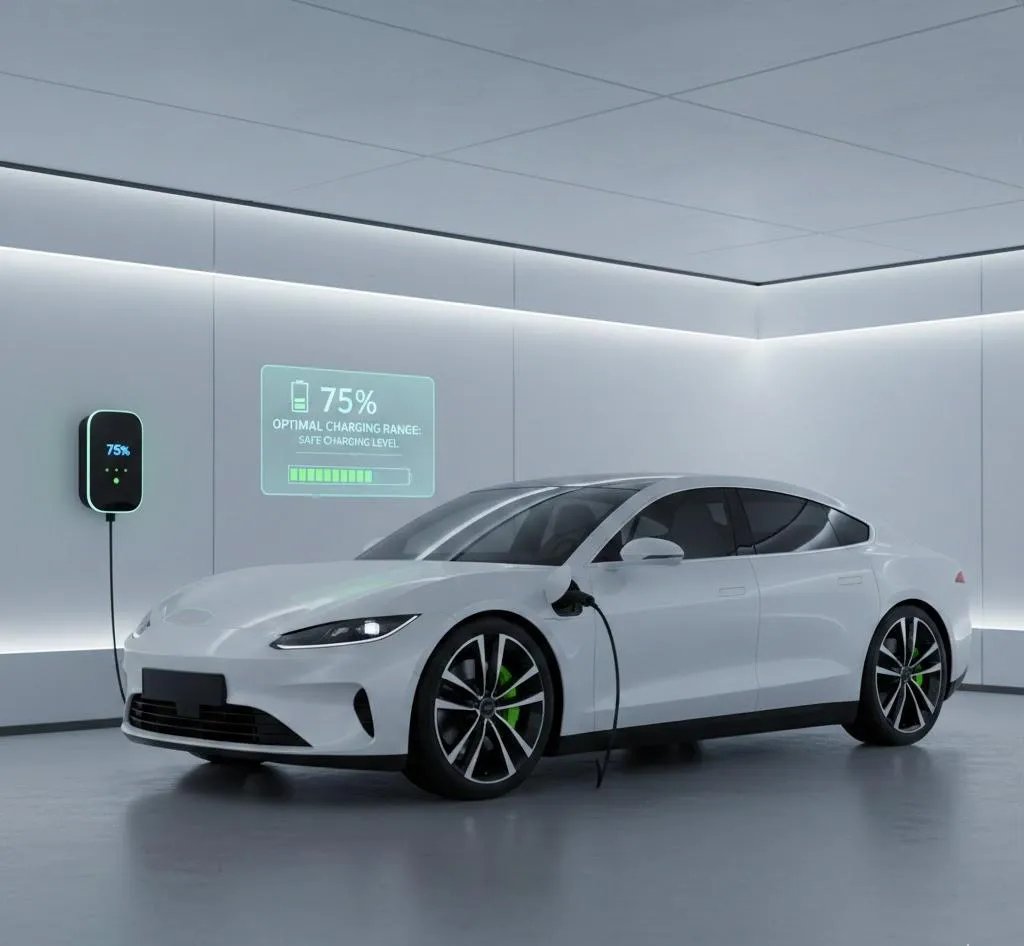
Modern smart EV chargers have evolved far beyond simple power delivery devices into sophisticated battery management tools that integrate seamlessly with vehicle systems. These advanced charging solutions provide multiple layers of protection against both overcharging and over-discharging through real-time communication with the vehicle’s Battery Management System (BMS). The BMS maintains continuous data on individual cell voltages, temperatures, and state of charge, sharing this information with the charger to enable proactive power management. A quality smart charger receives this data and can automatically halt power delivery when the battery reaches a user-defined limit, typically 80% to 90% for daily driving applications.
This communication-enabled protection represents a fundamental departure from older charging systems that simply supplied power until the BMS stopped accepting it. By controlling the charging endpoint proactively rather than reactively, modern EV chargers substantially reduce the stress on battery chemistry. The integration of app-based controls further enhances this protection, allowing owners to set custom state of charge targets, schedule charging sessions, and receive real-time alerts about charging progress and anomalies. For those seeking to understand the full scope of advanced charging capabilities, exploring specific EV smart charger settings and indicators provides valuable operational insights. Premium charging solutions from manufacturers like Tesla and others incorporate Wi-Fi connectivity that can survive network outages through automated reconnection protocols, ensuring charging sessions continue safely even during communications interruptions.
Temperature monitoring represents another critical feature of advanced EV chargers that directly prevents battery damage. Using embedded temperature probes that measure both battery pack and charger enclosure conditions, these systems can throttle charging speed or pause entirely if temperatures approach unsafe levels. This protection is especially valuable in extreme climates where thermal management becomes challenging. Some high-end chargers even adjust their charging profiles dynamically based on ambient temperature readings and predicted weather conditions, effectively pre-cooling the battery or adjusting charge rates before thermal stress develops. The comprehensive protection features extend to voltage stability, with quality chargers incorporating adjustable leakage protection and voltage-difference settings that stabilize fluctuating input power, preventing voltage spikes that could trigger overcharge-like conditions.
Optimal Charging Practices for Daily EV Battery Maintenance
The most effective strategy for preventing overcharging is elegantly simple yet requires consistent discipline: charge to 80% for routine daily use. This target represents the optimal balance between range availability and battery longevity, operating the battery in its “sweet spot” where electrochemical stress is minimal. At 80% state of charge, most drivers have sufficient range for daily commuting needs, and the battery experiences dramatically less degradation than when maintained at full capacity. Charging to 90% or 100% should be reserved exclusively for long trips requiring maximum range, with the vehicle driven immediately after reaching full charge to avoid prolonged high-voltage storage.
Scheduled charging through your EV charger creates substantial additional protection by enabling precise control over when and how the battery receives energy. Programming the charger to commence during off-peak hours—typically late evening or early morning—and set to stop at the desired state of charge target ensures the battery reaches the optimal charge level just before departure. This approach minimizes time spent at high states of charge, further reducing degradation. The best EV chargers with comprehensive app integration make this process effortless, allowing adjustments from anywhere using smartphone applications. For daily use, establishing a routine of plugging in when the state of charge reaches 20% to 30% and charging to 80% distributes stress evenly across the battery’s lifespan, analogous to how moderate daily exercise is healthier than sporadic intense workouts.
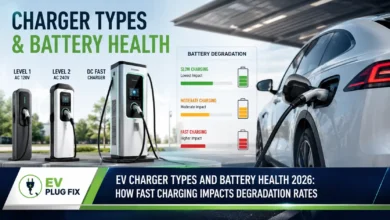
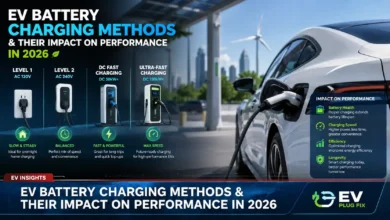
Understanding the impact of different charger types is essential for long-term battery health. Level 1 chargers (120V household outlets) are slow but extremely gentle, producing minimal heat that could accelerate degradation. Level 2 chargers (240V) represent the ideal balance for most owners—substantially faster than Level 1 while producing less thermal stress than DC fast charging. The sweet spot lies in selecting Level 2 chargers with configurable amperage, typically 32A to 48A, allowing owners to charge at lower rates when time permits. DC fast chargers, while invaluable for long-distance travel, should be limited to occasional use. Relying on DC fast charging for daily top-ups accelerates degradation similarly to chronic overcharging, as the high current generates significant heat and forces rapid ionic movement that stresses the battery’s internal structure.
Prevention Strategies: Avoiding Over-Discharging Damage
While overcharging tends to dominate discussions about battery protection, over-discharging is equally damaging and often more overlooked by EV owners. The primary strategy is straightforward: never allow the state of charge to drop below 20% during normal use. Maintaining the battery within the 20% to 80% operating envelope keeps the electrochemical system in its optimal zone where degradation is minimal. Most modern EVs include low-state-of-charge warnings at approximately 15% to 10%, alerting drivers to charge soon. However, relying on warnings represents a reactive rather than proactive approach. Instead, establish a personal habit of plugging in whenever the battery drops to about 25% to 30%, well above danger zones.
Vehicles left unused for extended periods face unique risks that require special attention. If you won’t drive for more than a few weeks, charge to and maintain the battery at approximately 50% state of charge. This “storage charge” balances the risks of both overcharge and deep discharge during idle months, as lithium-ion batteries experience minimal stress at this midpoint. Some smart EV chargers with advanced connectivity can be programmed to maintain this level automatically, periodically topping up if needed—a feature particularly valuable for vehicles stored seasonally or for second cars with limited daily use. The 50% storage recommendation applies regardless of battery chemistry, including lithium iron phosphate batteries, which may require occasional 100% charges for cell balancing purposes.
Cold weather management requires special attention to over-discharging risks. In freezing conditions, battery chemistry slows dramatically, making rapid discharge more stressful on the cells. Additionally, range decreases significantly in cold weather, tempting drivers to push batteries lower than advisable to reach charging stations. Anticipate this by charging more frequently in winter months, aiming to keep the state of charge above 30% rather than the 20% target used in moderate conditions. The combination of temperature effects and reduced regenerative braking efficiency in cold weather means batteries experience both increased discharge rates and reduced ability to recover energy, making proactive charging essential.
Advanced EV Charger Features for Long-Term Protection
Beyond basic smart controls, the most sophisticated EV chargers incorporate features that appear as luxuries but provide substantial long-term value. Detailed charging logs export comprehensive data showing state of charge targets, charging duration, energy delivered, and efficiency metrics. Reviewing these logs periodically enables owners to identify patterns—perhaps discovering that they’re frequently charging to 95% when 80% would suffice, or leaving the vehicle plugged in at full charge overnight. These insights facilitate behavioral adjustments that compound into years of extended battery life. Some premium chargers integrate with weather forecasting services, automatically adjusting charging schedules based on predicted temperatures.
Firmware updates for EV chargers continually refine algorithms based on field data and advancing battery science. Newer firmware often includes improved thermal management protocols, better state of charge communication standards, and enhanced safety features. Maintaining up-to-date charger firmware is as important as keeping vehicle software current, as these updates frequently address emerging battery protection challenges and optimize charging profiles for the latest battery chemistries. For owners installing new EV chargers, selecting models with sufficient capacity for future vehicle upgrades is prudent. A charger rated for higher amperage than currently necessary provides headroom for larger battery vehicles and enables slower, gentler charging of today’s batteries—a 48-amp Level 2 charger can charge at lower amperage if desired, while a 30-amp charger at full load provides no such flexibility.
The physical installation environment significantly impacts charger performance and battery protection. Smart chargers should ideally be mounted in locations that provide adequate ventilation and protection from extreme temperatures, as the charger’s own electronics require proper thermal management to function correctly. Units with IP55 to IP65 ratings offer protection against water jets and dust ingress, making them suitable for outdoor installation in most climates. When selecting a charger for coastal or tropical environments, ensuring appropriate corrosion resistance and sealed enclosures is essential for maintaining reliable communication with the vehicle’s BMS over the equipment’s lifespan.
Seasonal and Environmental Charging Considerations
Climate significantly impacts battery longevity, and charging practices must adapt accordingly to maintain optimal protection. In hot regions, charge during cooler hours—late evening through early morning—using your EV charger’s scheduling features to minimize thermal stress. Park in shade during the day to reduce baseline battery temperature, and when possible, precondition the vehicle using the EV’s built-in climate controls before charging. Bringing the battery to an ideal temperature before connecting the charger maximizes efficiency and minimizes thermal stress that accelerates degradation. Experts advise against charging immediately after extended sun exposure, as elevated battery temperatures combined with charging heat can push cells beyond safe operating ranges.
In cold climates, the challenge inverts dramatically. Batteries need warmth to charge efficiently, and most EVs include battery heaters that activate during cold charging sessions. However, this heating consumes energy, reducing charging efficiency. To minimize this impact, precondition the battery using the EV’s climate system if available—many vehicles can warm the battery while plugged in, drawing power from the charger’s circuit rather than the battery itself. This approach is far more efficient than allowing the charger to fight against cold chemistry. The National Renewable Energy Laboratory research indicates that proper cold-weather preconditioning can reduce charging time by up to 25% while simultaneously protecting battery health.
Humidity in coastal or tropical regions can stress charger electronics, potentially compromising their battery protection functions. High-quality EV chargers designed for harsh environments include sealed enclosures and corrosion-resistant components. When selecting a charger for such locations, verify that it has appropriate environmental ratings—IP65 or higher for protection against water jets and dust, and IK10 for impact resistance where vandalism or accidental damage is possible. These ratings ensure the charger’s sophisticated electronics and communication systems remain functional, maintaining uninterrupted battery protection.
Troubleshooting Common EV Battery Charging Issues
Even with proper charging habits and equipment, EV owners occasionally encounter issues that can threaten battery health. Understanding how to identify and address these problems is essential for long-term battery protection. One common issue involves chargers that fail to communicate properly with the vehicle’s BMS, potentially leading to overcharging if the charger continues delivering power beyond the set limit. Symptoms include charging sessions that don’t stop at the programmed state of charge or charger displays that don’t match the vehicle’s indicated charge level. In such cases, immediately disconnect the charger and verify that both the vehicle and charger software are updated to the latest versions.
Another frequent concern involves chargers that unexpectedly interrupt charging sessions, potentially leaving batteries at dangerously low states of charge. This can result from grid voltage fluctuations, overheating protection activation, or Wi-Fi connectivity issues that cause the charger to lose communication with the vehicle. Regular inspection of charging cables and connectors for wear, corrosion, or damage helps prevent charging interruptions that could lead to inadvertent deep discharge. Damaged connectors can create resistance that generates heat and causes uneven charging similar to over-discharge stress, accelerating battery degradation.
For owners using standard outlet timers or basic chargers without smart features, the risk of overcharging is significantly higher. These systems lack the sophisticated communication capabilities needed to respond to the vehicle’s actual state of charge, potentially exposing the battery to extended high-voltage periods. If upgrading to a smart charger isn’t immediately possible, manually unplugging the charger once the desired state of charge is reached offers some protection, though it requires careful attention and discipline. Many EV owners find that the relatively modest investment in smart charger technology pays for itself through extended battery life and deferred replacement costs.
Essential Questions & Expert Answers About EV Battery Protection
What should I do if my EV charger doesn't have smart features?
Is DC fast charging safe for regular use?
Can I recover a battery that has been repeatedly overcharged?
How do I know if my EV charger is functioning correctly?
What's the 80% rule and why does it matter for EV batteries?
Conclusion: Protecting Your EV Battery Investment
Overcharging and over-discharging represent entirely avoidable threats to EV battery longevity that can dramatically impact both vehicle range and resale value. By understanding the electrochemistry behind battery degradation and implementing disciplined charging practices—particularly maintaining the 20% to 80% daily charging window—EV owners can extend battery life well beyond 10 years or 200,000 miles. The investment in quality smart EV charger technology with app control, temperature monitoring, and real-time state-of-charge management pays dividends through years of reliable transportation and deferred battery replacement costs. With proper management informed by the latest battery science, modern EV batteries will outlast the vehicles themselves, making electric transportation not only environmentally responsible but economically sound for owners who prioritize battery health from day one.