Thermal Management in High-Power EV Charging Stations: Essential 2026 Guide for Operators
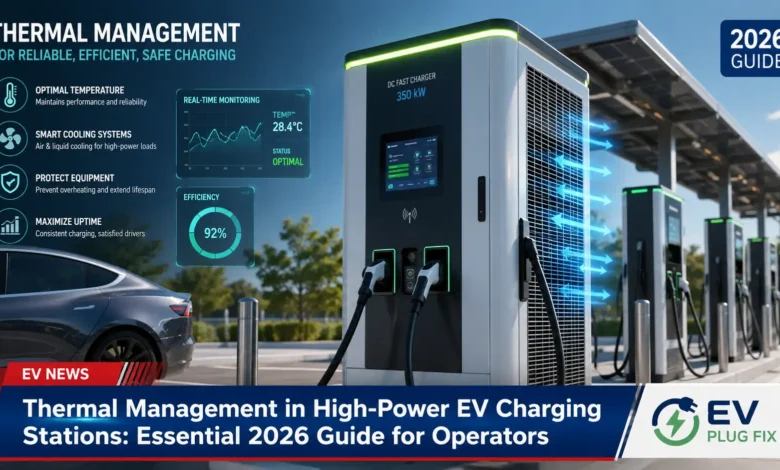
Thermal management in high-power EV charging stations determines whether your infrastructure delivers consistent fast charging or struggles with frustrating power reductions and unexpected downtime. As charging speeds push beyond 150 kW in 2026, the heat generated during each session has become the single most critical factor limiting station performance, equipment lifespan, and operator profitability. Without effective cooling strategies, even the most advanced high-power chargers will automatically reduce output to protect internal components, leaving drivers waiting longer and cutting directly into your revenue. At Parwatt New Energy, where we design and supply high-power DC chargers and power modules for demanding commercial applications, we’ve seen firsthand how superior thermal design separates reliable charging networks from those plagued by constant service issues.
High-power EV charging stations convert and deliver massive amounts of electrical energy in short timeframes. This conversion process generates intense heat within power electronics, cables, and connectors. When temperatures climb beyond safe operating thresholds, the system’s protective logic intervenes, reducing charging power to prevent catastrophic component failure. This automatic derating protects hardware but delivers a poor user experience and erodes station economics. In 2026, with average charging power continuing its upward trajectory, understanding and implementing robust thermal management has become a core competency for successful charging infrastructure operators.
The Real Cost of Overheating in High-Power EV Charging Stations
Overheating forces high-power EV chargers to reduce output, accelerates component aging, and introduces serious safety risks. Stations operating without adequate cooling suffer lower utilization rates, higher maintenance expenses, and frustrated customers who may never return. Let’s examine the practical impact of heat on station performance through real-world examples and hard data.
I recall analyzing performance logs from a busy public fast-charging site where several 150 kW+ chargers consistently underperformed during peak afternoon hours. On warm days, these units repeatedly dropped to below 100 kW after just 15-20 minutes of continuous operation. The operator initially blamed grid limitations or equipment faults. After thorough investigation, we discovered that the cooling systems simply could not keep pace with sustained sessions during elevated ambient temperatures. The result: longer wait times, reduced daily throughput, and a flood of negative driver reviews that damaged the network’s reputation.
The thermal challenge stems from basic physics. Power electronics generate heat as they convert AC to DC and regulate high currents. Semiconductors, transformers, and capacitors all produce significant thermal energy during operation. Without sufficient cooling, component temperatures rise rapidly. Every charger includes thermal protection limits. When temperatures approach these preset thresholds, the system automatically reduces output power. This derating protects the hardware but forces drivers to wait longer for their vehicles to reach target charge levels.
Heat also imposes a hidden cost through accelerated wear. Repeated high-temperature cycles stress capacitors, transformers, and connectors far beyond normal operating conditions. Components age faster, often failing well before their rated service life. Stations then face unplanned replacements, extended downtime, and significantly higher lifetime costs than originally projected. In extreme cases, overheating can degrade insulation or cause connectors to melt, creating safety hazards that demand immediate shutdown. For a deeper understanding of charging speed factors, explore our comprehensive guide on EV Charging Time and how thermal dynamics affect overall session duration.
| Problem | What Happens | Impact on Station Operations | Impact on EV Drivers |
|---|---|---|---|
| Power derating | Charger automatically reduces output to protect components | Lower revenue per session, reduced daily throughput | Longer charging wait times, schedule disruption |
| Component stress | Accelerated aging of power electronics and connectors | Higher maintenance costs, earlier equipment replacement | Reduced charger availability and reliability |
| Unplanned downtime | System shuts down to prevent thermal damage | Lost revenue, service complaints, brand damage | Station appears unavailable or unreliable |
| Reduced cable life | Heat accelerates wear on cables and connectors | Frequent cable replacements, increased operating costs | Potential safety concerns and convenience issues |
| Inconsistent performance | Charging power varies significantly with temperature | Harder to predict session completion times | Driver frustration and loss of trust |
These patterns appear consistently across high-power charging sites. At Parwatt, we engineer our FES-D30 DC EV Charger and higher-power solutions with thermal performance as a primary design consideration. However, the surrounding station design and overall cooling strategy ultimately determine whether the hardware can deliver its full rated capability under real-world operating conditions.
Fleet depots running multiple high-power sessions back-to-back face particular pressure. Continuous operation provides minimal recovery time for components to cool between sessions. Public charging hubs in hot climates experience similar challenges during summer peaks. In both scenarios, thermal management directly impacts daily throughput and operating economics. As charging power continues to rise through 2026, these heat-related issues become increasingly expensive. Operators who treat cooling as an afterthought often discover the true cost only after performance problems manifest.
Debunking Common Thermal Management Myths in EV Charging
Despite the growing importance of thermal management, many operators continue to hold misconceptions that lead to under-designed stations and disappointing performance. These myths persist because lower-power charging systems often function acceptably with minimal cooling, creating false expectations for high-power infrastructure.
One persistent myth suggests that natural convection or basic fans can adequately handle the heat from modern high-power chargers. At lower power levels, this may hold true. At 150 kW and above, the heat load increases dramatically. Simple air cooling often cannot remove heat quickly enough during continuous sessions, especially when ambient temperatures rise. The result is inevitable derating and slower charging.
Another common misconception holds that thermal problems only matter in hot climates. This thinking overlooks the fundamental reality that chargers generate heat through the power conversion process itself. Even in cooler regions, poorly cooled systems will derate under sustained load. While ambient temperature affects the thermal margin, the primary heat source remains the charger’s internal electronics. A station in a mild climate can still experience significant derating during consecutive high-power sessions.
Some buyers focus almost exclusively on initial purchase price, viewing advanced cooling as an unnecessary expense. This short-sighted approach often leads to higher total ownership costs. Operators who skip advanced liquid cooling or adequate air systems later pay through reduced charging speeds, more frequent repairs, and shorter equipment life. The total cost of ownership almost always favors better thermal design. To make informed decisions, review our detailed Choose the Right EV Charger guide that evaluates long-term operational costs alongside initial investment.
A fourth misconception treats thermal management as purely a hardware concern. In reality, monitoring and control software play equally important roles. Systems that adjust fan speeds, pump rates, or power limits based on real-time temperature data perform significantly better than static designs with fixed cooling output.
| Misconception | Reality in 2026 | Consequences of the Myth | Better Understanding |
|---|---|---|---|
| Simple air cooling is sufficient | High-power systems often require liquid or advanced forced air | Frequent derating and slower charging sessions | Match cooling capacity to actual power level |
| Only hot climates need thermal management | Heat is generated internally by the charger itself | Problems appear even in moderate weather | Design for continuous load, not just ambient conditions |
| Advanced cooling is pure cost | Better thermal design improves uptime and equipment life | Higher long-term operating expenses | Evaluate based on total cost of ownership |
| Thermal issues are uncommon | Sustained high-power use makes overheating frequent | Unexpected performance degradation | Treat thermal design as essential, not optional |
| Hardware alone solves thermal challenges | Monitoring and control enhance cooling effectiveness | Static systems consistently underperform | Combine cooling hardware with intelligent software |
I have personally reviewed stations that appeared well-designed on paper but struggled in real operation because thermal capacity was underestimated. Addressing these misconceptions early prevents costly outcomes. The industry increasingly treats robust thermal management as standard practice in 2026, recognizing that reliable cooling directly supports business success.
Thermal Management Technologies Powering High-Performance EV Chargers
Modern high-power EV chargers employ several proven technologies to remove heat from critical components. These include liquid cooling systems, advanced forced air solutions, heat exchangers, and smart monitoring platforms. Understanding each method helps operators select and maintain effective solutions for their specific needs.
Liquid cooling has emerged as the preferred solution for chargers requiring sustained high-power output. This technology circulates a specialized coolant through cold plates or channels attached to power modules and other heat-generating components. The heated liquid then passes through a radiator or heat exchanger where fans or ambient air dissipate the thermal energy. Liquid cooling offers exceptional heat removal capacity for dense, high-power electronics because fluids transport more heat than air for a given volume. Systems employing this approach can maintain full-rated power for extended sessions even in challenging ambient conditions.
Forced air cooling uses fans to move large volumes of air across heat sinks attached to power components. This approach is simpler and typically less expensive than liquid cooling. For moderate power levels or well-ventilated outdoor installations, forced air can work effectively. However, at the highest power levels or in hot environments, air cooling may reach its thermal limits during continuous operation. The performance difference between air and liquid cooling becomes most apparent during back-to-back high-power sessions on warm days. Understanding the fundamental differences between AC vs DC Charging helps clarify why DC fast charging generates significantly more heat that demands advanced cooling solutions.
Heat exchangers transfer thermal energy between the internal cooling circuit and the outside environment. These devices allow sealed cabinets to stay protected from dust and moisture while still rejecting heat efficiently. Many modern charging stations combine liquid cooling loops with high-performance heat exchangers to achieve both protection and effective thermal management.
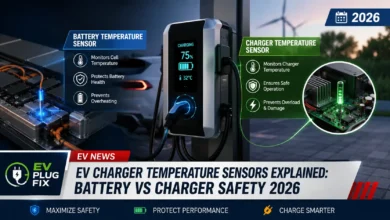
Smart monitoring completes the thermal solution by providing real-time visibility and control. Temperature sensors placed at critical points throughout the system feed data to the control platform. The software continuously reads these sensors and adjusts fan speeds, pump rates, or even charging power if temperatures approach critical thresholds. Advanced systems can predict thermal stress patterns and take preventive action before issues develop. Modern EV Charging Apps increasingly integrate these monitoring capabilities, providing operators with remote visibility into thermal conditions across their entire network.
| Technology | Heat Removal Capacity | Typical Use Case | Key Advantage | Primary Limitation |
|---|---|---|---|---|
| Liquid cooling | High | 150 kW+ continuous operation | Sustains high power without derating | Higher complexity and installation cost |
| Forced air cooling | Moderate to high | Medium-power or well-ventilated sites | Simpler design and lower upfront cost | Less effective in hot ambient conditions |
| Heat exchangers | Supports sealed systems | Outdoor or dusty environments | Protects internal components from contaminants | Depends on effective external airflow |
| Smart monitoring | Enhances any cooling method | All modern high-power stations | Dynamic adjustment and early warning capability | Requires proper sensor placement and software integration |
In a typical high-power station, power modules generate heat during AC to DC conversion and current regulation. Liquid or air systems remove this thermal energy from the modules. Sensors track temperatures across multiple points continuously. The control system adjusts cooling output based on current load and temperature readings. If temperatures rise, the system can increase cooling effort or temporarily reduce power to remain within safe operating limits.
I have observed well-designed liquid-cooled stations maintain near-full power for extended sessions even on warm days. Conversely, stations with marginal air cooling often show clear power curves that drop significantly as temperatures climb. The difference in driver experience and station throughput is substantial and directly affects revenue potential. In 2026, leading manufacturers increasingly combine liquid cooling with intelligent controls to deliver higher average charging speeds and longer equipment life.
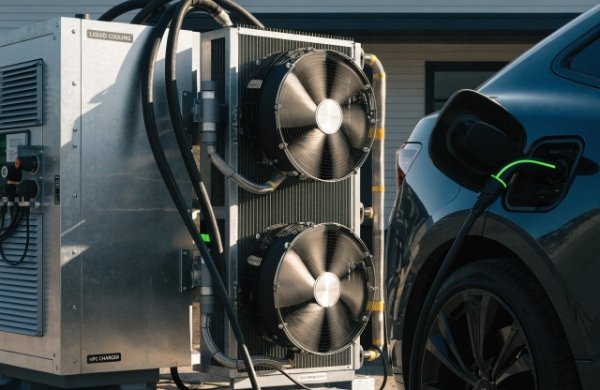
Liquid cooling technology outpaces forced air systems for sustained high-power EV charging, delivering superior heat removal and charger reliability.
2026 Best Practices for EV Charging Thermal Management
Effective thermal management requires matching cooling capacity to expected power levels and duty cycles. It also demands proper installation, ongoing monitoring, and regular maintenance. Following proven practices helps stations deliver consistent performance and lower lifetime costs in the competitive 2026 charging landscape.
For chargers rated 150 kW and above, liquid cooling has become the preferred solution for continuous or high-utilization applications. It provides the thermal capacity needed to sustain rated power under demanding conditions. For lower power levels or sites with strong natural ventilation, high-quality forced air systems can still perform effectively when properly sized for the expected load profile.
Always design for the worst expected conditions, not average or best-case scenarios. Consider peak ambient temperatures, the length of continuous sessions, and the possibility of multiple chargers operating simultaneously within a shared cabinet or enclosure. Undersizing cooling capacity leads to frequent derating and disappointing performance during critical peak periods.
Install temperature monitoring at critical points throughout the system and ensure the control software can act on this data effectively. Simple threshold alarms provide basic warning. More advanced systems that adjust cooling proactively based on real-time thermal data deliver significantly better operational results.
Maintain the cooling system with the same diligence applied to the power electronics. Clean or replace filters regularly, check coolant levels and quality, inspect fans and pumps for wear, and verify sensor calibration periodically. A neglected cooling system will eventually limit the performance of an otherwise healthy charger. Understanding EV Cable Management Systems helps operators maintain proper cable routing that supports optimal airflow and cooling efficiency around the charging station.
| Practice Area | Recommendation | Why This Matters | Expected Outcome |
|---|---|---|---|
| Cooling capacity | Design for maximum sustained power, not average | Prevents unexpected derating under heavy load | Stable, predictable charging speeds |
| Technology choice | Select liquid cooling for 150 kW+ continuous duty | Superior heat removal capacity | Better uptime and consistent performance |
| Monitoring system | Deploy multi-point sensors with active control | Early detection and rapid response capability | Fewer thermal events and service interruptions |
| Installation quality | Ensure proper airflow and coolant routing | Maximizes cooling effectiveness | Full system capability utilization |
| Maintenance regimen | Regular cleaning, inspection, and service | Maintains cooling at original design capacity | Extended component life and lower costs |
At Parwatt, we design our power modules and complete charging solutions for seamless integration with strong thermal systems. Our experience across numerous installations confirms that stations following these best practices deliver more consistent performance and lower total ownership costs than those that overlook thermal considerations.
I have reviewed multiple sites that invested in robust thermal design from the beginning. They consistently report fewer power reductions, longer intervals between major component replacements, and significantly higher driver satisfaction ratings. In 2026, these competitive advantages become increasingly valuable as charging networks compete for business and users expect reliable high-speed service on every visit.
Additional practical measures include allowing adequate space for airflow around cabinets, avoiding direct sun exposure where possible, and planning for future power increases so the thermal system has built-in margin. These details improve long-term flexibility and protect the investment against changing demands.
Taking Action: Optimize Your Charging Station Thermal Management Today
Optimizing thermal management begins with an honest assessment of current station performance and expected loads. From this evaluation, operators can select appropriate cooling technologies and implement monitoring and maintenance routines. Taking these steps protects both equipment investment and revenue potential.
Start by reviewing historical session data. Look for power reduction patterns that correlate with high ambient temperatures or long continuous sessions. These patterns frequently reveal thermal limitations that require attention. Understanding your station’s actual derating behavior provides the foundation for effective improvement.
Inspect existing cooling hardware thoroughly. Check fan condition, filter cleanliness, coolant levels in liquid systems, and sensor functionality. Simple maintenance issues often reduce cooling effectiveness significantly. Addressing these basic concerns can restore lost performance without major capital expenditure.
Compare the cooling capacity of current equipment against your maximum sustained power requirements. If the margin is small, plan upgrades before performance problems become frequent and costly. Proactive investment in cooling capacity typically costs far less than the cumulative revenue loss from persistent derating.
When selecting new chargers or power modules, ask specific questions about thermal design, cooling method, and expected derating behavior under continuous load. Prefer systems that maintain high power across a wide temperature range. Suppliers who provide clear thermal performance data demonstrate confidence in their solutions and respect for operator needs.
Implement or improve monitoring systems so temperature data remains visible and actionable. Set clear response procedures for high-temperature alerts. Having the data to identify problems early is only useful if you have defined actions to address them.
Action Checklist for Charging Station Operators
- Review historical session data to identify power derating patterns
- Inspect and service all existing cooling components thoroughly
- Match cooling capacity to required sustained power levels
- Specify liquid cooling for the highest-power continuous applications
- Implement or upgrade multi-point temperature monitoring
- Establish and follow a regular cooling system maintenance schedule
- Choose equipment from suppliers providing clear thermal performance data
- Allow adequate space for airflow in station design
- Plan thermal capacity margin for future power increases
At Parwatt, we support clients in selecting high-power charging solutions that incorporate strong thermal design principles. Stations that treat thermal management as a core design requirement achieve higher uptime and more predictable performance than those that treat cooling as an afterthought.
“The difference between a reliable high-power charging station and one that constantly frustrates drivers often comes down to thermal management. Operators who invest in proper cooling see higher utilization, lower maintenance costs, and stronger customer loyalty.”
Taking action now prevents heat-related limitations from constraining your charging network as power levels and utilization continue rising throughout 2026 and beyond. Reliable thermal performance supports both operator economics and driver satisfaction. Don’t let heat limit your charging potential—prioritize thermal management when designing or upgrading high-power stations for reliable, future-proof operation.
Key Takeaway 1
Thermal management directly impacts station revenue. Every derating event extends charging sessions and reduces daily throughput, limiting earning potential and creating negative driver experiences.
Key Takeaway 2
Liquid cooling has become essential for stations operating at 150 kW and above on a continuous basis. The upfront cost premium delivers significant returns through improved uptime and extended equipment life.
Key Takeaway 3
Smart monitoring turns temperature data into actionable operational intelligence, allowing preventive responses before thermal issues cause service interruptions or equipment damage.
Effective thermal management is critical for high-power EV charging stations to maintain performance, ensure safety, and maximize equipment lifespan in 2026. As charging speeds continue their upward trend, proper cooling systems prevent derating, reduce downtime, and protect expensive infrastructure investment. At Parwatt, we engineer our power modules and high-power chargers with thermal performance as a core requirement. Whether deploying liquid cooling, advanced air systems, or smart monitoring, investing in robust thermal management delivers tangible returns through higher uptime and lower long-term costs. Prioritize thermal management when designing or upgrading high-power stations for reliable, future-proof operation that meets driver expectations and supports business growth.