go-e Gemini Flex EV Charger 2026 Review: Smart 11kW Mobile Wallbox Performance & Cost Analysis
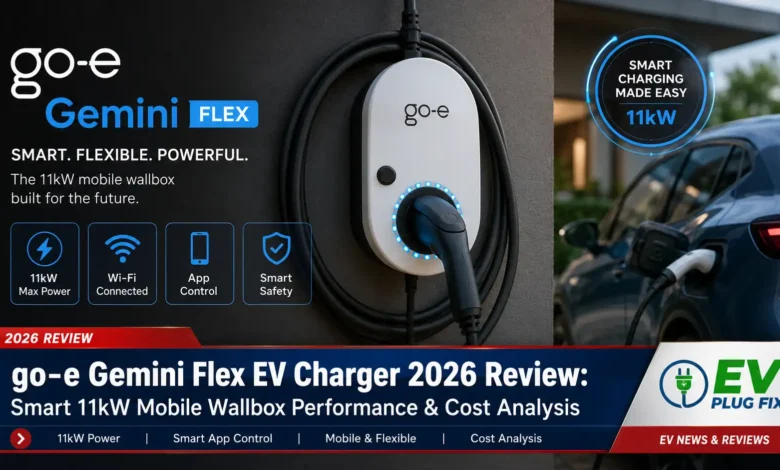
The go-e Gemini Flex 11kW smart mobile EV charger has emerged as a leading solution for electric vehicle owners seeking flexibility and intelligence in their home charging setup.
As the electric vehicle market continues to surge, understanding your charging options becomes crucial. The go-e Gemini Flex 11kW stands out for its unique ability to serve as both a fixed home wallbox and a mobile charging station—a versatility that few competitors can match. For those considering permanent installations, Level 2 EV Installation remains a popular alternative that offers similar charging speeds with a fixed setup.
What Makes the go-e Gemini Flex 11kW a Smart Charger for 2026
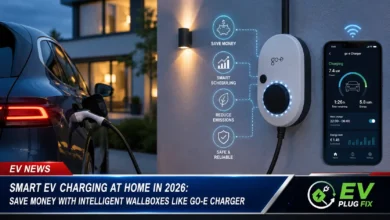
Modern EV owners require more than just a basic power supply. The go-e Gemini Flex 11kW is a smart EV charger that delivers advanced features through its robust connectivity options. With an integrated eSIM providing 4G LTE connectivity (with 5 years of free mobile connection) plus WiFi support, this charger ensures you maintain control regardless of your location or home network stability .
Smart charging capabilities include:
- Electricity exchange charging that automatically charges at the most affordable times based on market rates
- Scheduling functionality to optimize charging sessions for off-peak periods, complementing EV Time-of-Use Plans for maximum savings
- RFID access management for controlling who can use the charger
- Surplus photovoltaic (PV) charging when paired with the optional go-e Controller
- Dynamic load management to prevent overloading main fuses, similar to go-e Load Management systems
Plug and Play Design: Installation and Setup
The go-e Gemini Flex’s plug-and-play design revolutionizes EV charger installation. Unlike traditional wallboxes requiring permanent professional installation, this mobile charging station connects directly to an existing red CEE 16A three-phase socket . This eliminates the need for costly electrical work and makes it immediately operational out of the box.
Installation simplicity means you can take your charger with you. Whether you’re at home, visiting family, or staying at a vacation rental with the appropriate socket, the go-e Gemini Flex provides Level 2 charging capability wherever you go. This mobility factor is a game-changer for EV road trips and frequent travelers.
Key Specifications and Performance
The go-e Gemini Flex 11kW delivers robust performance with technical specifications designed for modern EVs:
- Maximum charging power: 11 kW (3×16A)
- Current adjustment: 6-16A in 1A increments
- Protection rating: IP65 for both indoor and outdoor use, meeting EV Charger Protection Ratings standards
- Integrated DC protection module for enhanced safety
- Type 2 socket with mechanical locking
- OCPP 1.6 and HTTP API for integration with energy management systems
Safety features are comprehensive, including a 6mA DC/20mA AC protection module, RCD Type A protection, and line protection on the building side . The IP65 rating ensures reliable operation even in challenging weather conditions.
Smart Charging vs. Dumb Charging: Why Intelligence Matters
In the debate between smart EV chargers versus dumb chargers, the go-e Gemini Flex represents a clear choice for forward-thinking EV owners. Dumb chargers simply deliver power without monitoring or control, while smart chargers like the Gemini Flex provide network connectivity and advanced features including :
- Remote monitoring and control through the go-e app
- Energy management and scheduling to reduce electricity costs
- Integration with renewable energy sources like solar panels
- Real-time data and tracking of charging sessions, aligning with EV Charging Data Standards
- Over-the-air updates that future-proof your investment
During the recent oil price increases from the Strait of Hormuz closure, the savings from home EV charging increased between 20-45% in most countries . Smart charging functionality helps lock in these savings by ensuring you charge when energy costs are lowest.
| Feature | Dumb Charger | go-e Gemini Flex (Smart) |
|---|---|---|
| Functionality | Basic power delivery only | Full monitoring and control |
| Connectivity | None | 4G + WiFi |
| Energy Management | Not possible | Dynamic and PV integration |
| User Experience | Plug and go | Full app control and scheduling |
| Future Updates | Not possible | Over-the-air firmware updates |

The go-e app interface allows for remote monitoring, scheduling, and access to smart charging features like PV surplus charging.
PV Surplus Charging and Integration with Renewable Energy
One of the most compelling features of the go-e Gemini Flex is its capability for photovoltaic (PV) surplus charging. When paired with the go-e Controller accessory, the charger automatically adjusts to use excess solar energy, charging your EV only when your solar panels are producing more power than your household consumes .
This smart charging approach addresses a critical challenge in the EV landscape. Research indicates that uncontrolled EV charging, particularly during evening hours when 85% of EVs are typically charged, adds strain to power grids already under heavy load . By enabling smart, renewable-focused charging, the go-e Gemini Flex contributes to grid stability while reducing your carbon footprint.
Recent studies emphasize the importance of integrating renewable energy sources into EV charging infrastructure to avoid simply shifting fossil fuel dependency from transportation to power generation . The go-e Gemini Flex, with its PV surplus capabilities and dynamic load management, represents a forward-thinking solution to this challenge.
Cost Analysis: Is the go-e Gemini Flex a Good Investment?
With a price point around €569-€716 depending on the specific model , the go-e Gemini Flex represents a significant upfront investment. However, the long-term savings potential is compelling.
According to IEA data, BEVs charged at home offer substantial running cost savings compared to ICE vehicles. In the United States, these savings amount to approximately $860 per year . The smart charging features of the go-e Gemini Flex can enhance these savings by enabling:
- Off-peak charging when electricity rates are lowest
- PV surplus utilization to maximize renewable energy usage
- Load management to prevent costly circuit upgrades
For EU drivers traveling 30,000 km per year, the savings could reach $1,900 annually with April 2026 energy prices—$700 more than in 2025 . The go-e Gemini Flex’s smart features directly facilitate capturing these savings.
Overcoming Charging Challenges: Solutions for Multi-Unit Residences
Access to home charging varies significantly worldwide. In China, only about 50% of EV owners have home chargers, with most living in apartment buildings . The go-e Gemini Flex’s mobile design offers an elegant solution for those without dedicated home charging.
In Europe, policy measures are evolving to address this challenge. The 2024 revision of the Energy Performance of Buildings Directive requires new or renovated buildings to include pre-cabling for EV charging . The go-e Gemini Flex can easily integrate into these new installations while maintaining its mobility advantage.
For multi-unit residences without dedicated charging infrastructure, the mobile aspect of the Gemini Flex is particularly valuable. Users can charge at their workplace, a friend’s house, or even public CEE sockets when available, significantly expanding charging options.
“Electric cars are superior to hydrogen cars. While the fuel cell concept is appealing, it doesn’t deliver the desired results. Green, CO2-neutral hydrogen is scarce, costly to produce, and needed in other sectors which cannot easily electrify.” — Ronald Kroke, Head of Marketing at go-e
go-e Gemini Flex vs. Other Models: Choosing the Right Charger
The go-e product line offers several options to suit different needs and budgets. Understanding the differences helps you select the right charger for your specific situation :
- go-e Gemini Flex: The mobile, plug-and-play option with 11kW power
- go-e Gemini Fix: The wall-mounted version for permanent installation
- go-e Gemini 2.0: Enhanced version with integrated SIM for up to 22kW
- go-e Charger CORE: Higher capacity 22kW model for faster charging
For most residential applications, the 11kW Gemini Flex offers the ideal balance of power, portability, and price. The 22kW models are better suited for commercial applications or those with higher-capacity onboard chargers. When comparing options, Best Home EV Wallbox Chargers often include both fixed and mobile solutions to match different installation scenarios.
Hydrogen vs. Electric: The Charging Infrastructure Advantage
The debate between battery electric vehicles (BEVs) and hydrogen fuel cell vehicles (FCVs) continues to evolve. As Ronald Kroke, Head of Marketing at go-e, points out, electric cars have a distinct advantage when it comes to practical infrastructure .
Research comparing BEVs and FCVs reveals that BEVs achieve 15-20% lower lifecycle emissions than FCVs under most conditions . Additionally, electric vehicles are more energy efficient—a typical BEV uses about 70% less energy per kilometer than a gasoline ICE vehicle of similar size .
The charging infrastructure for EVs is rapidly expanding, with over 7 million public charging points globally in 2025 . China leads this expansion, with public charging facilities exceeding 5 million in mid-2026, up 22.3% year-over-year .
Hydrogen refueling infrastructure remains limited, with operational challenges that hinder widespread adoption. In South Korea, 59 out of 188 hydrogen refueling stations were closed either temporarily or permanently as of August 2024 due to breakdowns .
These infrastructure disparities give BEVs and their charging solutions like the go-e Gemini Flex a significant practical advantage for most consumers.
Future-Proofing Your EV Charging Investment
As EV technology evolves, charging infrastructure must keep pace. The go-e Gemini Flex is designed with future needs in mind through several key features :
- OCPP 1.6 compatibility ensures integration with future energy management systems
- Over-the-air updates via 4G or WiFi deliver feature enhancements
- Expandable with go-e Controller for PV surplus and load management
- Open API allows integration with third-party systems
By 2030, EV fleets are projected to expand to 250 million units . The charging infrastructure must scale accordingly, and adaptable solutions like the go-e Gemini Flex will play a crucial role. The mobile design allows it to serve as both a primary home charger and a backup solution as public infrastructure continues to develop. For those interested in emerging technologies, Bidirectional EV Charging Benefits represent another future-proofing consideration that complements modern smart charger investments.