Feyree Smart EV Charger Savings 2026: Cut Costs with Off-Peak Scheduling & Dynamic Load Balancing
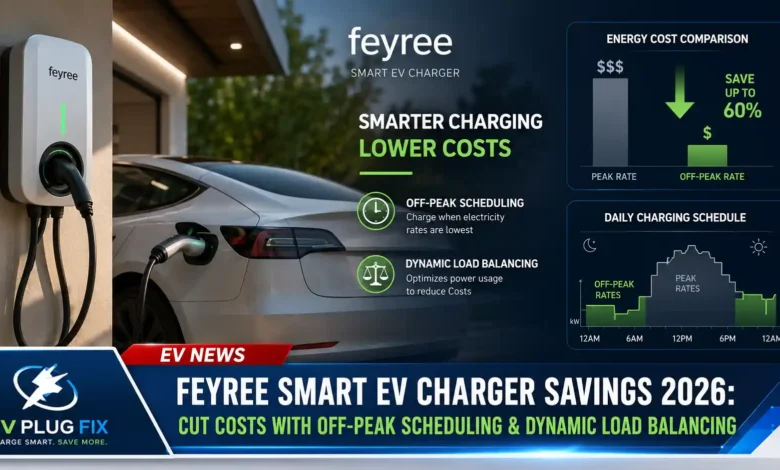
Feyree smart EV chargers are transforming how electric vehicle owners manage home charging costs through intelligent scheduling and advanced power management. Electricity prices fluctuate dramatically throughout the day, with utilities offering time-of-use (TOU) plans that make overnight power substantially cheaper than peak daytime rates. By automatically shifting EV charging to off-peak periods, Feyree’s connected charging stations deliver measurable savings while protecting home electrical systems from overload. For homeowners considering a permanent solution, Level 2 EV Charger Installation provides the dedicated circuit capacity needed to maximize these intelligent features.
Understanding Time-of-Use Rates and Off-Peak Charging Benefits
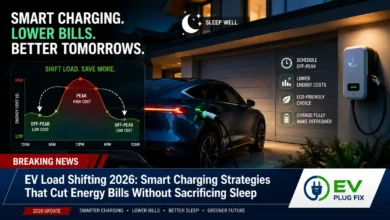
Time-of-use electricity pricing represents one of the most effective tools for reducing EV charging costs. Utilities charge premium rates during peak demand hours—typically late afternoon and early evening—while offering significantly lower rates during overnight off-peak periods. Analysis shows off-peak rates between 10 p.m. and 6 a.m. average around $0.10 per kWh, compared to peak rates of $0.25 per kWh or more .
For EV owners driving 1,000 miles monthly, the savings potential is substantial. Charging at night rates instead of peak rates can save well over $500 annually simply by shifting when the vehicle draws power. Feyree smart chargers automate this process entirely, eliminating the need for manual intervention.
Feyree Smart Charging System Features
Feyree’s comprehensive product lineup includes portable and wallbox EV chargers equipped with Wi-Fi connectivity and smartphone control through the Tuya Smart app platform. The mobile application—available on both iOS and Android—provides complete remote management capabilities .
- Smart Scheduling via App: Set precise charging start times or create weekly recurring schedules to ensure charging occurs exclusively during low-rate periods. The delay function allows programming charges to begin 1–15 hours after plugging in .
- Adjustable Charge Current: Fine-tune output from 8A to 32A (7kW models) or 8A to 16A (11kW models) to match home electrical capacity and prevent circuit overload when multiple appliances run simultaneously .
- Dynamic Load Balancing (DLB): Wallbox models with DLB continuously monitor total household electrical consumption and automatically adjust charging power to prevent circuit breaker trips. This intelligent management ensures safe operation even with AC, ovens, and other high-draw appliances running simultaneously .
- Multi-Layer Safety Systems: All chargers feature Type B leakage protection (AC 30mA + DC 6mA), over/under-voltage shutdown, over-current protection, short-circuit protection, and lightning surge protection .
- Wide EV Compatibility: Supports Type 2, SAE J1772, GB/T, and Tesla NACS standards through adapters, accommodating virtually any plug-in electric vehicle. Understanding Cross-Brand EV Charging Compatibility helps ensure your Feyree charger works seamlessly with your specific vehicle model.
| Feyree Model | Power Output | Current Range | DLB Support | Best For |
|---|---|---|---|---|
| Lion King / Master Series | 7kW (32A) / 11kW (16A) | 8A – 32A (7kW) 8A – 16A (11kW) |
No | Portable use, basic scheduling |
| Pisces Wallbox | 7kW / 11kW / 22kW | 8A – 32A per phase | Yes | Home installation with load management |
| Gemini Wallbox | 7.6kW / 11kW / 22kW | 8A – 99A total | Yes | Advanced three-phase installations |
How Dynamic Load Balancing Protects Your Home
Dynamic Load Balancing represents a significant advancement in home EV charging safety and efficiency. The system uses a current transformer (CT) sensor installed on the home’s main electrical line to monitor real-time household power consumption . When the charger detects increased appliance usage, it automatically reduces charging current to prevent exceeding the circuit’s safe capacity. For homeowners interested in similar smart control features across different brands, the go-e Controller Setup offers comparable PV-integrated load management capabilities.
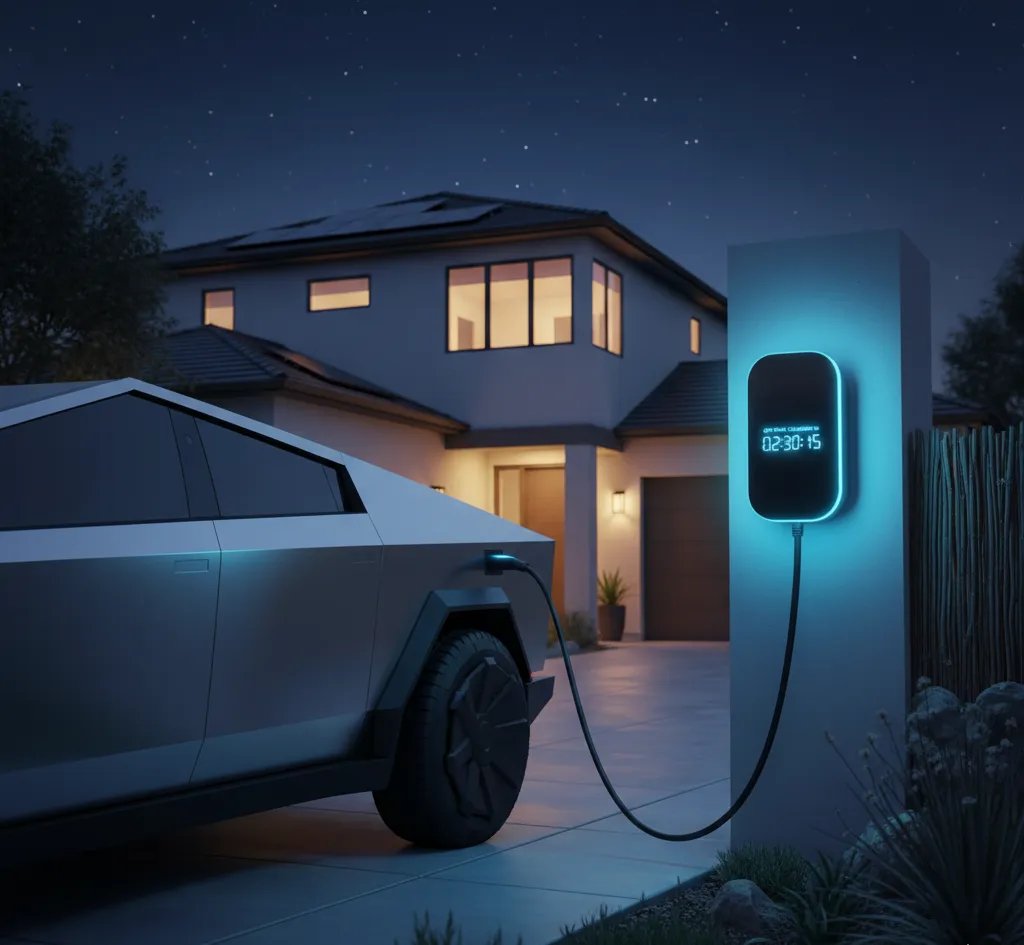
Dynamic Load Balancing lets your EV charger and appliances run safely without overloading circuits.
Three distinct DLB strategies accommodate different electrical configurations :
- Single-Phase DLB (Plan A): Monitors the single-phase circuit current and adjusts output so combined charging and appliance draw never exceeds the user-configured total current limit (8A–99A).
- Three-Phase Per-Phase DLB (Plan A): Monitors each phase individually (L1, L2, L3) and adjusts based on the highest-loaded phase, preventing unbalanced loading issues common in three-phase installations.
- Three-Phase Total Load DLB (Plan B): Monitors combined current across all three phases, maximizing available power utilization for high-efficiency charging environments.
In practice, the DLB system responds within seconds to load changes. When a heavy appliance like an electric oven or air conditioner switches on, charging current steps down to maintain safe limits. When appliance load decreases, charging power ramps back up to reclaim available capacity—all without interrupting the charging session .
Grid Support and Demand Response Programs
Smart EV charging benefits extend beyond individual household savings to support broader grid stability. Studies indicate coordinated smart charging can reduce peak grid loads by approximately 6–9% compared to unmanaged charging . This “peak shaving” effect helps utilities avoid costly infrastructure investments in new power lines and transformers.
“Your smart charger can act as a virtual power plant resource—responding to the grid’s needs while lowering your own energy bills.”
Many utilities actively encourage off-peak charging through demand-response programs. Participating households may earn bill credits or special rates by allowing their EV charger to delay or pause charging during grid emergencies. DTE Energy’s Smart Charge program, for example, rewards participants with $5 monthly for enrolling and remaining in the program, with charging automatically shifted to off-peak periods .
Real-World Energy Savings and ROI
The financial impact of smart charging adds up quickly. EV owners leveraging off-peak rates and intelligent scheduling typically see substantial reductions in their electricity bills. Managed charging programs consistently demonstrate savings of approximately 10% on household energy costs, amounting to roughly $200 annually per vehicle .
For high-mileage drivers, the savings compound significantly. Shifting 1,000 miles of monthly charging from $0.25/kWh peak rates to $0.10/kWh off-peak rates yields hundreds of dollars in annual savings through simple scheduling optimization. These savings become even more critical during extreme weather conditions when range can be impacted—for instance, Kia EV6 winter range data shows how temperature affects efficiency and why smart charging economics matter year-round.
Frequently Asked Questions
How much can I realistically save on my electricity bill?
Savings depend on local rates and driving patterns, but real-world programs demonstrate significant reductions. Managed charging typically cuts household energy costs by approximately 10%, with pilot programs reporting $200 in annual savings per EV through off-peak charging optimization .
What are Time-of-Use rates and how do I use them?
TOU plans are electricity tariffs where prices vary by time of day. Peak hours (typically late afternoon/evening) carry the highest rates, while off-peak hours (often after 10 p.m.) are substantially cheaper. For instance, some utilities charge $0.25/kWh at 5 p.m. but only $0.10/kWh after midnight. Using the Feyree app, you can program your charger to operate exclusively during the cheapest windows.
Does Feyree offer chargers compatible with my EV?
Yes. Feyree provides chargers supporting multiple standards including Type 2 (European), SAE J1772 (North American), GB/T (Chinese), and Tesla NACS through adapters. Portable units plug directly into standard 240V outlets, while wallbox models require professional installation on a dedicated circuit . For a comparison of how Feyree’s offerings stack up against other premium mobile solutions, check out the go-e Gemini flex Comparison to evaluate portable charging options.
Are Feyree chargers safe for outdoor installation?
Absolutely. Feyree chargers feature IP66 (portable) and IP65 (wallbox) waterproof ratings, allowing safe outdoor installation in rain or snow. The housings use UL94 V-0 flame-retardant materials with 99.95% pure copper conductors for reliable performance .
How does the mobile app work without Wi-Fi?
Feyree chargers support multiple connectivity options. In addition to Wi-Fi, the Tuya Smart app enables Bluetooth control within 10 meters or hotspot control via mobile data when Wi-Fi is unavailable. Physical buttons on the charger also allow schedule setting without any app connection .
Can I install a Feyree charger myself?
Portable units simply plug into existing 240V outlets and require no professional installation. Wallbox models, however, require installation by a qualified electrician on a dedicated circuit. DLB-equipped models additionally require CT sensor installation on the main supply line, which should be performed by a licensed professional .