EV Energy Meter Guide 2026: Choosing the Right Solution for Accurate Billing & Compliance
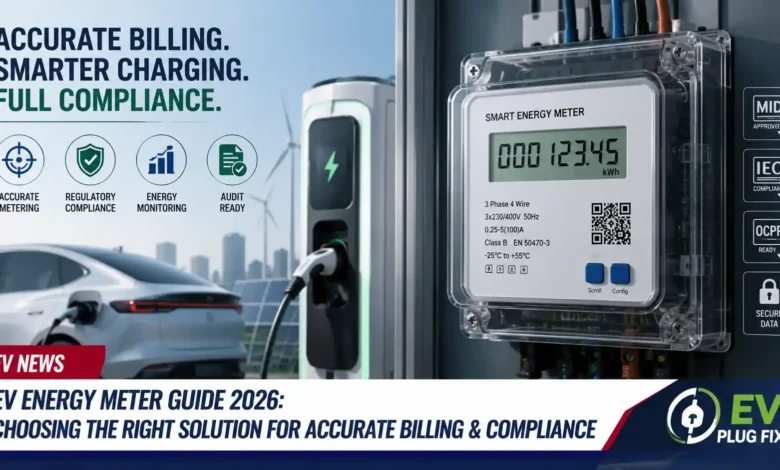
An EV energy meter’s accuracy is the cornerstone of fair billing for electric vehicle charging, making it essential for fleet managers, property owners, and employees with company cars alike. Whether you’re reconciling electricity costs for a business fleet or managing a multi-tenant residential complex, the integrity of your billing depends on precise data from a certified meter. This article cuts through the technical jargon to deliver a clear, journalistic analysis of modern EV energy metering solutions and their impact on compliance and profitability in 2026.
⚡ Key Takeaways: EV Energy Metering & Billing Compliance
- Integrated Wallbox Meters: Integrated MID-certified meters (e.g., go-e Charger PRO) enable legally valid billing for employee company cars and commercial fleets.
- External Sub-Meter Installations: External DIN-rail sub-meters allow multi-tenant properties to track and split electricity costs across mixed hardware setups.
- MID Class B vs. Class C Accuracy: MID Class B meters provide high accuracy for standard sub-metering, while Class C offers ultra-high precision for commercial fast-charging networks.
- German Eichrecht Standard: Requires tamper-proof digital hardware, local display verification, and end-to-end encrypted session storage for total billing transparency.
Understanding the Core Function of an EV Energy Meter
At its most fundamental level, an energy meter for EV charging measures the precise amount of electricity a vehicle draws during a session. This data is the lifeblood of the entire charging ecosystem, enabling transparent and verifiable billing. It moves the process from a system based on trust to one based on verifiable, legally defensible data. Without an accurate meter, billing becomes a guessing game, leading to potential disputes and financial losses.
Three Primary Types of Energy Metering in EV Charging
The location of your meter is a critical decision. Let’s analyze the three primary configurations for energy measurement in EV charging:
1. Integrated Metering Inside the Charging Station (The Standard)
This is the most common and convenient solution for modern electric vehicle supply equipment (EVSE). The meter is built directly into the wallbox, offering a seamless “plug-and-play” experience. A prime example is the go-e Charger PRO, which features a factory-integrated meter compliant with the MID standard, making it ideal for billing multiple users or company cars.
- Seamless Functionality: Automatically measures and records each charging session with minimal configuration.
- Smart Integration: Works flawlessly with mobile apps, RFID access control, and backend management systems for automated billing.
- Legal & Practical: This setup is typically required for reliable billing of company car electricity in many European countries, notably in Germany where an MID or Eichrecht-compliant meter is mandated by law.
2. External Sub-metering (For Complex Sites)
In some installations, like apartment buildings or older commercial sites, a separate, external energy meter is installed alongside the main electrical distribution board. This is a classic example of sub-metering, used to allocate costs fairly among different tenants, residents, or departments who share the charging infrastructure.
- Location: Mounted on a DIN rail in an electrical cabinet.
- Versatility: Can be a single, high-capacity meter for a bank of chargers or dedicated to a specific charger circuit.
- Best For: Multi-tenant environments where you need to connect chargers from various manufacturers to a single, unified billing system.
Products like the ABL E-Mobility Pulsar external MID meter exemplify this category, designed for precise energy tracking and offering traceable data that’s perfect for billing company car charging at home.
3. Vehicle-Integrated Measurement (Not Reliable for Billing)
While EVs can track incoming energy, this data is generally considered unsuitable for official billing. It is not standardized, legally compliant, or easily accessible by third-party systems.
A driver can check their car’s app for an estimate of how much energy they received, but this is primarily for personal information. Relying on this data for official billing with an employer or for a public charging network is a recipe for disputes and compliance failures.
Why Billing-Grade Metering is Non-Negotiable
The distinction between a standard electricity meter and a billing-grade meter is crucial. Billing-grade meters are legally recognized instruments subject to strict accuracy, tamper-proofing, and auditability requirements.
MID Compliance: The European Standard
The Measuring Instruments Directive (MID) is a European standard that certifies the accuracy of electricity meters used for billing. A meter that is MID-compliant has undergone rigorous testing and its production line is certified by an accredited body, ensuring consistent quality and measurement reliability.
Accuracy Classes: Understanding MID B vs. C
MID meters are categorized by accuracy classes. For EV charging, you will typically encounter Class B and Class C.
- Class B: Offers a high degree of accuracy suitable for most commercial and sub-metering applications.
- Class C: Provides a superior accuracy level. This higher precision is increasingly preferred for high-throughput public charging networks where even a small percentage error can translate into significant financial impact.
Germany’s Eichrecht: The Gold Standard for Transparency
Germany has taken metering requirements a step further with its “Eichrecht” (measurement and calibration law). This regulation demands not just an MID-compliant meter but also customer-verifiable displays and strict adherence to data security protocols to ensure complete transparency and trust in billing. For applications in Germany, selecting a wallbox like the go-e Charger PRO CABLE ME, which is designed to meet these rigorous standards, is often mandatory.
| Feature | Integrated Meter | External Meter | Vehicle Meter |
|---|---|---|---|
| Location | Inside the wallbox (e.g., go-e Charger PRO) | DIN rail in electrical cabinet | Onboard the vehicle |
| Best Use Case | Single or multi-user private, workplace, and fleet sites | Multi-tenant buildings, mixed charger networks | Driver information only |
| Billing Compliance | Yes (MID/Eichrecht certified models) | Yes (MID certified) | No |
| System Integration | Seamless (App, RFID, OCPP, API) | Excellent (via Modbus, Backend systems) | Very limited |
| Pros | Standardized, automated, legal compliance | Flexible for retrofits and mixed equipment | Easily accessible for driver |
| Cons | Tied to a specific charger manufacturer | More complex installation, may require more space | Not legally valid for billing or reimbursement |
Advanced Metering for the Future of EV Charging
As technology evolves, so too does the sophistication of energy metering. Next-generation solutions are addressing the unique challenges of high-power DC charging and bi-directional energy flow.
DC Metering for Fast Chargers
For ultra-fast and hyper-fast chargers, the energy transfer happens in DC, bypassing the vehicle’s onboard charger. This requires specialized DC energy meters that are installed directly on the DC side of the charging station. The Carlo Gavazzi DCM1 is a prominent example of such a meter. It offers a high level of accuracy, monitors vital parameters like temperature and voltage, and even supports cable loss management to ensure the meter only bills for energy that is actually delivered to the vehicle’s battery.
Bi-Directional Metering for V2G
Vehicle-to-Grid (V2G) technology allows EVs to send energy back to the grid. For this to work effectively and fairly, bi-directional energy meters, which can measure both imported and exported energy, are essential.
Smart Software & Integration: The Complete Picture
A smart energy meter alone is powerful, but its true potential is unleashed when integrated into a comprehensive Charge Point Management System (CPMS). This ecosystem connects the meter data with user accounts, RFID access, and billing platforms to automate the entire process, from authentication and energy consumption to generating compliant invoices.
A smart meter is the hardware; a CPMS is the brain. The combination delivers automated, error-free billing that builds trust and eliminates administrative overhead.
Frequently Asked Questions About EV Energy Meters
What is an MID-certified energy meter in EV charging?
An MID (Measuring Instruments Directive) certified energy meter is a legally calibrated electricity meter tested and approved across Europe for accurate, auditable financial billing and expense reimbursement.
Can I use my EV’s internal battery screen for company car expense reimbursement?
No. Vehicle-internal energy displays are uncertified estimates intended for driver information only. Employers and tax authorities require an MID- or Eichrecht-compliant wallbox meter for legal electricity reimbursement.
What is the difference between AC and DC EV energy metering?
AC meters measure energy delivered to home and commercial wallboxes before conversion by the car’s onboard charger. DC meters measure high-power energy directly at the fast charger output cable, accounting for cable power losses.
Conclusion: Choose Your EV Energy Meter Wisely
Selecting the right energy meter for your EV charging application is a decision that has lasting operational and financial consequences. For straightforward fleet or workplace billing, an integrated MID meter like the go-e Charger PRO provides an elegant, compliant solution. For more complex scenarios with multiple tenants or a mix of hardware, a certified external sub-meter is the strategic choice. And for the future of public high-power charging, advanced DC meters are non-negotiable. By prioritizing accuracy and compliance from the start, you can ensure a transparent, fair, and ultimately profitable EV charging experience for everyone involved.