Do You Need a Home EV Charger in 2026? Costs, Benefits & Alternatives Compared
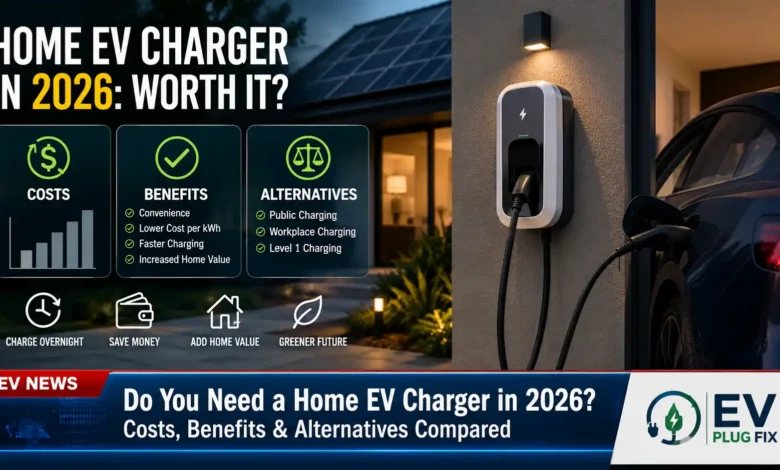
The question of whether you need a home EV charger in 2026 is one of the most critical decisions for current and prospective electric vehicle owners. While for many, the convenience of waking up to a full battery is non-negotiable, for others, particularly those in urban centers with robust public infrastructure, a dedicated home charger might be an unnecessary expense. This investigation cuts through the hype to deliver a clear, data-driven analysis of when a home charger is a necessity, a luxury, or completely avoidable, based on your unique lifestyle and location.
⚡ Key Decision Matrix: Do You Need a Home Charger?
- Must-Have For: Homeowners with dedicated driveways or garages, daily commuters driving over 50 miles per day, and drivers in areas with sparse public charging.
- Optional/Skip For: Low-mileage urban drivers (<20 miles/day), renters without designated parking access, and drivers with free workplace Level 2 charging.
- Cost Savings: Residential home charging averages ~$0.17/kWh compared to $0.40–$0.70/kWh for public DC fast charging, saving over $800–$1,200 annually.
- Gold Standard Speed: Dedicated 240V Level 2 chargers provide a full charge overnight (3–8 hours) compared to 20+ hours on standard 120V wall outlets.
Understanding the Three Charging Levels: A Quick Primer
Before deciding if you need a home charger, it’s essential to grasp the fundamental differences in charging speeds. This will help you understand what each option can realistically offer your daily routine.
- Level 1 Charging (120V): This is your standard household outlet. It’s the slowest method, adding only about 3-5 miles of range per hour. While it requires no special installation, it can take over 20 hours to fully charge a larger EV battery, making it impractical for daily use for most drivers.
- Level 2 Charging (240V): This is the gold standard for home charging. Requiring a dedicated 240-volt circuit (like your clothes dryer), a Level 2 charger can add 20-30 miles of range per hour. It can fully charge most EVs in 3-8 hours, making overnight charging a breeze.
- Level 3 Charging (DC Fast Charging): Found at public stations, these are the heavy hitters. They can charge an EV to 80% in 20-45 minutes, but they are expensive to install (often exceeding $30,000) and are not designed for residential use.
The Economics: Why Home Charging Wins on Cost
From a purely financial standpoint, home charging is significantly cheaper than relying on public infrastructure. This cost advantage is one of the primary reasons most EV owners prefer to charge at home.
| Charging Type | Average Cost per kWh | Annual Cost (12,000 miles) |
|---|---|---|
| Home Charging (Residential Rate) | ~17¢ | ~$732 |
| Public Level 2 Charging | ~30¢ – 50¢ | ~$1,600 |
| Public DC Fast Charging | ~40¢ – 70¢ | Could exceed $1,900 |
This difference in cost is primarily due to the markup on commercial electricity and the infrastructure investments required for public stations. Additionally, many utilities offer time-of-use (TOU) rates, allowing you to charge overnight for as little as 5-8 cents per kWh, further widening the savings gap.
Do You Need a Home EV Charger? The 2026 Breakdown
Whether a home charger is a requirement or a luxury depends heavily on your personal circumstances. Let’s break down the key profiles.
1. The Homeowner with a Garage or Driveway
For this group, a Level 2 home charger is a highly recommended investment. With a dedicated parking spot, installation is straightforward. The cost typically ranges from $749 to over $3,000 for the unit and professional installation. While the upfront cost can seem steep, the annual savings on fuel compared to public charging can recoup the investment in just a few years. The convenience of never having to visit a public station for daily needs is a significant lifestyle upgrade.
2. The Apartment Dweller or Renter
This group faces the most significant barriers. Without control over the parking infrastructure, installing a home charger can be difficult or even impossible. In many cities, apartment EV charging is becoming more common, but availability is still limited and often comes with waitlists or additional fees. For renters, workplace charging or relying on a robust public network is often the primary solution. Some regions are enacting “right-to-charge” laws, but progress remains inconsistent.
3. The Low-Mileage or Occasional Driver
If you drive less than 30-40 miles per day or only use your EV for short trips, a Level 1 charger might be sufficient. Many EVs come with a Level 1 cord as standard equipment. While slow, it can effectively top up the battery overnight for these use cases, making the investment in a Level 2 charger unnecessary.
4. The High-Mileage Commuter
For those who drive over 80 miles daily, a Level 2 home charger is effectively non-negotiable. Relying on Level 1 charging or public stations would be inconvenient, time-consuming, and more expensive. A home charger ensures you start each day with a full battery, eliminating range anxiety and daily detours.
Regional Infrastructure: The Geographic Factor
Your location plays a pivotal role in this decision. The density and reliability of public charging networks vary dramatically across the globe.
United States: The landscape is highly fragmented. Coastal states like California have dense networks with over 100,000 public ports, but rural areas in the Midwest and South suffer from “charging deserts,” making home charging a necessity. The NEVI program aims to address this, but coverage is still years away.
Europe: Infrastructure is generally mature, but uneven. Northern and Western Europe (e.g., Netherlands, Norway, Germany) boast high charger-to-EV ratios. However, Eastern and Southern Europe have thinner coverage, making home charging more critical for reliable daily use.
China: As the world’s largest EV market, China has built a massive public charging network, especially in dense urban centers. In places like Beijing and Shanghai, many residents live in high-rise apartments and rely heavily on public charging. This makes home charging less of a requirement for many urban dwellers.
Developing Markets: In many parts of Southeast Asia, Latin America, and Africa, public EV infrastructure is in its infancy. For drivers in these regions, access to a reliable home or workplace charger is often the deciding factor in whether EV ownership is even feasible.
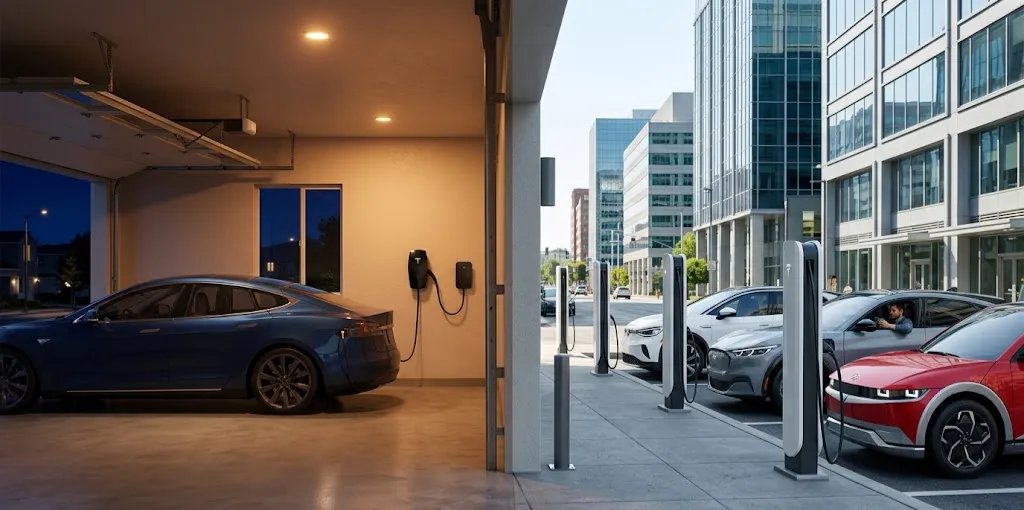
Understanding the different levels of EV charging is the first step in deciding what’s right for your lifestyle.
When a Home Charger Is Overkill
Despite the many benefits, there are clear scenarios where buying a home EV charger isn’t necessary.
- Excellent Public Network: If you live in a city like Amsterdam, Oslo, or parts of London, where public chargers are abundant and reliable, you may not need a dedicated home unit. Some cities now have over 270 public chargers per 100,000 residents.
- Workplace Charging: If your employer offers free or subsidized Level 2 charging, this can effectively replace the need for a home charger, especially for commuters.
- Very Low Mileage: As mentioned, if you drive very little, a standard wall outlet may meet all your needs.
“The mark-up for public fast charging can be up to 240% higher than residential prices… exclusively using public fast charging for a battery electric car would result in higher running costs than a gasoline ICE car.”
Frequently Asked Questions About Buying a Home EV Charger
Can I charge my EV at home using a normal wall outlet?
Yes, using a Level 1 120V trickle charger. However, it only adds 3 to 5 miles of range per hour, taking over 20 hours to fully charge a typical battery. A Level 2 240V charger is recommended for daily driving.
Is it cheaper to charge an EV at home or at public stations?
Charging at home is significantly cheaper. Residential electricity averages roughly 17 cents per kWh, whereas public Level 2 and DC fast charging can cost 30 to 70 cents per kWh plus connection fees.
How much does it cost to install a Level 2 home EV charger?
A Level 2 wallbox unit costs between $400 and $800, with professional electrical installation ranging from $500 to $2,000 depending on panel distance and capacity upgrades.
Final Verdict: Is It Worth It?
The decision to purchase a home EV charger in 2026 is a personal one, but the data provides a clear framework. For the vast majority of drivers, particularly homeowners and those with long commutes, a Level 2 home charger is a smart investment that pays for itself in convenience and cost savings. For renters and low-mileage drivers in cities with excellent public infrastructure, it may remain an optional luxury. However, as home charging is the preferred method worldwide for its affordability and ease, it will likely remain the gold standard for EV ownership for years to come.