go-e Charger Gemini flex vs Wallbox: Best Mobile EV Charging for 2026
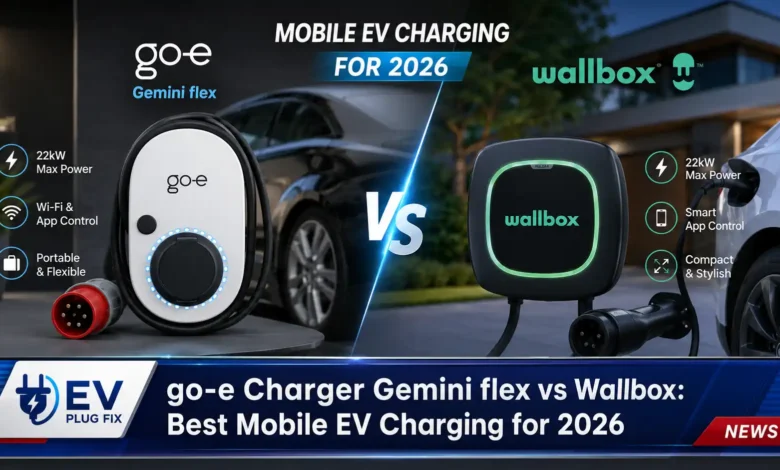
go-e Charger Gemini flex is redefining how EV owners think about charging infrastructure in 2026. No longer are drivers tethered to a single fixed wallbox in their garage. The mobile charging revolution has arrived, offering unprecedented flexibility for electric vehicle owners who demand convenience whether at home, on the road, or at a job site.
The days of range anxiety are fading as portable wallboxes like the go-e Charger Gemini flex deliver 11kW of power from almost any red CEE socket. With smart app integration, PV surplus charging, and compact design, this mobile charging station represents the perfect bridge between permanent home charging and emergency roadside solutions. For drivers concerned about extreme weather conditions, understanding how temperature affects your EV is crucial—our Kia EV6 winter range test provides valuable insights into cold-weather performance.
Why Mobile Wallboxes Are Dominating EV Charging in 2026
The electric vehicle landscape has evolved dramatically over the past year. With more than 50% of new car buyers considering EVs, the demand for flexible charging solutions has skyrocketed. Fixed wallboxes have their place, but they lock drivers into a single location. Mobile wallboxes like the go-e Charger Gemini flex liberate EV owners from this limitation.
For families with multiple EVs, or renters who can’t install permanent charging infrastructure, portable chargers provide the ideal solution. Simply pack the charger in your trunk, and you’re ready to charge from any compatible socket. Whether visiting relatives, staying at an Airbnb, or working on a construction site, you’ll never be stranded with a dead battery.
A professional-grade portable charger like the Cord EVIRA can deliver up to ten times faster charging than a standard 3-pin “granny” charger with no fixed installation, groundworks, or landlord permissions needed . This represents a paradigm shift in how we approach EV charging accessibility. If you’re considering a permanent solution instead, our comprehensive guide on Level 2 EV Charger Installation covers everything you need to know about fixed home charging setups.
“One socket. One charger. Total freedom. The mobile EV charger market is exploding because it solves the biggest pain point for EV owners: infrastructure dependency.”
go-e Charger Gemini flex vs Stationary Wallbox: Key Differences
When comparing the go-e Charger Gemini flex to traditional stationary wallboxes, the differences extend beyond mere portability. Each system offers distinct advantages depending on your driving habits and living situation.
| Feature | go-e Charger Gemini flex (Mobile) | Stationary Wallbox |
|---|---|---|
| Portability | Fits in trunk—charge anywhere with CEE socket | Fixed installation—one location only |
| Installation | Plug & Play—no electrician required | Professional installation, permits often needed |
| Charging Speed | Up to 11kW (16A, 3-phase) | 11kW to 22kW depending on model |
| App Control | Full smart functionality via go-e app | Varies by manufacturer |
| PV Surplus Charging | Supported with real-time solar optimization | Often requires separate hardware |
| Cost | €569 (Gemini flex) to €717 (Gemini flex 2.0) | €800-€2000+ plus installation |
| Connectivity | Wi-Fi, Bluetooth, 4G LTE (2.0 version) | Usually Wi-Fi only |
The go-e Charger Gemini flex transforms from a stationary wallbox to a mobile charger in seconds, making it ideal for both home and travel use . Users consistently praise its flexibility, with one reviewer calling it “the egg-laying wool-milk sow of EV chargers” .
Understanding CEE Sockets and Adapters for Mobile Charging
The red CEE socket is the secret weapon of mobile EV charging. These industrial-grade power outlets provide robust 16A or 32A current at 240V or 400V, enabling far faster charging than standard household sockets. A CEE socket can deliver three to five times faster charging than a typical 220V Schuko outlet.
But what happens when you’re away from home and only a standard socket is available? This is where charging adapters become essential. The go-e Charger ecosystem includes adapters for almost any scenario:
- Red CEE 16A 3-phase (blue): Standard go-e connection—provides full 11kW charging
- Red CEE 32A: Supports up to 22kW charging on compatible vehicles
- Schuko adapter: For standard household outlets—slower but better than nothing
- NEMA 14-50: North American standard for 240V high-power outlets
Smart Features: The go-e Charger App Experience
The go-e Charger app transforms your EV charging experience from passive to proactive. Available for both iOS and Android, the app provides unprecedented control over your charging sessions. Users can schedule charging during off-peak electricity tariffs, monitor real-time energy consumption, and even integrate with solar PV systems for completely renewable charging.
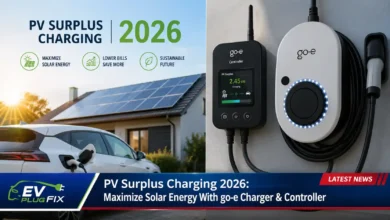
One of the standout features is PV surplus charging—the system automatically adjusts charging power based on available solar energy. When your solar panels produce excess electricity, the go-e Charger routes it directly to your EV rather than exporting it to the grid. This intelligent energy management can save hundreds of euros annually on electricity costs. For a detailed walkthrough of this functionality, check out our comprehensive go-e Controller Setup guide.
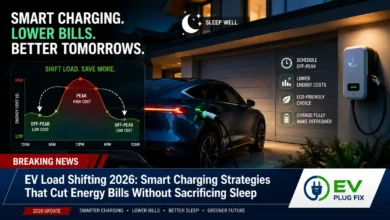
The app also supports dynamic electricity tariffs, enabling you to schedule charging during the cheapest periods. Simply set your target state of charge and departure time, and the go-e system optimizes the charging schedule for maximum cost efficiency.
For tech-savvy users, the go-e Charger offers an open API interface, allowing integration with home automation systems and custom energy management setups . This level of flexibility is rarely found in competing products at the same price point.
Charging Speed Showdown: CEE vs Standard Socket
One of the biggest surprises for new EV owners is the stark difference in charging speeds between socket types. Understanding these differences is crucial for effective trip planning and avoiding frustration.
Standard 220V Schuko Socket (2.3kW):
– Charges approximately 15-20 km of range per hour
– Adds about 100 km in 5 hours
– Suitable for overnight charging but painfully slow for daily driving
Red CEE 16A 3-Phase Socket (11kW):
– Delivers 50-60 km of range per hour
– Fully charges most EVs in 4-6 hours
– Comparable to many dedicated home wallboxes
Red CEE 32A 3-Phase Socket (22kW):
– Provides 100+ km of range per hour
– Complete charge in 2-3 hours for average EVs
– Limited vehicle compatibility (some EVs accept 22kW AC charging)
This performance gap explains why mobile chargers like the go-e Gemini flex prioritize CEE connectivity. The difference between 2.3kW and 11kW is the difference between a frustrating charging experience and seamless integration into your daily routine.
🔋 Range Per Hour Comparison
- Schuko (2.3kW): ~20km/hour
- Blue CEE 16A (3.7kW): ~35km/hour
- Red CEE 16A (11kW): ~60km/hour
- Red CEE 32A (22kW): ~110km/hour
🚗 Best Use Cases
- Schuko: Emergency backup only
- Blue CEE: PHEVs and small batteries
- Red CEE 16A: Daily EV charging sweet spot
- Red CEE 32A: Commercial/fleet operations
Top Mobile EV Chargers of 2026: Market Comparison
While the go-e Charger Gemini flex leads the pack, several competitors offer compelling alternatives. Each solution addresses slightly different needs and budgets. Understanding your specific charging requirements is essential before making a purchase decision.
| Model | Max Power | Connectivity | Key Feature | Price (EUR) |
|---|---|---|---|---|
| go-e Gemini flex | 11kW | Wi-Fi, Bluetooth | Open API, PV integration | €569 |
| go-e Gemini flex 2.0 | 11kW | Wi-Fi, 4G LTE | Remote diagnostics | €717 |
| Cord EVIRA 11kW | 11kW | LCD display | IK10 impact-resistant | Varies |
| Cord EVIRA 22kW | 22kW | LCD display | IP65 weatherproof | Varies |
| VEVOR Mobile Wallbox | 3.6kW | App optional | Budget-friendly option | ~€150 |
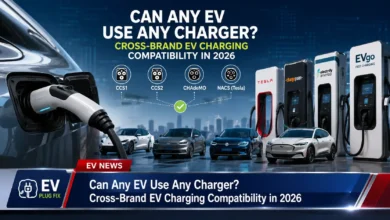
The Cord EVIRA has recently gained attention for its professional-grade construction and versatility, offering models from 2.3kW to 22kW with interchangeable plug sets . It’s particularly suited for workshops and fleet operators who need robust, weatherproof charging solutions. When evaluating different connector types, our detailed Cross-Brand EV Charging Compatibility guide helps you understand which standards work with your vehicle.
For budget-conscious buyers, the VEVOR Mobile Wallbox provides basic functionality at a fraction of the cost, though it lacks the smart features and high-power CEE charging of premium models .
Safety Considerations for Mobile EV Charging
Safety should never be compromised when dealing with high-power electricity. Mobile chargers like the go-e Gemini flex incorporate multiple protection systems to ensure worry-free operation in any environment.
The go-e Charger features comprehensive safety protections including overcurrent protection, AC and DC leakage detection, over-temperature shutdown, surge protection, and under/over voltage protection. The RCD protection module completely shuts down the charger in the event of DC fault currents, preventing potential electrical hazards .
For outdoor use, look for chargers with appropriate IP ratings. The go-e Gemini flex is suitable for indoor and outdoor installation, though some users note it’s “not waterproof” in heavy rain . For truly weather-exposed installations, the Cord EVIRA offers IP65 rating and IK10 impact resistance .
Installation Guide: Setting Up Your go-e Charger Gemini flex
One of the standout advantages of the go-e Charger Gemini flex is its remarkably simple installation process. Unlike stationary wallboxes that require professional electrician visits, permits, and potentially expensive wiring upgrades, the go-e system operates on a true plug-and-play basis.
- Identify a suitable CEE socket—ensure it’s rated for at least 16A and has proper grounding
- Connect the charger to the CEE socket using the included cable
- Attach the Type 2 connector to your EV’s charging port
- Configure settings via the go-e app—set charging limits, schedules, and preferences
- Monitor and optimize charging through the app interface
For stationary use, the go-e Charger can be wall-mounted with the included bracket, transforming it into a permanent wallbox. When you need to travel, simply unmount it from the wall bracket and take it with you . This dual functionality eliminates the need for separate home and travel chargers.
Users consistently praise the installation simplicity, with one reviewer noting it’s “super easy installation—self-explanatory, fast, that’s how it should be” . The charger never needs to be opened during installation, and should never be opened otherwise, ensuring the safety of the components and maintaining the manufacturer’s warranty.
“I have had it for 2 months. It works very well even at -14 degrees. Usually, I plug it in at night and by morning it is charged. It’s worth it, especially since if you go somewhere, you just unplug it and put it in its bag.”
— Verified VEVOR Mobile Wallbox user, January 2026
Future-Proofing: EV Charging Infrastructure Trends for 2026
The mobile EV charging market is rapidly evolving, with several key trends shaping the industry in 2026. Understanding these developments helps buyers make informed decisions that remain valuable for years to come.
Connectivity evolution: The shift toward integrated cellular connectivity—as seen in the go-e Gemini flex 2.0 with its embedded 4G SIM—represents a significant advancement. This allows for remote diagnostics, firmware updates, and smart charging functionality even when Wi-Fi isn’t available .
Battery-assisted charging: Limited grid capacity has become a major challenge for EV charging deployment . Battery-assisted chargers like the SCU EVMS ONE combine energy storage with high-performance EV charging to reduce pressure on existing power infrastructure. This technology enables faster charging without requiring costly grid upgrades.
Megawatt-scale charging: For commercial applications, ABB’s new OM X-Series demonstrates the future of high-power EV charging, scaling from 800 kW to 10 MW and beyond . While this exceeds consumer needs, the liquid-cooled technology and energy management systems will eventually trickle down to consumer products.
📱 Smart Charging Features
- PV surplus optimization
- Dynamic electricity tariff scheduling
- Remote diagnostics via 4G
- Open API for custom integration
⚡ Future-Proof Essentials
- CEE socket compatibility
- App-controlled scheduling
- OTA update capability
- Type 2 connector standard
Making the Right Choice: Which EV Charger Suits Your Lifestyle?
Selecting between a mobile and stationary EV charger depends on your specific use case. The decision fundamentally hinges on how and where you charge most frequently.
Choose a mobile charger like the go-e Gemini flex if:
– You rent your home or can’t install permanent charging
– You frequently travel to places with CEE sockets
– You want one charger for both home and road use
– You value flexibility and portability over maximum speed
Choose a stationary wallbox if:
– You own your home and can install permanent charging
– You need maximum charging speed (22kW+)
– You want a dedicated, always-ready charging solution
– You never plan to charge away from home
Many EV owners are now choosing both—a stationary wallbox for daily home charging and a portable unit like the go-e Gemini flex for travel. However, the go-e’s dual functionality makes it a compelling “do-it-all” solution that excels in both scenarios. For those considering a permanent installation, our Level 2 EV Charger Installation resource provides detailed guidance on professional setup options.
For hybrid owners with smaller batteries, even the standard Schuko adapter might suffice for overnight charging. But for pure EV owners, the CEE socket connection provided by the go-e Gemini flex is virtually indispensable for convenient daily use.
With the increasing availability of CEE sockets at campsites, car parks, and commercial properties, mobile charging is becoming more practical than ever. The flexibility offered by the go-e Charger Gemini flex and similar products represents a fundamental shift toward accessible, convenient, and worry-free EV ownership.
As charging infrastructure continues to expand, having a portable charger in your trunk ensures you’ll never be caught off-guard by a low battery. The go-e Charger Gemini flex isn’t just a charger—it’s peace of mind for the electric road ahead.