Portable EV Charger Performance Limits 2026: What Every Driver Must Know Before Buying
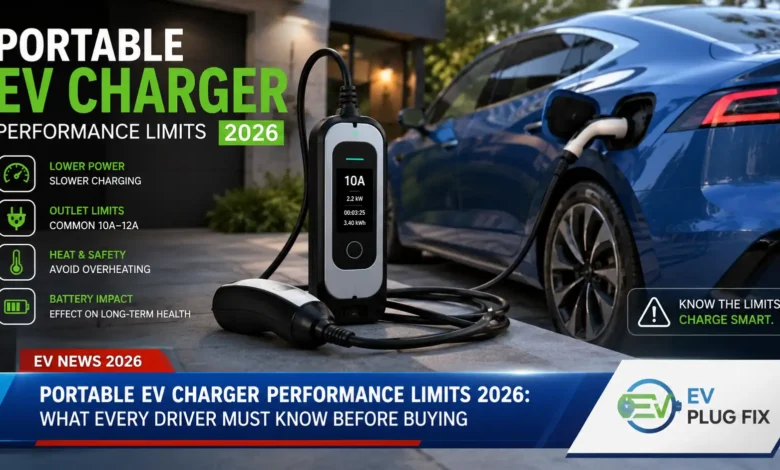
Portable EV chargers promise freedom on the road but often deliver frustration when drivers need them most. The gap between expectation and reality has left countless EV owners stranded in slow-charging purgatory, watching their range crawl upward at 3 to 5 miles per hour while appointments slip away and range anxiety spikes through the roof.
As General Manager at Parwatt New Energy, I have spoken with hundreds of drivers and fleet managers who purchased portable charging solutions expecting a convenient travel companion and received a slow, often inadequate substitute instead. One sales representative who travels weekly between cities bought a portable unit thinking he could top up at hotels using standard outlets. After his first road trip, he discovered that a full charge from low battery required eight to twelve hours of waiting. The portable charger helped in emergencies but never became the primary solution he envisioned.
Expert Take: Portable EV chargers deliver between 1.4 kW on standard 120V outlets and up to 11 kW on 240V connections. Compare this to dedicated home Level 2 chargers pushing 7 to 19 kW and public DC fast chargers delivering 50 kW or more, and the performance gap becomes starkly clear. For a deeper understanding of charging speeds across different setups, check our detailed EV Charging Levels Guide.
The fundamental limitation stems from physics. A typical wall outlet simply cannot supply the current required for rapid charging. Even with improved 2026 technology, portable units remain constrained by available power sources. Understanding these limits before purchasing prevents the disappointment that plagues many first-time buyers.
Why Portable EV Chargers Often Disappoint Drivers When They Need Them Most
Drivers buy portable chargers expecting reliable emergency power or convenient travel charging, yet the units consistently underdeliver on speed. Range anxiety persists because the added miles per hour remain painfully limited. Many owners eventually realize their portable unit cannot keep pace with real-world driving demands.
| Charging Situation | Driver Expectation | Portable Charger Reality | Consequence |
|---|---|---|---|
| Overnight apartment charging | Full battery by morning | Partial charge only | Next-day range anxiety |
| Road trip meal stop boost | Quick range extension | 10-20 miles after one hour | Still requires public fast charger |
| Emergency low battery recovery | Reliable rescue | Hours of waiting required | Missed appointments |
| Daily high-mileage use | Convenient home replacement | Slow, inconvenient process | Driver frustration |
Apartment residents without assigned parking or dedicated circuits face the greatest daily frustration. Travelers discover portable units work best as a last resort rather than a planned strategy. Fleet operators who tried portable solutions for temporary sites often switched to higher-capability mobile units because small portables could not support multiple vehicles efficiently.
The 2026 market offers better portable options with improved efficiency and 240V support, yet the fundamental physics of power delivery from standard outlets remains unchanged. Drivers expecting Level 3 speeds from portable units continue feeling let down. Clear expectations remain the best protection against disappointment. If you encounter issues with your charging setup, our EV Charger Troubleshooting Guide can help identify and resolve common problems.
“A portable EV charger is like a spare tire – essential in emergencies but never a replacement for proper infrastructure. Know its limits before you need it.”
Common Misconceptions About Portable and Mobile EV Chargers
Many drivers hold incorrect beliefs about portable and mobile EV chargers, leading to poor purchase decisions and later disappointment. Some assume any portable unit delivers fast charging anywhere, while others underestimate the importance of electrical outlet capacity or ignore safety features entirely.
Critical Warning: Cheap portable chargers without proper temperature monitoring or cable protection can overheat during extended sessions. This creates fire hazards, trips breakers, and damages vehicle charging ports. Quality units include thermal sensors and automatic current adjustment. Understanding your EV Charger Circuit Breaker requirements is essential for safe operation.
Here is the reality check every EV owner needs:
| Common Misconception | 2026 Reality | Why It Causes Problems |
|---|---|---|
| Anytime fast charging | Limited to 3-11 kW typically | Long wait times, persistent range anxiety |
| Power matches home Level 2 | Depends heavily on outlet and circuit | Under-delivery of expected range |
| All units equally safe | Quality varies widely in thermal protection | Overheating, breaker trips, equipment damage |
| Full daily replacement possible | Best for low mileage or emergency only | Daily inconvenience for most drivers |
| Works identically on every outlet | 120V vs 240V creates massive difference | Unexpected slow performance |
At Parwatt, we see customers who bought the cheapest available unit and later returned frustrated because it could not deliver consistent results. Our EP02 Portable EV Charger with Display includes clear power information and safety protections so users understand performance limits from the start. Always check your vehicle’s maximum AC charging rate and available outlet power before purchasing. A portable charger supporting 32A on 240V outperforms basic 120V-only units, yet both still fall short of a properly installed home charger for regular use. The quality of the cable itself also matters significantly; Copper EV Charging Cables offer superior conductivity and durability compared to lesser alternatives.
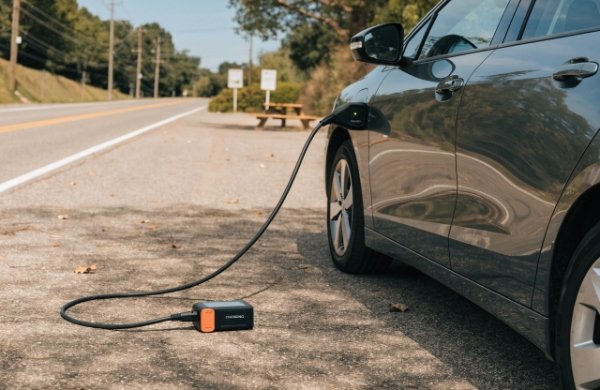
Mobile EV chargers offer higher power output but sacrifice the compact portability of smaller units
Portable vs Mobile EV Chargers: Use Cases, Performance and Limitations in 2026
Portable and mobile EV chargers serve different needs even though people often use the terms interchangeably. Portable units are small, lightweight, and designed for easy carrying. Mobile units are larger, often wheeled or vehicle-mounted, and can deliver higher power or include battery buffering. Understanding these differences helps match the right tool to actual requirements.
Portable EV Chargers
- 1.4–11 kW power output
- Lightweight, fits in trunk
- Emergency, travel, apartment backup
- Relies on available outlet
- Example: EP01, EP02 portable units
Mobile EV Chargers
- Higher continuous or buffered power
- Heavier, often wheeled
- Temporary sites, fleets, events
- Some models include battery buffer
- Example: META mobile series
I have witnessed customers choose a portable unit when they actually needed a mobile solution for temporary fleet charging. The mismatch led to longer sessions and operational delays. Matching the category to the real use case prevents this problem entirely. For fleet applications, understanding MID Wallbox Requirements can help ensure compliance and accurate billing.
Practical Limitations That Persist
Both categories still face power and time constraints. Even higher-end portable units cannot match the speed of a well-installed home Level 2 or public DC fast charger. Mobile units with battery buffers add flexibility but introduce the need to recharge the buffer itself. Heat management remains critical during long sessions. Outlet access and circuit capacity continue to constrain real-world performance. To better understand the role of internal components in charging efficiency, explore our guide on the EV DC-DC Converter.
When Portable EV Chargers Make Sense – And When They Don’t
Portable EV chargers deliver genuine value in specific situations but fall short when used as a primary daily solution for high-mileage drivers. Knowing the difference helps owners avoid frustration and make better equipment decisions.
Where Portable Chargers Excel
- Apartment living: Residents without private garages or dedicated circuits benefit most from portable units for overnight charging
- Road trip security: Hotel and family outlet access provides peace of mind when public chargers are scarce
- Emergency backup: A dead battery in an unexpected location becomes manageable with a portable charger on hand
- Low-mileage urban driving: Drivers covering under 40 miles daily can often rely solely on portable charging
- Secondary vehicles: Infrequently used cars benefit from occasional slow charging without infrastructure investment
Where Portable Chargers Fall Short
- High daily mileage: Drivers covering long distances consistently need faster charging
- Fleet operations: Multiple vehicles require higher power or dedicated infrastructure
- Time-sensitive needs: Anyone expecting quick charging will face disappointment
- Primary home charging: Fixed Level 2 remains superior for regular daily use
“Start by calculating your average daily driving distance and available overnight charging opportunities. If the numbers show a portable unit can restore enough range overnight for your typical day, it can work well. If not, combine home charging with portable backup.”
Ready to Choose the Right Portable EV Charger? Here’s Your Next Step
Choosing the right portable or mobile EV charger begins with an honest assessment of actual driving patterns and available power sources. Matching power rating, connector compatibility, and safety features to real needs prevents later disappointment.
Practical Decision Framework
- Calculate daily range needs: Measure typical driving distance. Under 40-50 miles with overnight charging access makes portable units viable as primary solution
- Verify vehicle AC capability: Check your EV’s maximum AC charging rate. Some vehicles accept higher current on Level 2 while others are limited by onboard chargers
- Inspect power sources: Confirm 240V outlet availability and circuit amperage. A 32A-rated unit cannot deliver full power on a 15A circuit
- Prioritize safety: Look for thermal protection, automatic current adjustment, and quality cables. Avoid cheap units without proper certifications
- Consider hybrid approach: Most drivers find the best long-term setup combines fixed home charging for daily use with portable backup for travel and emergencies
2026 Update: Newer portable models feature improved efficiency, better 240V support, and enhanced safety systems. These advances narrow the gap but do not eliminate the fundamental limits of outlet power and portability.
Conclusion
Portable and mobile EV chargers offer valuable flexibility for emergency use, travel, and apartment charging, yet they carry clear limitations in speed, power, and convenience. In 2026, they work best as a backup or supplementary solution rather than a primary daily charger for most drivers. At Parwatt, we design our portable and mobile solutions to deliver reliable performance within these realistic limits. Understanding actual use cases and limitations helps choose the right charger and avoid disappointment. For most EV owners, combining home Level 2 charging with a quality portable unit provides the best balance of convenience and peace of mind. For additional insights on managing charging time effectively, explore our detailed analysis on EV Charging Time.