EV Battery Charging Methods & Their Impact on Performance in 2026
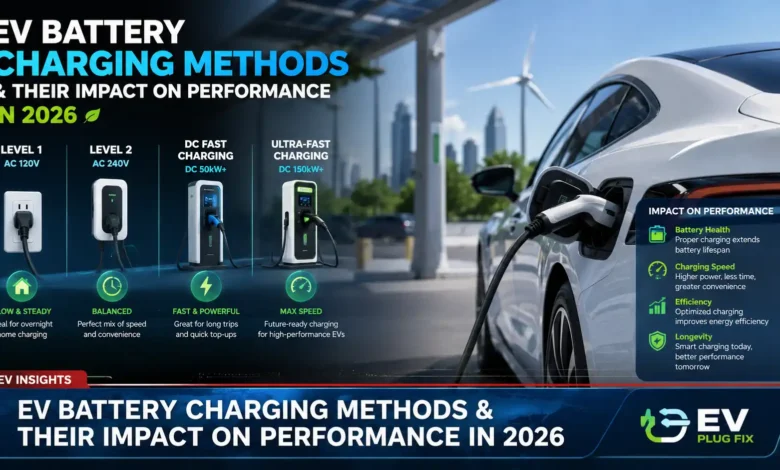
EV battery charging methods directly determine how well your electric vehicle performs, how far it goes, and how long its battery pack will last. For electric vehicle owners in 2026, understanding the nuances of different charging strategies is no longer optional—it’s essential for protecting your investment and maximizing driving range. Whether you’re considering a new purchase or evaluating Used EV Ownership Costs, charging habits play a central role in long-term value.
Lithium-ion batteries, the powerhouse behind modern EVs, are sensitive to how they’re charged. From the widely used Constant Current-Constant Voltage (CC-CV) protocol to emerging pulse charging technology, each method affects charging speed, thermal management, and long-term battery degradation differently. The EV Charging Handshake between your vehicle and the charger ensures these protocols are properly executed for safe and efficient energy transfer.
Let’s cut through the confusion and examine how these charging methods impact your EV battery in real-world conditions.
Essential EV Battery Charging Methods Explained
Before diving into performance impacts, it’s crucial to understand the primary charging techniques available for lithium-ion batteries in 2026. Each method has distinct characteristics that influence charging efficiency and battery health. For those installing home solutions, understanding these methods helps when selecting Dedicated EV Circuits that support your preferred charging approach.
Constant Current-Constant Voltage (CC-CV) Charging
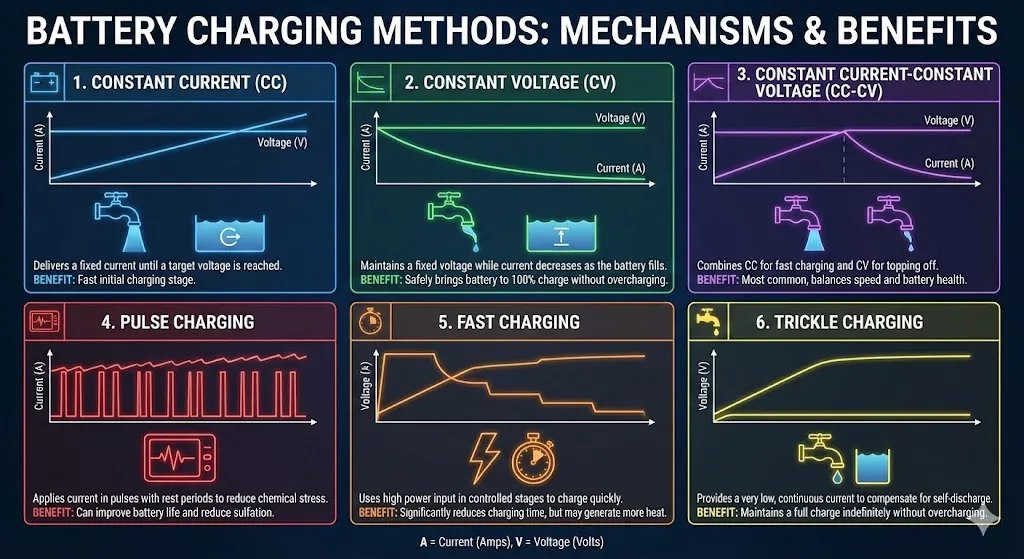
The CC-CV charging method remains the gold standard for lithium-ion batteries, including those in most EVs and consumer electronics . This two-stage process balances speed with battery protection:
- Constant Current Stage: The charger delivers a steady current until the battery reaches its voltage limit, typically around 80% state of charge.
- Constant Voltage Stage: Voltage is held constant while current gradually decreases to prevent overcharging.
Research demonstrates that CC-CV effectively balances charging speed and battery lifespan, making it the preferred choice for manufacturers . Modern implementations integrate intelligent Battery Management Systems (BMS) that optimize parameters based on battery temperature and health .
Multi-Stage Constant Current (MCC) Charging
Building on CC-CV, multi-stage constant current charging divides the process into several current steps. Each stage applies a different current level optimized for specific state of charge ranges. Studies indicate MCC can reduce charging time by up to 20% compared to conventional CC-CV while effectively suppressing lithium plating—a primary cause of battery degradation .
Pulse Charging
Pulse charging delivers current in intermittent bursts, allowing brief relaxation periods between pulses. This technique shows promise in reducing internal polarization and improving battery cycle stability . The relaxation periods help manage temperature and promote uniform lithium distribution, potentially extending battery longevity compared to traditional methods .
Fast Charging: Speed vs. Battery Longevity
Fast charging technology has revolutionized EV usability, reducing charging time from hours to minutes. However, this convenience comes with measurable impacts on battery health that owners should understand. When you’re on the road, knowing Public EV Fast Charging station locations and capabilities helps you plan charging stops that balance speed with battery preservation.
The Science Behind Fast Charging Degradation
When you plug into a DC fast charger delivering 100 kW or more, the battery experiences increased electro-thermal stress . High current delivery accelerates several degradation mechanisms:
- Lithium Plating: Metallic lithium deposits form on the anode instead of properly intercalating, reducing available capacity
- Increased Heat Generation: Higher currents produce more resistive heating, accelerating chemical aging reactions
- Accelerated Capacity Loss: Frequent fast charging can double battery degradation rates compared to standard AC charging
| Charging Method | Typical Charging Time | Relative Degradation Impact | Best Use Case |
|---|---|---|---|
| Level 1 (120V AC) | 40-50 hours | Lowest | Emergency backup |
| Level 2 (240V AC) | 4-10 hours | Low | Daily home charging |
| DC Fast (50-150 kW) | 30-60 minutes | Moderate-High | Road trips, urgent needs |
| Ultra-Fast (150-350 kW) | 15-30 minutes | Highest | Long-distance travel |
Data from a comprehensive Geotab analysis of over 22,700 EVs revealed that vehicles frequently using chargers above 100 kW experienced approximately 2.5% annual battery degradation, compared to 1.5% for those primarily using slower charging . The research showed that when fast charging exceeded 12% of total charging sessions, degradation became markedly more pronounced .
“Convenience has a measurable cost. Even slightly moderating fast charging habits can extend battery usable life by years.” — Geotab EV Battery Study, 2026
Modern EVs offer smart charging features to optimize battery health and performance.
Modern EVs offer smart charging features to optimize battery health and performance.
Practical Charging Strategies for Maximum EV Battery Health
Based on extensive research and real-world data, here are actionable strategies to optimize your EV’s battery performance and longevity:
Maintain the 20%-80% Sweet Spot
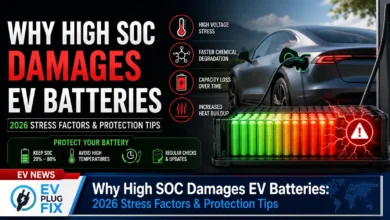
Keeping your battery between 20% and 80% state of charge significantly reduces chemical stress . This range minimizes the voltage extremes that accelerate degradation while still providing ample range for daily driving. Smart scheduling through EV Off-Peak Charging can help you maintain this range automatically while saving on electricity costs.
- Set charge limits through your vehicle’s infotainment system or mobile app
- Reserve 100% charges for road trips when you need maximum range
- Avoid letting the battery drop below 20% regularly
Prioritize Slow Charging for Daily Use
Home AC charging (Level 2) is considerably gentler on your battery than frequent DC fast charging . Level 2 chargers deliver sufficient power for overnight charging while generating minimal heat—a primary factor in battery aging. A properly installed EV Wallbox Installation provides the ideal foundation for daily charging that protects your battery long-term.
Real-world perspective: A Tesla Model 3 Long Range charges from 20% to 80% in approximately 6 hours with a Level 2 charger, providing over 200 miles of range for the next day’s driving .
Manage Temperature Exposure
Temperature plays a crucial role in battery health. Research shows that in regions with average temperatures exceeding 25°C (77°F), battery degradation increases by approximately 0.4% annually .
- Park in shade or garages when possible during hot weather
- Allow the battery to cool before initiating charging sessions
- Use battery preconditioning features when navigating to fast chargers
- Charge during cooler times of day when practical
Use Fast Charging Judiciously
While occasional fast charging won’t cause immediate harm, frequent use accelerates degradation. Reserve DC fast charging for:
- Long-distance travel where charging stops are necessary
- Emergency situations requiring rapid range extension
- Times when you have limited charger availability
Battery Chemistry Matters: LFP vs. NMC
Different battery chemistries respond differently to charging habits. Understanding your EV’s battery type helps optimize your charging strategy. For deeper insights into one popular chemistry, check our NMC Battery Analysis to understand its specific care requirements.
Lithium Iron Phosphate (LFP) Batteries
LFP batteries demonstrate greater tolerance for frequent full charges and high state of charge operation . Many manufacturers recommend charging LFP packs to 100% about once per week for battery management system calibration. These packs also show better resilience to fast charging stress .
Nickel Manganese Cobalt (NMC) and Nickel Cobalt Aluminum (NCA) Batteries
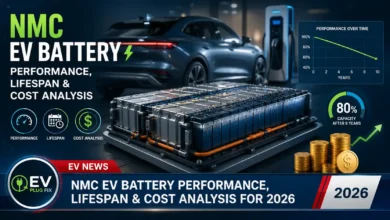
NMC and NCA chemistries offer higher energy density but are more sensitive to high voltage stress . Daily charge limits of 80-90% are typically recommended to optimize longevity.
“Not all EV batteries respond the same way to high state of charge. LFP chemistry handles frequent full charges better than NMC or NCA packs.” — Automotive Battery Research, 2026
Battery Management Systems: Your EV’s Guardian Angel
Modern EVs feature sophisticated Battery Management Systems that automatically protect your battery from adverse charging conditions . BMS functions include:
- Real-time temperature monitoring and thermal management
- Cell voltage balancing across the entire pack
- Charging rate adjustments based on battery state
- Prevention of overcharging and deep discharge
While BMS technology has significantly improved battery protection, charging habits still influence long-term degradation patterns . For drivers who frequently rely on public infrastructure, understanding EV Charging Power Outages and recovery protocols adds another layer of battery protection.
The Future of EV Battery Charging
Charging technology continues to evolve rapidly. Current research focuses on:
- Physics-informed charging strategies that account for battery aging and thermal safety simultaneously
- Bayesian optimization frameworks that generate optimal charging protocols for specific battery types
- Adaptive charging algorithms that adjust current based on real-time battery state and environmental conditions
These innovations promise to deliver faster charging with less degradation, potentially changing our approach to EV charging in the coming years. As Smart EV Charging Europe initiatives expand, these advanced protocols will become more accessible to everyday drivers.
Key Takeaways for EV Owners in 2026
Your charging habits directly impact battery performance, range, and replacement costs. By understanding different charging methods and their effects, you can make informed decisions that optimize both convenience and battery longevity. Prioritize Level 2 charging for daily needs, reserve fast charging for when it’s truly necessary, keep charge levels between 20% and 80%, and let your vehicle’s BMS do its job while supporting it with smart habits.