ISO 15118 Explained: EV Plug & Charge, V2G, and 2026 Compliance
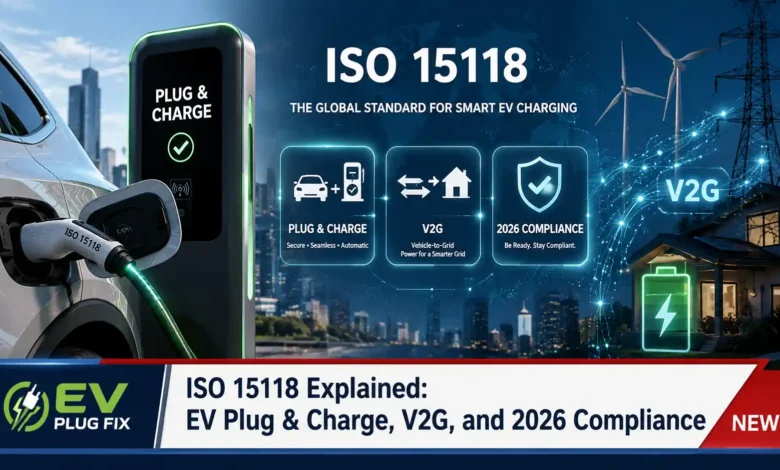
ISO 15118 is rapidly transforming the electric vehicle charging experience from a sometimes-frustrating ritual of cards and apps into a seamless, automatic process—and it’s also opening the door for EV owners to earn money by feeding energy back to the power grid. This international standard establishes a common digital language for communication between electric vehicles and charging stations, enabling advanced features like Plug & Charge and bidirectional power transfer. With new European regulations mandating support from 2026, understanding ISO 15118 is no longer optional for EV owners, fleet operators, and charge point managers. For those considering a Home EV Charger Guide, understanding this standard is crucial for future-proofing your installation.
⚡ Key Takeaways: ISO 15118 at a Glance
- Plug & Charge Convenience: Enables automatic vehicle-to-charger authentication and billing without RFID cards, mobile apps, or manual codes.
- Bidirectional Power (V2G): ISO 15118-20 unlocks Vehicle-to-Grid energy transfer, allowing EVs to sell excess battery power back to the grid.
- 2026 EU Regulatory Mandate: The EU Alternative Fuels Infrastructure Regulation (AFIR) mandates ISO 15118 support for public AC chargers starting January 8, 2026.
- Bank-Grade Cybersecurity: Utilizes Public Key Infrastructure (PKI) digital certificates and encrypted TLS communication to protect payment data.
What Is ISO 15118 and Why Is It Critical for EV Charging?
ISO 15118 is the international standard defining the digital communication protocol between an electric vehicle and charging infrastructure, covering both AC and DC charging. In essence, it replaces the basic analog signaling of older chargers with sophisticated digital data exchange over the charging cable using Power Line Communication (PLC) technology. This digital “conversation” allows the car and charger to securely exchange information about identity, billing, charging parameters, and energy needs without driver intervention. As an industry expert noted during a recent panel discussion, regulatory pushes are accelerating adoption faster than anyone expected, making ISO 15118 a central pillar of modern EV infrastructure.
ISO 15118 is the technical foundation for three of the most important capabilities in modern EV charging: Plug & Charge, smart charging, and bidirectional power transfer.
The standard is structured in parts, with ISO 15118-2 defining the core communication for authentication and smart charging, while ISO 15118-20 expands this foundation to support bidirectional charging and wireless charging. This newer version is a substantial evolution that is not backward-compatible, meaning a charger or vehicle that needs to support both versions must implement both protocol stacks.
Plug & Charge: The End of RFID Cards and Mobile Apps
One of the most celebrated features enabled by ISO 15118 is Plug & Charge. This consumer-friendly functionality makes charging an EV as simple as plugging in the cable—no RFID cards, mobile apps, QR codes, or manual authentication needed.
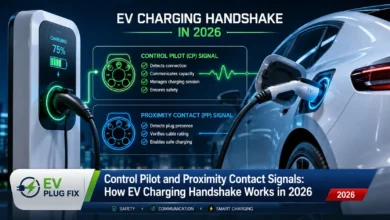
When you connect an ISO 15118-compliant vehicle to a compatible charger, the two perform a secure cryptographic handshake using digital certificates, similar to how online banking authenticates your identity. The vehicle presents its digital certificate—a form of electronic ID—to the charger, which validates it against a trusted system and authorizes the charging session and billing in seconds.
Bidirectional Charging and V2G: Turning Your EV into a Revenue Source
Beyond convenience, ISO 15118-20 unlocks the transformative potential of bidirectional charging. This allows electric vehicles to not only draw power from the grid but also feed it back, a concept known as Vehicle-to-Grid (V2G). For those exploring this capability, understanding Bidirectional EV Charging is essential to maximizing your investment.
Imagine owning solar panels: on sunny days, your car stores excess power in its battery; in the evening when demand and electricity prices are high, you can use that stored energy at home or sell it back to the grid. This turns your EV into a mobile energy storage unit, capable of generating revenue through energy arbitrage. According to the International Energy Agency, commercial offerings already promise customer benefits of up to $770 annually through managed charging programs.
The economic potential is staggering: according to Transport & Environment, V2G technologies could save more than €100 billion in European system costs between 2030 and 2040. Private users in Germany could earn up to €500 a year by participating in the electricity market, while the required investment of €100 to €300 is offset by annual revenues exceeding €600.
Bidirectional charging turns electric vehicles into flexible storage units capable of absorbing surplus solar or wind power and releasing it at times of peak demand.
While a common concern is battery degradation from V2G use, an RWTH Aachen University study shows that additional aging amounts to just 1.7 to 5.8 percentage points after ten years, making the revenue potential highly attractive. For more insights on battery health, check out our detailed analysis on EV Battery Degradation.
The 2026 AFIR Regulation: A Compliance Deadline for Charging Stations
The adoption of ISO 15118 is being dramatically accelerated by new European regulations. Starting January 8, 2026, the EU’s Alternative Fuels Infrastructure Regulation (AFIR) mandates that all newly installed or substantially upgraded publicly accessible AC charging points must support the ISO 15118-2 standard. This means supporting Plug & Charge and smart charging features is no longer optional for public infrastructure.
The timeline tightens further from January 1, 2027, when AFIR will require implementation of ISO 15118-20 for the same types of charging points and for all private ones. This effectively mandates V2G capability for new chargers and marks a significant shift from basic analog communication (Pulse Width Modulation) to sophisticated digital controllers with PLC capabilities.
ISO 15118 Benefits for EV Drivers, Fleets, and the Grid
The advantages of ISO 15118 extend to every stakeholder in the EV ecosystem:
For EV Drivers
- Frictionless Charging: True plug-and-go experience with no apps, cards, or manual login required.
- Enhanced Security: Banking-grade encryption and certificate-based authentication protect payment details and account information.
- Potential Revenue: Opportunity to earn money by participating in V2G programs, energy arbitrage, or grid stabilization services.
For Fleet Operators
- Reduced Operational Complexity: Automatic authentication eliminates the need to teach drivers different charging procedures across networks.
- Lower Support Costs: Fewer customer service calls related to lost RFID cards, app glitches, or payment errors.
- Improved Efficiency: Vehicles start charging immediately, reducing queuing and idle time.
For Grid Stability and Energy Management
- Grid-Friendly Charging: Smart charging helps avoid overloads and reduce peak demand.
- Flexibility Resources: EVs with V2G offer the largest hourly energy flexibility of all technologies considered, according to IEA analysis.
- Reduced Infrastructure Costs: Studies show V2G deployment could reduce the need for expensive grid upgrades, with one study finding it could avoid three-quarters of transformer overloads by 2050.
ISO 15118-2 vs. ISO 15118-20: What’s Changed?
Understanding the difference between these two parts of the standard is crucial for planning future-proof EV infrastructure:
| Feature | ISO 15118-2 | ISO 15118-20 |
|---|---|---|
| Primary Focus | Authentication (Plug & Charge), Smart Charging | Bidirectional Power Transfer (V2G, V2H), Wireless Charging |
| Security | TLS 1.2 (optional) | TLS 1.3 (mandatory), TPM 2.0 integration |
| Bidirectional Support | Not supported | Full support for vehicle-to-grid, vehicle-to-home, vehicle-to-building |
| AFIR Mandate | January 8, 2026 (public AC chargers) | January 1, 2027 (public and private chargers) |
| Backward Compatibility | Not compatible with ISO 15118-20; both stacks must be implemented | Not compatible with ISO 15118-2; both stacks must be implemented |
How Plug & Charge Works: The Technology Behind the Experience
Plug & Charge relies on a secure Public Key Infrastructure (PKI)—a system of digital certificates that establishes trust between the vehicle, charger, and backend systems. Here’s the process:
- Certificate Provisioning: When an EV owner signs a charging contract, a Contract Certificate is provisioned to the vehicle, acting as its digital identity.
- Plug-in and Handshake: When the driver connects the cable, the charging station presents its certificate and establishes a TLS encrypted connection with the EV.
- Authentication: The vehicle presents its contract certificate to the charger, which sends it to its backend system.
- Authorization: The backend validates the certificate against the PKI, authorizes the session, and begins billing—all within seconds and without any driver interaction.
This is different from the less secure “Autocharge” method, which simply checks a vehicle’s MAC address or ID against a whitelist and lacks the certificate chain and encryption that make ISO 15118 banking-grade secure.
Current Adoption and Real-World Implementation
While the technology is ready and regulations are driving adoption, implementation faces several challenges. Compliance testing is only 50% of the job—fully standards-compliant systems can still experience field bugs due to edge cases. The industry relies on events like CharIN Testivals to test real-world interoperability across different vehicle and charger combinations.
Vehicle support is also expanding, with major auto groups actively rolling out Plug & Charge updates across their brands. However, V2G-capable models remain limited, with only 22 models globally offering full V2G capabilities as of 2026, though this represents rapid growth in the last two years. Notably, while Chinese OEMs produce over half of EV models globally, they account for only one of the commercially available V2G models.
For charge point operators, the challenge includes managing both RFID and Plug & Charge authorization simultaneously—what happens when both try to authorize at the same time? The industry has agreed on workarounds, but the user experience continues to mature. For those evaluating different charger management solutions, our go-e Portal Review offers valuable insights into modern management platforms.
Cybersecurity and the Importance of Secure Communication
With advanced digital communication comes the need for robust cybersecurity. ISO 15118 addresses this with encryption and certificate-based authentication. As one expert noted, cybersecurity is a bigger motivator than most companies admit publicly. The standard’s security features protect against eavesdropping, tampering, and unauthorized access.
However, like any connected system, ISO 15118 is not immune to potential attacks. Researchers have demonstrated relay attacks that could theoretically allow energy theft during a charging session. The good news is that these vulnerabilities are being actively studied and addressed—lightweight modifications including distance bounding algorithms have been proposed as effective countermeasures.
It’s worth noting that ISO 15118’s certificate-based security is inherently more secure than alternative protocols like DIN Spec 70121 (Autocharge), which relies on MAC addresses and lacks a certificate chain. Understanding EV Charger EMC Standards is also critical for ensuring reliable and secure charging infrastructure.
Smart Charging: The Underrated Value Driver
Before V2G, even ISO 15118-2 provides powerful smart charging capabilities. The standard allows the vehicle to communicate its energy demand and the driver’s departure time to the charger. This enables charging optimization based on grid capacity, renewable energy availability, and electricity prices.
As industry experts point out, smart charging is the most underrated value driver because it doesn’t require waiting for ISO 15118-20 adoption. Charging station management systems can use this data to calculate optimal charging schedules, reducing strain on the grid and lowering costs for EV owners. For those looking to integrate renewable energy, combining ISO 15118 with Solar EV Charging can maximize both environmental and financial benefits.
Frequently Asked Questions About ISO 15118
What is the difference between ISO 15118-2 and ISO 15118-20?
ISO 15118-2 defines core digital communication for authentication and Plug & Charge capabilities. ISO 15118-20 is an expanded protocol that adds support for Bidirectional Power Transfer (V2G, V2H), wireless charging, and upgraded TLS 1.3 encryption.
Is Plug & Charge the same as Autocharge?
No. Autocharge relies on unencrypted vehicle MAC address identification, which can be vulnerable to spoofing. ISO 15118 Plug & Charge uses encrypted digital certificates and Public Key Infrastructure (PKI) to deliver bank-grade security.
Does my EV charger need to support ISO 15118?
Yes, especially if installing commercial or public charging infrastructure in Europe where the AFIR regulation mandates compliance starting in 2026. For home chargers, ISO 15118 support ensures future readiness for V2G energy trading and smart grid optimization.
Conclusion: ISO 15118 as the Foundation of the EV Future
ISO 15118 is more than a technical standard—it’s the key that unlocks a seamless, profitable, and grid-friendly EV ecosystem. With mandatory compliance approaching in 2026 and 2027, the technology is rapidly transitioning from “future potential” to “current reality.”
Whether you’re an EV driver tired of juggling multiple charging apps, a fleet operator seeking operational efficiency, or a charge point operator preparing for regulatory deadlines, understanding and implementing ISO 15118 is essential. The standard delivers on the promise that charging an electric vehicle can be as effortless and secure as plugging in a phone, while simultaneously opening new revenue streams for EV owners and contributing to grid stability.