Should You Leave Your EV Charger Plugged In? Myths and Facts You Need to Know
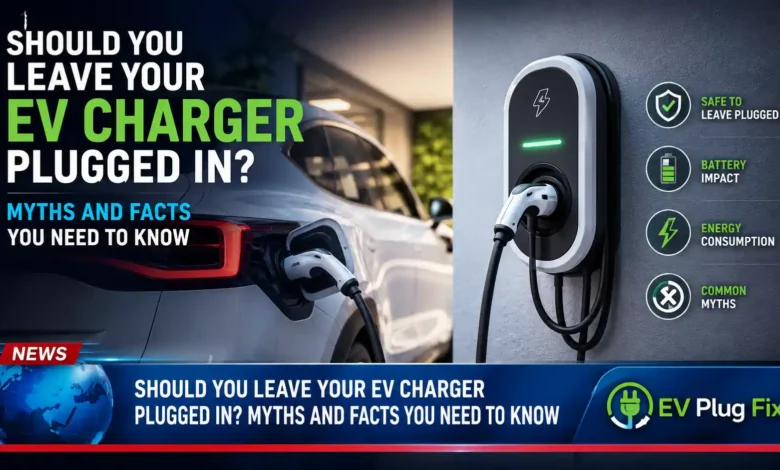
Every electric vehicle owner eventually faces this quiet dilemma: you pull into the garage, plug in for the night, and the next morning, you face a choice. Do you leave the charging cable connected until the next drive, or do you disconnect it immediately, even though your battery is full?
- Core Answer: Leaving your EV charger plugged in is generally safe and often recommended by manufacturers for battery health.
- Key Insight: Frequent plugging and unplugging can cause more physical wear to your charge port and connector than leaving them connected in standby mode.
- Practical Advice: Use your EV’s app to set a charging limit (e.g., 80%) and a schedule to optimize energy use while keeping the connector safely seated.
This question—whether to leave your EV charger plugged in when not actively charging—stirs up debate even among seasoned EV owners. Is it a drain on your electricity bill? A risk to your battery? Or is it a harmless modern convenience that actually protects your vehicle? The answer, supported by recent analysis and manufacturer recommendations, reveals that the bigger threat to your charging system isn’t the time it spends connected, but the mechanical wear and tear of constantly connecting and disconnecting it.
Let’s explore the engineering, the economics, and the best practices to help you make the right decision for your EV and your home charging setup.
Does Leaving Your EV Charger Plugged In Waste Electricity?
One of the primary concerns EV owners have is about energy waste, often referred to as “phantom” or “vampire” drain. When your EV isn’t actively drawing a charge, the charger remains in a standby state, ready to communicate with your vehicle. In this mode, it powers internal electronics and status lights, consuming a small amount of power. For example, some chargers have a standby power consumption of around ≤ 6 W, which is comparable to a night light. Of course, standby consumption varies by model, with some units drawing up to 35W. To better understand these EV charging efficiency losses and how they impact your energy bills, it’s worth examining the standby consumption patterns across different charger models.
To put this into perspective, at 6W, it would take roughly a week to consume one kilowatt-hour of electricity. For most drivers, this translates to a minimal yearly cost—often less than the price of a cup of coffee per month. If you’re particularly energy-conscious, you can easily mitigate this by using your charger’s built-in scheduling features or a smart plug to cut power to the unit during times you never charge, such as when you’re asleep or at work, without ever touching the physical connector.
However, the perceived financial cost of “vampire drain” pales in comparison to the hidden cost of physical degradation that we’ll explore next.
The Hidden Danger of Frequent Plugging and Unplugging
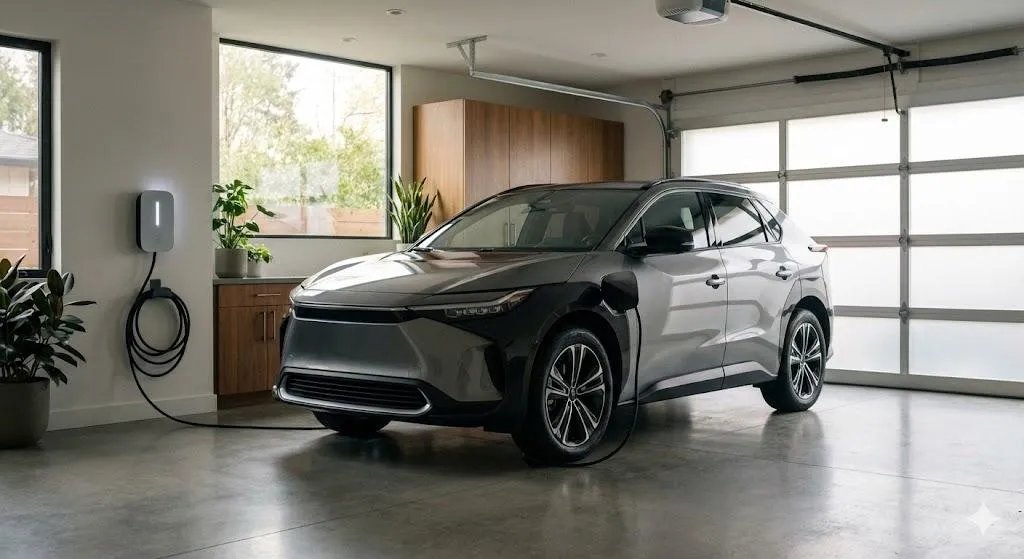
While unplugging your charger might feel like the responsible, “green” choice, the mechanical reality of EV charging is more nuanced. Every time you plug and unplug your charger, you are adding to the total number of mating cycles your connector undergoes. This is a critical durability metric known as the connector life cycle rating, which represents the number of plug-in/plug-out events a connector is designed to withstand while maintaining safe electrical performance and mechanical integrity. These frequent connection cycles contribute directly to charge port wear tear, making it one of the most overlooked maintenance concerns for EV owners.
This mechanical wear has several consequences:
- Accelerated Connector Degradation: Each cycle causes microscopic wear on the metal contact pins. Over time, this can lead to increased electrical resistance, which generates heat and can eventually cause charging failures or even melting. As the resistance builds, the thermal feedback loop can accelerate degradation.
- Increased Risk of Physical Damage: Handling the cable frequently increases the risk of dropping the connector, yanking the cable, or forcing a connection at an awkward angle. This can lead to physical damage to both the plug and your vehicle’s charge port.
- Contamination Exposure: Disconnecting your charger exposes the electrical contacts to the environment. In humid climates, this invites moisture ingress; in dusty areas, dirt and debris can accumulate. While seals are in place, minimizing exposure is better for long-term reliability.
Think of it like any other frequently used mechanical interface. The movement creates friction, and friction creates wear. By leaving the charger connected, you keep the contacts mated, stable, and protected from the elements.
Battery Conditioning and Management Systems
Modern EVs are equipped with sophisticated Battery Management Systems (BMS) that continuously monitor and regulate battery health, including State of Charge (SOC) monitoring, temperature management, and fault detection. One of the BMS’s most valuable features is the ability to “condition” the battery. Understanding proper EV battery health tips is essential, as the BMS relies on your charging habits to maintain optimal cell balance and longevity.
In extreme temperatures—both hot and cold—the battery requires energy to be heated or cooled to an optimal temperature for charging and driving. When your EV is plugged in, the BMS can draw the energy required for this conditioning directly from the wall outlet rather than from the battery itself. This preserves your battery’s charge and prevents unnecessary cycling of the main battery pack.
Furthermore, leaving the vehicle plugged in allows you to use the charger’s scheduling and limit features effectively. You can set a maximum charge limit (such as 80%) for daily use, which is recommended to reduce long-term battery wear. These EV charging limit settings work in conjunction with the BMS to prevent overcharging and maintain your battery’s health for years to come. The car will charge to that limit, stop, and then periodically top itself off as needed. This is far superior to letting the battery sit at a low state of charge, which can also cause degradation.
Should You Leave Your EV Plugged In During Extended Storage?
If you’re going on vacation or leaving your EV parked for several weeks, the answer from many automakers is a definitive “yes.” Tesla, for instance, explicitly states that leaving your vehicle plugged in when you are not using it is the most important way to preserve the battery. This recommendation is echoed by manufacturers like Vinfast.
When storing an EV for an extended period, the general recommendation is to leave the battery at a State of Charge (SOC) of approximately 50% and leave it plugged in. This allows the BMS to manage the battery’s temperature and maintain the charge at that safe, stable level while also topping up the vehicle’s 12V auxiliary battery, which powers all the critical control modules and communication systems.
A weak or dead 12V battery is a surprisingly common cause of charging failure, as it prevents the vehicle from completing the necessary handshake to initiate high-voltage charging from the main pack. Keeping the vehicle plugged in ensures this small battery stays healthy, too.
Essential Questions & Expert Answers
Is it okay to leave my Level 2 charger plugged in all night?
Will leaving my EV plugged in damage the connector?
What should I do if my charger is outdoors and it rains?
How much power does an EV charger use in standby?
When You Should Definitely Unplug Your Charger
While leaving your EV plugged in is generally the recommended approach, there are specific situations where unplugging is the safer choice.
- During Electrical Storms: A lightning strike or severe power surge can travel through your home’s wiring and damage your charger or vehicle. If a thunderstorm is approaching, it’s wise to unplug the charger from the wall (and vehicle) to protect your equipment.
- If You See or Smell Damage: If you notice burning smells, discoloration on the plug or receptacle, or hear unusual buzzing, stop using the charger immediately and unplug it. These are signs of an electrical fault and require a professional inspection.
- If the Breaker Trips Repeatedly: A circuit breaker or RCD (Residual Current Device) that trips every time you try to charge is a serious sign of a ground fault or circuit overload. Do not keep resetting it; unplug and call a licensed electrician.
Conclusion
The debate over leaving your EV charger plugged in is largely settled by the evidence. The convenience, battery management benefits, and reduced wear on critical connectors make it the clear winner for most daily-use scenarios. Manufacturers like Tesla recommend it for a reason, and the data shows that a stable connection is often healthier for your charging equipment than frequent handling. By keeping your charger connected, using smart scheduling to manage costs, and setting a charge limit to preserve battery longevity, you can ensure your EV is always ready to go and protected from the elements.