EV Preconditioning in 2026: Boost Range & Charging Speed Today
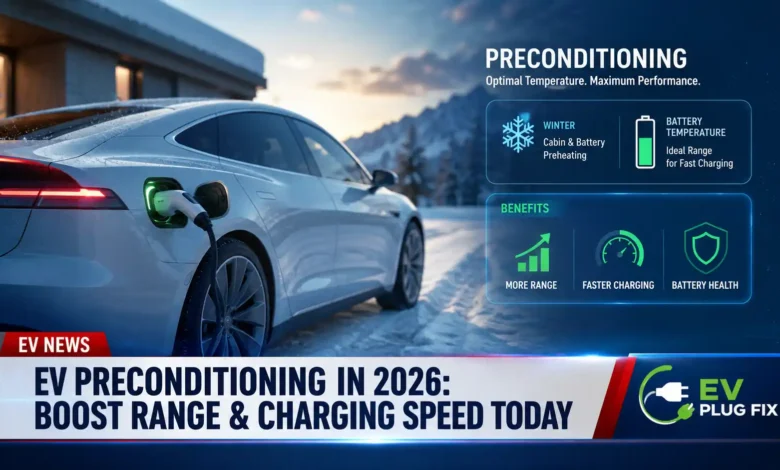
EV preconditioning is the single most impactful habit an electric vehicle owner can adopt, yet it remains one of the most underutilized features in modern EVs. This sophisticated battery and cabin temperature management system doesn’t just warm your seats on a frosty morning; it actively protects your battery’s long-term health, dramatically slashes fast-charging times by over 50 percent, and can recover up to 19 percent of your driving range in brutal winter conditions. In 2026, understanding and using preconditioning effectively is no longer a luxury—it’s a necessity for maximizing your EV investment, especially when paired with a Level 2 EV Installation at home for optimal charging readiness.
What is EV Preconditioning? The Dual Approach to Thermal Management
EV preconditioning is the process of actively bringing your electric vehicle’s battery pack and cabin to their optimal operating temperatures before you start driving or charging. This isn’t just about comfort; it’s a critical function for performance and longevity. It operates on two core levels: battery preconditioning and cabin preconditioning.
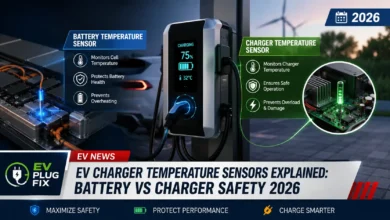
Battery preconditioning ensures the high-voltage pack is within a safe and efficient temperature range, typically between 15°C and 35°C. When the battery is too cold, the electrolyte becomes sluggish, slowing ion movement and limiting available power and charging acceptance. Conversely, excessive heat accelerates internal chemical reactions, leading to rapid degradation. Cabin preconditioning, on the other hand, pre-heats or cools the interior using grid power while the car is plugged in. This not only ensures your comfort from the moment you get in but crucially, it saves precious battery energy that would otherwise be used to heat or cool the cabin during your journey, directly impacting your available driving range. Modern EV Charger Standby Power management systems can help optimize this energy usage even further.
How EV Preconditioning Works in 2026
The Battery Thermal Management System (BTMS)
Modern electric vehicles rely on advanced Battery Thermal Management Systems (BTMS) to perform preconditioning. These systems are the brains and brawn behind the operation, using a combination of hardware and software to regulate temperature precisely.
- Liquid Cooling and Heating: This is the most common method, circulating a coolant through plates attached to battery modules. It can effectively remove excess heat during fast driving and provide warmth in cold conditions. This technology is used in vehicles from Tesla to the Chevrolet Bolt.
- Heat Pump Systems: Increasingly common in 2026 models, heat pumps are exceptionally efficient. They work like a reversed air conditioner, extracting heat from the outside air—even when it’s cold—and compressing it to a higher temperature for cabin or battery use. This is up to four times more efficient than traditional resistive heaters, using a quarter of the energy for the same heating output.
- Active Heating Elements: In extreme cold, some systems, including Tesla’s “stator heating,” use waste heat from the electric motor’s stator to warm the battery. This method can deliver up to 3.5 kilowatts of heating power per motor unit.
How to Activate Preconditioning: Automatic and Manual Methods
EV manufacturers provide several ways to activate preconditioning, ranging from fully automated to manual control.
- Automatic Preconditioning (Navigation-Based): This is the most intelligent and hands-off method. When you input a fast-charging station as your navigation destination, the car’s system calculates the optimal time to begin preconditioning. It will start warming (or cooling) the battery en route so it’s at the perfect temperature for maximum charging speed upon arrival. As of 2025, Tesla’s software update expanded this feature to work with third-party charging networks, not just Superchargers.
- Scheduled Preconditioning: This feature allows you to set a specific departure time via the vehicle’s infotainment screen or smartphone app. The car will work backward from this time to start preconditioning, typically 20-45 minutes in advance, ensuring the battery and cabin are perfect when you’re ready to leave.
- Manual Preconditioning (On-Demand): For spontaneous trips, you can manually activate preconditioning through your smartphone app. This is ideal for quickly warming the cabin or preparing the battery before an unplanned drive or charge.
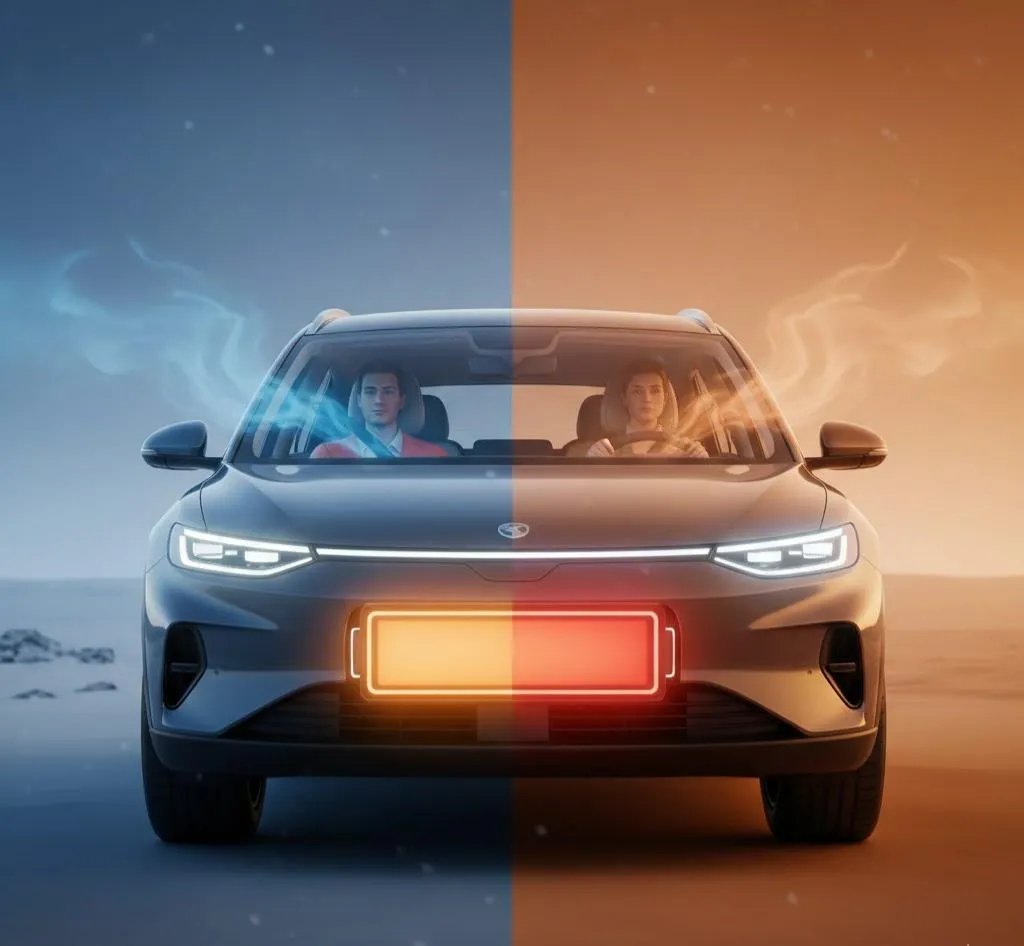
A preconditioned battery can achieve maximum charging speeds, while a cold battery is forced to charge slowly to prevent damage.
4 Key Benefits of EV Preconditioning: Performance, Range & Longevity
⚡ Dramatically Faster Charging Speeds
This is the most tangible benefit. A cold battery forces the car’s management system to limit charging power to protect the cells. Research shows a cold battery at a 350kW charger might start at just 30-50kW. A preconditioned battery can hit 150kW or more immediately. This can reduce the time needed to add 10kWh of energy by over fifty percent. Real-world tests from a Rivian owner showed a preconditioned battery reached the station’s full 62.5kW output, while an unprepared battery was stuck at a sluggish 19kW. For maximum efficiency at home, understanding your EV Charger Amp Rating can help you plan your preconditioning schedule accordingly.
🔋 Protects Battery Health & Extends Lifespan
Temperature is a primary factor in battery degradation. Charging a cold battery can cause “lithium plating,” where metallic lithium permanently forms on the anode, reducing capacity. The U.S. National Renewable Energy Laboratory (NREL) has found that effective thermal management significantly reduces this capacity loss. On the other end of the spectrum, preconditioning’s cooling function in hot weather (above 35°C) prevents rapid chemical degradation, safeguarding your most expensive vehicle component.
📈 Maximizes Driving Range in Extreme Weather
Preconditioning’s impact on range is profound. American Automobile Association (AAA) research shows using cabin heating at -7°C can reduce EV range by up to 41 percent. However, if you perform this heating while the car is plugged in, you’re using grid power, not your battery’s stored energy. NREL research indicates that for pure electric vehicles, preconditioning can deliver range improvements of 1% to 6%, but for plug-in hybrids, it can be as high as 19%. A Canadian Tesla Model Y owner reported a 56% range loss at -15°C even with preconditioning, highlighting that while the feature is essential, it can’t completely overcome physics in the most extreme cold.
🚀 Enhances Driving Performance
A warm battery is a responsive battery. Cold batteries have higher internal resistance, which limits peak power output and reduces regenerative braking efficiency. In -20°C environments, capacity can drop by over 40%. Preconditioning ensures you have access to full power for a consistent, predictable driving experience when you need it most. This performance optimization works hand-in-hand with Plug and Charge EV technology for seamless driving experiences.
The golden rule of preconditioning is to do it while your EV is plugged in. This ensures all the energy used to prepare the battery and cabin comes from the grid, not your driving range.
When and How to Use Preconditioning: A 2026 Best-Practice Guide
EV Preconditioning Scenarios & Benefits Comparison
| Scenario | Action | Key Benefit |
|---|---|---|
| Visiting a Fast-Charging Station | Set the DCFC as your navigation destination. | Cuts 10kWh charge time by over 50%. Achieves maximum power (e.g., 150kW vs. 30kW). |
| Winter Morning Commute (<10°C / 0°C) | Use scheduled departure or manual app activation. | Preserves range (up to 19% improvement) and ensures a warm, defrosted cabin. |
| Extreme Heat Conditions (>35°C) | Use manual or scheduled preconditioning. | Prevents battery overheating and thermal aging. Provides a cool cabin instantly. |
| Unplugged Preconditioning | Activate manually via app when not plugged in. | Will use ~5% battery but can be worthwhile for a significant charge session speed boost. |
How Much Energy Does Preconditioning Use?
A common concern is the electricity cost of preconditioning. The data shows it’s remarkably low. A full preconditioning cycle, including battery heating and cabin warming, typically consumes 3-5 kilowatt-hours. At U.S. average electricity rates, that’s just $0.05 to $0.10 per session. This small investment can save you 20-30 minutes of time at a public charger and prevent hundreds of dollars in long-term battery degradation. Smart Smart EV Energy Management systems can help you optimize these costs by scheduling preconditioning during off-peak hours.
However, if you precondition while unplugged, the car draws this energy from the battery, consuming roughly 5% of its capacity. In this scenario, you must weigh the cost against the massive efficiency gains at the next fast charger. A warm battery can accept a charge rate three times faster than a cold one, making the trade-off often worth it for long trips.
EV Preconditioning Across Different Manufacturers
- Tesla: Operates a highly automated system. Navigate to any fast charger (Supercharger or third-party via 2025 update) and it starts automatically. Use “Scheduled Departure” for daily commutes. Manual activation is not directly supported; it’s tied to navigation.
- Hyundai-Kia Group (Ioniq 5, EV6, GV60): Offers a “Winter Mode” or “Battery Conditioning Mode” in settings. It also initiates preheating when navigating to fast chargers, though reports suggest a more conservative approach focused on battery protection rather than absolute peak speed.
- Ford (Mustang Mach-E, F-150 Lightning): Features “En Route Preconditioning” that activates when a DC fast charger is set in the navigation. In extreme weather, the system will sometimes prioritize cabin comfort over battery preheating.
- Porsche (Taycan): Employs continuous active thermal management and will precondition the battery when a fast-charging station is set as the destination.
2026 Trends and Future of EV Preconditioning
The technology is rapidly advancing. Next-generation systems are already integrating predictive algorithms that learn your driving habits and sync with smart home energy management to precondition during the cheapest electricity rates. The frontier is immersion cooling—directly submerging battery cells in a dielectric coolant. This enables ultra-fast 10-minute charging and provides perfect temperature uniformity, though it remains expensive and complex for widespread use today. These developments signal that preconditioning will become even smarter and more integrated into our driving lives, making the EV experience seamless across all climates and driving conditions. Understanding Vehicle-to-Grid Regulations will become increasingly important as bidirectional charging capabilities become more common alongside advanced preconditioning features.
Mastering EV preconditioning in 2026 is about moving from being a passive owner to an active driver, ensuring you get the most efficiency, performance, and longevity out of your electric vehicle.