EV Charger Upgrade Signs 2026: When to Replace Your Home Charging Station for Safety & Savings
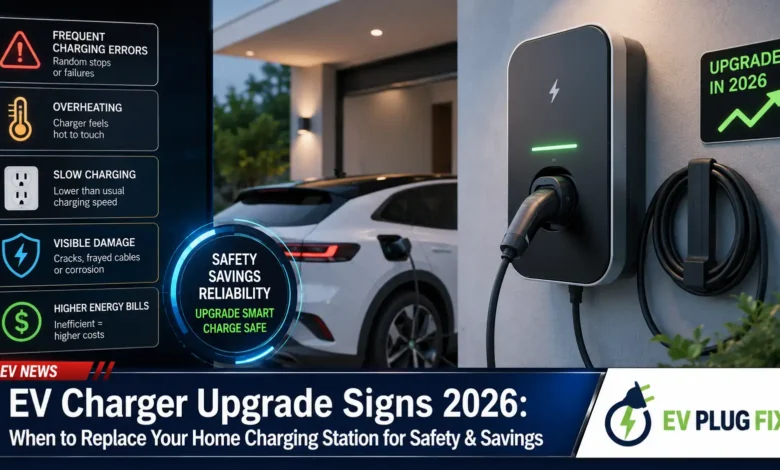
EV charger upgrade signs often go unnoticed until a slow charge ruins your morning commute or a tripped breaker leaves you stranded. Electric vehicles have moved firmly into the mainstream, yet countless owners installed their home charging station once and never revisited that decision — even as technology, vehicles, and homes evolved dramatically around them. Knowing when to replace your EV charger isn’t just about convenience; it directly impacts your safety, energy costs, charging speed, and your vehicle’s battery health. Here’s what you need to watch for in 2026.
1. Outdated Charging Technology That Bottlenecks Your EV
The EV charging industry has advanced at lightning speed over the past decade. What felt cutting-edge when you first bought your charger may now be the weakest link in your daily routine.
1.1 Slow Charging Speeds That Waste Your Time
Early Level 2 home chargers typically delivered just 3.3 kW to 7.2 kW of power. Today’s EVs routinely accept 11 kW, 19.2 kW, or even higher charging rates. If your charger was installed five or more years ago and you’ve recently upgraded to a newer EV with a larger battery pack, your old unit is severely under-delivering.
Consider this: a modern EV that could theoretically charge from 20% to 80% in three hours might take six or seven hours on aging hardware. That’s the difference between waking up fully charged and scrambling to top off before work.
| Charger Age | Typical Power Output | Time to Charge 75 kWh Battery (20-80%) | Efficiency Rating |
|---|---|---|---|
| 5+ years old | 3.3 – 7.2 kW | 6 – 9 hours | Low |
| 2-4 years old | 7.2 – 9.6 kW | 4 – 6 hours | Medium |
| Current (2026 models) | 11 – 19.2 kW | 2.5 – 4 hours | High |
1.2 Missing Smart Features That Cut Your Electric Bill
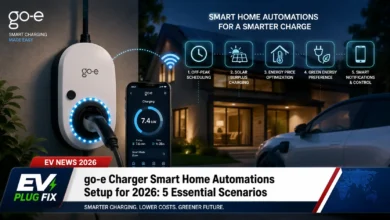
Today’s smart charging stations offer Wi-Fi and Bluetooth connectivity, real-time energy monitoring, scheduled charging during off-peak utility hours, and seamless integration with home energy management systems. If your current unit is a basic “plug and charge” device with no connectivity at all, you’re leaving meaningful electricity-cost savings on the table.
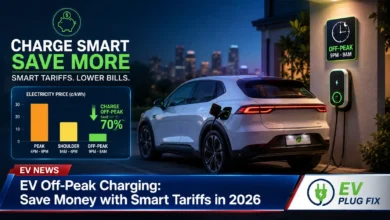
“Time-of-use electricity plans are increasingly common across the US, and a smart charger can automatically exploit these lower-rate windows to reduce your monthly energy bill by 20-40%,” says EV charging infrastructure expert Mark Reynolds.
Many utilities now offer substantial rebates for smart charger installation, further sweetening the financial case for an upgrade.
1.3 No Vehicle-to-Grid (V2G) or Vehicle-to-Home (V2H) Support
Bidirectional charging represents one of the most exciting advances in EV technology. V2G allows your vehicle to feed surplus energy back to the power grid; V2H lets it power your home during an outage. Newer EVs from Ford, Nissan, Hyundai, and other manufacturers already support bidirectional charging.
If you own or are planning to purchase one of these vehicles, an old one-directional charger simply cannot unlock this capability. Upgrading to a bidirectional-capable station transforms your vehicle from a pure energy consumer into a mobile power bank — potentially saving you thousands during power outages.
1.4 Connector and Protocol Compatibility Issues
Connector standards continue to consolidate and shift dramatically. The North American Charging Standard (NACS), originally developed by Tesla, has now been adopted by virtually every major automaker and is set to become the dominant standard in North America. If your older charger uses only the J1772 connector, you may soon need an adapter for your next vehicle — or worse, find yourself unable to charge at all.
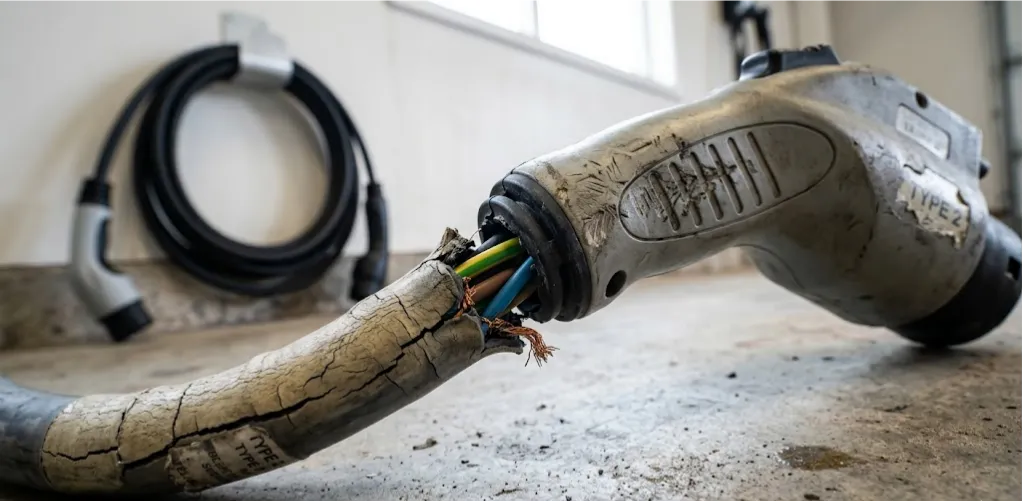
Physical damage to your charging cable is a clear warning sign that replacement is urgently needed.
Proactively upgrading to a dual-port or NACS-native charger future-proofs your installation and eliminates adapter hassle. Several 2026 models now offer native NACS support with J1772 backward compatibility built in.
2. Physical Deterioration and Safety Concerns
Even a technologically adequate charger can become a hazard as it ages physically. Safety is non-negotiable, and a degraded charging station poses real fire or electrical risks that demand immediate attention.
2.1 Visible Wear on the Cable and Connector
The charging cable experiences the highest wear of any component on your EV charger. It’s repeatedly coiled, uncoiled, bent, and exposed to weather extremes. Cracks in the outer jacket, fraying near the connector, or discoloration around the pins are clear indicators that the cable’s insulation is compromised.
2.2 Frequent Tripped Breakers or Persistent Error Codes
A charger that frequently trips its dedicated circuit breaker — or displays persistent fault codes that can’t be cleared — is telling you something critical. These issues often indicate degraded internal components, a failing relay, or a ground fault detection circuit that’s no longer reliable.
Modern chargers include sophisticated self-diagnostic systems that can alert you via smartphone app or LED indicator long before a failure becomes dangerous. Repeated faults on an older unit typically mean the cost of repair exceeds the cost of replacement.
2.3 Inadequate Weather Protection for Outdoor Installations
Older outdoor chargers may have been rated to a lower NEMA or IP ingress-protection standard than what’s now available. If your unit regularly gets wet from rain spray, faces extreme cold, or sits in direct sun in a hot climate, its internal electronics may have degraded faster than expected.
Modern outdoor-rated units are designed to handle temperatures from -40°C to 50°C and carry at least a NEMA 4 (IP65) rating. If your charger shows signs of moisture ingress — condensation on the display, intermittent connections in damp weather, or rust around mounting hardware — replacement is warranted for safety reasons alone.
3. Your Home Electrical System Needs Attention
Perhaps the most overlooked dimension of charging station readiness is the home electrical system itself. The charger you see on the wall is only the final link in a chain that begins at the utility transformer and passes through your main panel, branch circuits, and wiring.
3.1 Undersized Electrical Panel
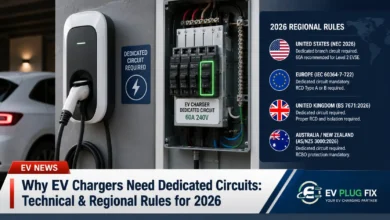
Many homes built before the 1990s have 100-amp service panels, which were adequate for the electrical loads of that era. Adding a 48-amp Level 2 charger (drawing up to 11.5 kW) to a 100-amp panel already loaded with HVAC, heat pump water heater, induction range, and other modern appliances can exceed the panel’s capacity.
Symptoms include lights dimming when the charger is operating, circuit breakers tripping across the home, or a home inspector flagging the panel as over-capacity. In these cases, the right solution is a panel upgrade to 200 amps or 400 amps, after which you can confidently install a full-power charger.
3.2 Aluminum or Knob-and-Tube Wiring Hazards
Homes from the early-to-mid twentieth century may still contain knob-and-tube wiring or aluminum branch-circuit wiring — both considered inadequate and potentially hazardous for high-current loads like EV chargers. Aluminum wiring particularly tends to oxidize at connections over time, increasing resistance and creating dangerous heat buildup.
“Before any EV charger installation or upgrade, have a licensed electrician inspect the wiring from the panel to the proposed charger location. In some cases, a partial or full rewire of the relevant circuit is necessary — this is a case where upgrading your home’s electrical infrastructure must accompany, or even precede, any charger upgrade.”
3.3 Integration with Solar and Battery Storage Systems
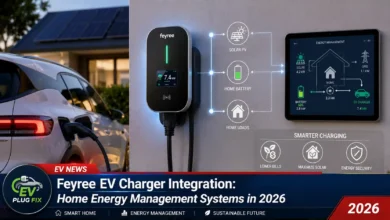
Homeowners who have installed rooftop solar and home battery systems (such as Tesla Powerwall, Enphase, or Franklin WH) are in an especially strong position to benefit from a charging station upgrade. Modern smart chargers can communicate with your solar inverter to prioritize charging your car with solar-generated electricity before drawing from the grid.
This “solar-first” charging mode can reduce your per-mile energy cost to near zero on sunny days. If your current charger has no integration capability, you’re leaving substantial financial and environmental value on the table every single day.
🔋 Key Smart Charging Benefits
- 20-40% energy cost savings through off-peak scheduling
- Solar-first charging for near-zero per-mile costs
- Real-time energy monitoring and usage alerts
- Dynamic load management for multi-EV households
- Remote control and scheduling via smartphone app
3.4 Load Management for Multi-EV Households
If your household has grown from one EV to two or more — a trend accelerating rapidly — running two unmanaged Level 2 chargers simultaneously can draw as much as 23 kW of continuous load. That’s simply untenable on a standard 200-amp residential panel without proper load management.
Modern charging stations support dynamic load management (DLM), where a master controller monitors total household current draw and automatically throttles each charger to prevent panel overload. Upgrading to a smart, load-managed charging system lets you charge multiple vehicles simultaneously without a panel upgrade in many cases, representing significant cost savings.
4. Your Vehicle Requirements Have Changed
Your vehicle itself may be the most straightforward reason to re-evaluate your charger. EV battery capacities have grown dramatically: where early mass-market EVs offered 24-40 kWh batteries, current long-range models routinely feature 75 kWh, 100 kWh, or even 130+ kWh packs.
A charger that could fully replenish a small 24 kWh battery overnight may leave a 100 kWh battery only partially charged by morning. If you’ve upgraded your vehicle but not your charger, calculate your typical daily driving range, determine how many kilowatt-hours you need to restore each night, and confirm that your current charger can deliver that within your available overnight window.
5. Warranty Expiration and Cost of Ownership Analysis
Most residential EV chargers carry a warranty of three to five years. Once that warranty expires, you bear the full cost of any repairs. Given that replacement parts for older models may be scarce or expensive, and that a brand-new modern charger often costs only marginally more than a major repair on an old unit, the economics frequently favor replacement.
Before spending money on repairing an aging charger, obtain a quote for a new unit and compare not just the upfront cost but the long-term value: improved charging speed, smart features, energy savings, manufacturer warranty, and future compatibility.
6. Practical Checklist: Is It Time to Upgrade Your EV Charger?
Use this comprehensive checklist to assess your situation. If you answer yes to three or more items, an upgrade deserves serious and immediate consideration.
- Your charger is more than 5 years old and lacks Wi-Fi or app connectivity.
- Your new vehicle supports faster charging than your current unit delivers.
- Your charger trips breakers or shows persistent error codes.
- The cable or connector shows visible physical damage.
- You’ve installed solar panels or a home battery but your charger can’t integrate with them.
- You now have two or more EVs but your charger lacks load management capability.
- Your home’s electrical panel is 100 amps or less and shows signs of overloading.
- Your charger doesn’t support the NACS connector standard.
- Your charger’s warranty has expired and a repair quote rivals the cost of a new unit.
- You want to leverage V2G or V2H capabilities your vehicle already supports.
2026 EV Charger Upgrade Guide: Next Steps
Upgrading your charging station is rarely a single, isolated decision. It sits at the intersection of technology evolution, vehicle capability, home electrical infrastructure, and personal energy goals. The latest generation of smart chargers is more powerful, more connected, safer, and more economically intelligent than anything available just a few years ago.
Whether your motivation is charging a newer, larger-battery EV faster, reducing your electricity bill through smart scheduling, integrating with solar generation, or simply ensuring your aging equipment is still safe to use, there has never been a better time to assess your current setup and make the upgrade.
Start with a professional electrical inspection of your home panel and circuits. Then compare the specifications of current chargers against your vehicle’s onboard charger capacity, your daily energy needs, and your smart-home integration goals. The investment you make today will pay dividends in convenience, safety, and energy savings for years to come — and will keep you ready for whatever the next generation of electric vehicles brings.