Feyree EV Charger Integration: Home Energy Management Systems in 2026
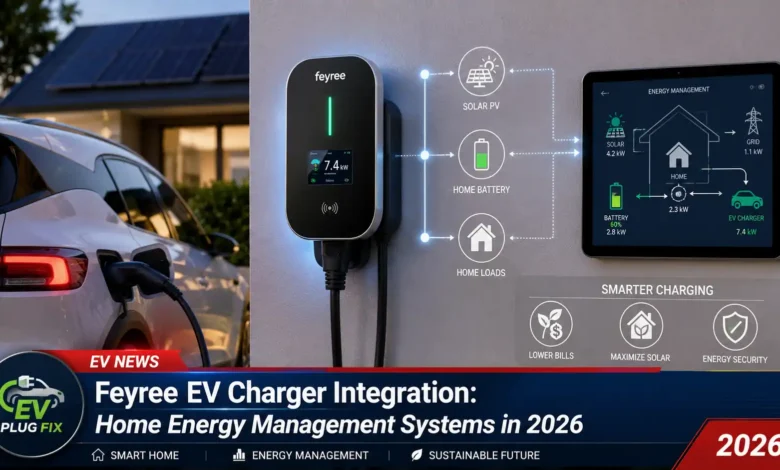
Feyree EV charger integration is rapidly evolving beyond basic Wi-Fi and app control, marking a fundamental shift in how electric vehicles interact with our homes and the power grid. The modern garage is being reimagined as a critical node in a household’s energy network, and intelligent EV chargers are becoming the central orchestrators of this transformation. As the global transition to electric vehicles accelerates past the early-adopter phase, the challenge is no longer just about connectivity but about intelligent integration to manage electrical loads without destabilizing the home or the grid. For homeowners considering the financial implications, understanding the EV Charging vs Petrol Cost Com is an essential part of the broader adoption equation.
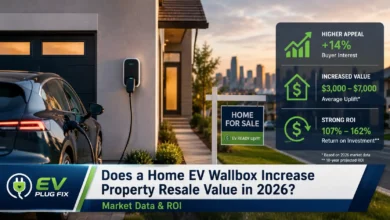
This evolution demands that EV chargers transform from “dumb” appliances that simply pass current into intelligent, interactive components of a Home Energy Management System (HEMS). For a forward-thinking brand like Feyree, this represents both a technological evolution and a strategic opportunity to lead the market from simple connectivity to total ecosystem synergy. Making the right choice for your home starts with understanding the Home EV Wallbox Value and how it integrates with your property’s long-term energy strategy.
Feyree’s Current Landscape: The Wi-Fi Era of Smart Charging
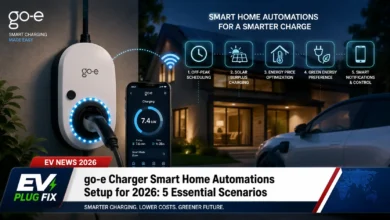
Currently, the industry, including Feyree’s successful product lines like the G-mini, Pisces, and Taurus series, is firmly rooted in the Wi-Fi and App-control era. These chargers provide essential “smart” features via stable Wi-Fi modules, allowing users to remotely schedule charging sessions to take advantage of lower night-time electricity rates and monitor real-time voltage, current, and energy consumption. While transformative compared to basic plug-and-play units, these features still operate within a siloed data model where the charger talks to the Feyree App but doesn’t coordinate with the household dishwasher or solar panels.
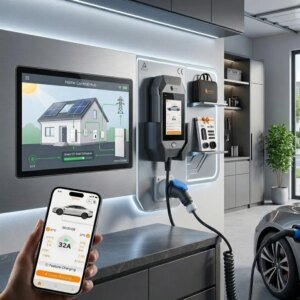
The future of EV charging is built on open standards like OCPP 2.0.1 and Matter, enabling true interoperability and smart home integration.
Why Centralized Home Energy Management is the Inevitable Future
As we look toward 2027 and beyond, several global factors are making centralized home management a necessity rather than a luxury. The integration of EV charging into the broader home ecosystem is driven by the need for dynamic load balancing, solar synergy, and the rise of bidirectional charging. For drivers who frequently rely on public infrastructure, understanding Public EV Fast Charging options provides valuable context for how home integration complements on-the-go needs.
Dynamic Load Balancing for Smart EV Charging
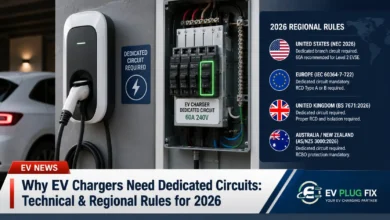
Most residential electrical panels cannot handle a 22kW or 48A continuous load on top of existing appliances. Without smart integration, charging an EV while running an electric oven and heat pump could trip the main breaker. Future integrated Feyree systems will communicate directly with the home’s smart meter, automatically throttling the charger’s output when the house’s total draw approaches its limit and increasing it again when other appliances are turned off. This eliminates the need for expensive electrical service upgrades for homeowners . Recent studies show that AI-driven, grid-aware charging coordination can reduce peak grid load by up to 24.5%, demonstrating the tangible benefits of integrated load management. Emerging AI EV Charging Solutions are at the forefront of this intelligent coordination, optimizing energy flow between vehicles, homes, and the broader grid infrastructure.
| Feature | Basic Wi-Fi Charger | Integrated HEMS Solution |
|---|---|---|
| Control Method | App-based scheduling | Real-time, automated optimization |
| Grid Awareness | None | Dynamic load balancing, peak shaving |
| Renewable Integration | Manual timing | Solar-only mode, excess capture |
| V2H Support | Not possible | Bidirectional energy flow for backup |
| Protocol Support | Proprietary | OCPP 2.0.1, Matter, ISO 15118-20 |
Solar Synergy and Green EV Charging
With residential solar adoption skyrocketing in markets like Germany, France, and the United States, an integrated charger can access data from the solar inverter to enable “Solar Only” mode. The Feyree charger will activate only when there is excess solar production, allowing users to effectively “drive on sunshine” . Research confirms that AI-driven scheduling with renewable-aware optimization can significantly reduce charging costs and improve renewable energy integration .
The Rise of V2H Vehicle-to-Home Technology
Looking further ahead, the EV battery itself will become a backup power source for the home. A centralized management system is required to coordinate this bidirectional flow of energy, turning the car into a giant power bank that can keep the lights on during a blackout . A 75 kWh EV battery parked in the garage holds more energy than five Tesla Powerwall 3 units stacked together, making V2H a game-changing backup solution . Even during unexpected grid disruptions, integrated systems can help maintain household resilience, complementing strategies outlined in resources about EV Charging Power Outages to ensure reliable backup power when it matters most.
Feyree’s Strategic Roadmap to Integrated Home Energy Management
Feyree products currently utilize Wi-Fi but are not yet linked to broader management systems, which is a common and logical starting point. The company’s strategic evolution toward integration involves transitioning to universal protocols and ensuring hardware readiness.
Transitioning to Universal Protocols: OCPP and Matter
The “language” of the future smart home will be dictated by two standards. The Open Charge Point Protocol (OCPP) 2.0.1 is the gold standard for EVSE communication, allowing Feyree hardware to be managed by any third-party energy management software or utility provider . OCPP 2.0.1 introduces dynamic smart-charging capabilities that adjust charging profiles in real-time to grid constraints, time-of-day rates, or renewable supply, and supports integration with ISO 15118 for bidirectional charging .
The Matter protocol, led by Apple, Google, and Amazon, will allow future Feyree chargers with Matter-certified chips to appear in “Apple Home” or “Google Home” dashboards alongside lights and thermostats with zero configuration required . Implementing these protocols ensures Feyree chargers can communicate with HEMS controllers, receiving and processing charging limits and providing status updates . The foundation of this interoperability aligns with the principles of Plug and Charge EV Technology, which aims to simplify the user experience through seamless, standardized communication between vehicles, chargers, and energy management platforms.
Hardware Readiness for Future EV Charging Standards
Feyree is already preparing its hardware architecture for this shift by ensuring internal control boards have the processing overhead and modularity to accept future communication modules. Whether it’s the Hero series or the Flying Cat, the internal logic is being designed to handle more complex “handshakes” between the vehicle and the home, future-proofing users’ investments.
Regional Analysis: Adapting Feyree’s EV Chargers to Global Ecosystems
A centralized management system is not a one-size-fits-all solution, requiring a nuanced approach to integration across Feyree’s global footprint.
The European Context: Grid Efficiency and AFIR Regulations
In Europe, where energy prices are among the highest in the world, the focus is on efficiency and regulation. The EU’s Alternative Fuels Infrastructure Regulation (AFIR) is pushing for more transparent and manageable charging. Integrated Feyree systems in Europe will focus heavily on Dynamic Load Management to help households stay within their “subscribed power” limits, common in France and Italy, to avoid heavy penalties from grid operators. Companies like SolaX are already introducing AC-side V2H systems at Intersolar Europe, highlighting the market’s movement toward integrated solutions that enhance solar self-consumption and peak-load reduction .
The North American Context: NACS Transition and High Amperage
In North America, the shift toward the NACS (Tesla) standard is the current focus, but integration follows closely behind. American homes often have higher power capacities but also higher consumption. Feyree’s future integrated units for the US and Canada will prioritize multi-device coordination, ensuring that a household with two or even three EVs can charge them all overnight without exceeding the transformer’s capacity .
A Day in the Life: The Integrated Feyree Experience in 2030
To understand the value of this integration, imagine a typical day for a Feyree user in the near future.
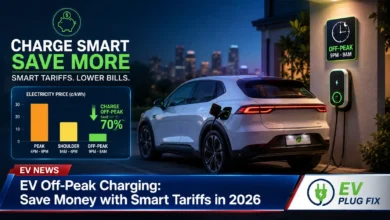
07:00 AM: Your Feyree charger, integrated with your home management system, has ensured your car is at 80% charge. It used only “off-peak” wind energy from the grid between 2:00 AM and 5:00 AM, saving you 40% on your energy bill.
10:00 AM: You are at work. Your home’s solar panels are producing 5kW of power, but the house is only using 1kW. The system sends a notification: “Excess solar detected. Should I discharge the EV to the grid for a credit, or save the energy?”
06:00 PM: You arrive home and plug in. Usually, this is “Peak Hour” where electricity is most expensive. The HEMS recognizes this and places the Feyree charger in “Standby Mode.”
07:30 PM: You decide to cook dinner and turn on the electric oven. The home’s total power draw spikes. Because your Feyree charger is integrated, it “knows” not to start charging yet, preventing any risk of a blown fuse.
11:00 PM: The grid price drops. The oven is off. The house is quiet. The HEMS gives the “Green Light” to the Feyree charger, which begins a high-speed 22kW charge to ensure you’re ready for the morning.
Feyree’s Commitment: Professional, Accessible, and Connected
Feyree’s brand philosophy has always been about bringing high-quality charging solutions to the masses. As the company transitions into the era of centralized management, its core values will remain.
- Plug and Play Simplicity: Even as backend technology becomes more complex, the user experience must remain simple. Feyree will ensure that “integration” doesn’t mean “complicated.”
- Localized Optimization: The company will continue to tailor its integration strategies to match the specific grid requirements and plug standards (Type 2, Type 1, NACS) of its diverse markets.
- Safety First: Centralized management isn’t just about convenience; it’s about safety. By monitoring the thermal health of the connection and the load on the home’s wiring, Feyree provides an extra layer of protection for the family .
The future of the electric vehicle is not just about the car; it’s about the environment in which that car lives. By moving beyond simple Wi-Fi connectivity and embracing full integration into Home Management Systems, Feyree is positioning itself as a vital partner in the sustainable home of the future. The company is building the bridges between your car, your home, and the sun. The integrated future isn’t just coming—at Feyree, it’s already being built.