EV Charging Cable Guide 2026: Why Smart Owners Buy Two Cables
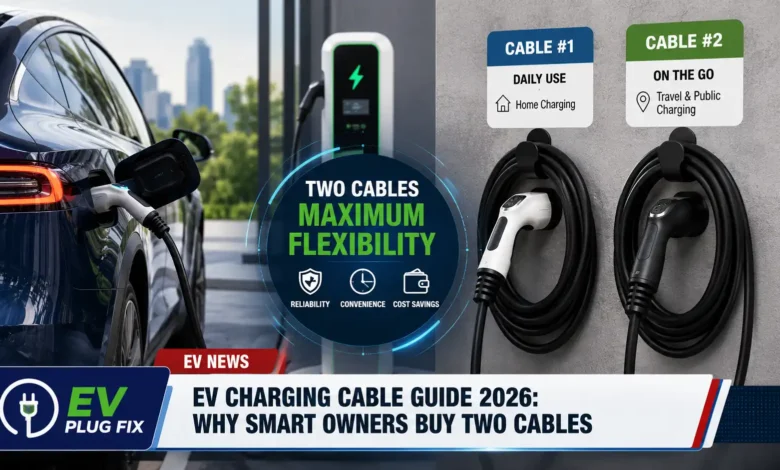
An EV charging cable might be the most underrated accessory in your electric vehicle arsenal, yet experienced owners know that having the right cables — and enough of them — transforms daily charging from a chore into a seamless routine. While it may sound like the most predictable gift on the planet, the strategic addition of a second cable, or simply upgrading to the optimal length, can genuinely revolutionize any EV driver’s day-to-day experience.
Consider the home charging dilemma: your wallbox installation often ends up in the least convenient spot due to wiring constraints, garage layouts, or that one wall nobody wants to drill into. When this happens, a longer cable becomes your salvation. We’re talking 7.5 meters of flexibility that eliminates the need to reverse into awkward angles or reposition your vehicle just to reach the connector. For a complete overview of setting up your home charging infrastructure, check out our Home EV Charger Guide for expert installation tips.
But here’s where the plot thickens — public charging stations present the opposite challenge. Most public chargers are positioned close enough that a shorter, more compact cable is actually more practical. You don’t want to wrestle with excessive coil length in a cramped parking space.
What to Look For in an EV Charging Cable: 2026 Buyer’s Checklist
Not all charging cables are created equal. As the EV market matures, so do the specifications, materials, and compatibility requirements. Here’s what every smart shopper evaluates before making a purchase:
- Correct Plug Type: Type 2 is the undisputed standard across Europe and increasingly globally. Type 1 connectors are becoming rare, so unless you’re driving an older model, stick with Type 2.
- Suitable Charging Power: Match your cable’s capacity to both your vehicle’s onboard charger and your home wallbox output. Cables typically range from 3.7kW to 22kW for single-phase and three-phase systems.
- Durable Weather-Resistant Materials: Your cable will face rain, snow, UV exposure, and temperature extremes. Look for IP-rated connectors and robust insulation that won’t crack in winter. For rental properties and multi-tenant buildings, our Best Rental Property EV Charger guide covers durable commercial-grade solutions.
- Optimal Cable Length: Industry experts agree that 5 to 7.5 meters is the sweet spot — long enough for home flexibility, short enough for public charger convenience.
- Storage Case: A protective case isn’t just a luxury — it prevents cable damage, reduces coil memory, and keeps your trunk organized for spontaneous charging needs.
Charging Cable Length Comparison: Finding Your Perfect Match
Selecting the right cable length impacts your daily convenience more than you might think. Here’s how the options stack up in real-world scenarios:
| Cable Length | Best Use Case | Advantages | Drawbacks |
|---|---|---|---|
| 3-5 meters | Public charging, tight parking spaces | Compact, lightweight, easy to store | Limited reach for poorly positioned home chargers |
| 5-7.5 meters | Versatile home and public use ⭐ Most Recommended | Balanced flexibility, adequate reach for most scenarios | Slightly heavier than shorter cables |
| 7.5+ meters | Home charging with awkward charger placement | Ultimate flexibility, no vehicle repositioning needed | Bulky storage, potential coil management issues |
“Having two cables isn’t about being prepared for the worst — it’s about optimizing for every scenario. One dedicated home cable, one dedicated travel cable. No exceptions.”
Beyond the Basics: Advanced Cable Considerations for 2026
Smart Cable Technology Integration
Modern EV charging cables are increasingly incorporating smart features. Some premium cables now include temperature monitoring, automatic current adjustment, and even RFID authentication for shared charging environments. While these features add cost, they provide peace of mind and efficiency gains worth considering for tech-savvy owners. For a deeper dive into connected charging ecosystems, explore our guide on Networked EV Chargers and smart home integration.
Temperature Management in Extreme Climates
If you live in regions with harsh winters or scorching summers, pay attention to your cable’s thermal specifications. High-quality cables maintain flexibility even at -30°C and resist softening in direct sunlight at 40°C+. This isn’t marketing fluff — it’s the difference between a cable that lasts five years versus one that fails in the first winter.
How to Choose a Charging Cable: The Smart Owner’s Decision Framework
Making your final decision comes down to three key questions:
- What’s your primary charging scenario? Home-only drivers can prioritize length, while frequent public charging users should value portability.
- What’s your future-proofing timeline? If you’re planning to upgrade your EV or home charging setup within two years, invest in a higher-capacity cable now. Understanding EV Battery Degradation trends can help you plan your charging strategy for long-term battery health.
- What’s your storage space? Your cable needs a home too — whether it’s a dedicated garage hook or a compact trunk case.
🏠 Home Charging Setup
Prioritize 7.5m+ length for installation flexibility. Consider a wall-mounted cable holder to prevent tangling and floor tripping hazards. Weatherproof materials are essential for outdoor installations.
🚗 Travel & Public Charging
Focus on 3-5m compact cables with durable cases. Look for lightweight designs that don’t strain your trunk organization. Quick-release connectors and tangle-resistant designs make a noticeable daily difference.
The Verdict: Why Two Cables Are Better Than One
After speaking with EV fleet managers, daily commuters, and road trip enthusiasts, the conclusion is unanimous: the two-cable strategy eliminates charging anxiety. No more frantic morning searches. No more last-minute realizations. No more arriving at your destination with 10% battery and a cable sitting in your garage.
The investment in a second quality cable pays dividends in convenience, peace of mind, and vehicle usability. For the cost of a few restaurant meals, you buy back countless hours of stress and logistical headaches. And when planning your overall EV ownership costs, be sure to review our analysis on EV Insurance Costs 2026 to complete your financial picture.
Ready to upgrade your charging setup? Start by auditing your current situation: measure your parking distances, count your charging locations, and honestly assess how often you forget your cable at home. Then shop accordingly.