Tesla Battery Health 2026: Science-Backed Charging Habits That Actually Work
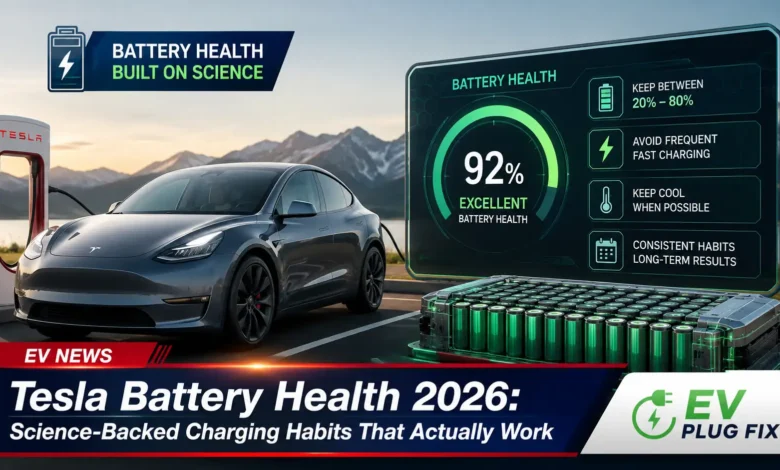
Tesla battery health depends less on luck and more on daily charging habits than most owners realize. The lithium-ion pack powering your vehicle represents the single most expensive component in the car, often costing upwards of $15,000 to $20,000 to replace out of warranty. Yet many Tesla drivers unknowingly accelerate battery degradation through simple, avoidable mistakes that compound over thousands of miles.
Recent battery degradation studies reveal that Tesla owners following optimal charging protocols experience as little as 5% capacity loss after 50,000 miles, while those with poor habits can see double that figure. The difference comes down to understanding the electrochemistry at play and implementing a few straightforward practices that preserve cell integrity without complicating your daily routine.
Understanding Tesla Battery Chemistry and Degradation Factors
Tesla vehicles currently utilize two primary battery chemistries: nickel-cobalt-aluminum (NCA) and nickel-manganese-cobalt (NMC) found in most Long Range and Performance models, and lithium-iron-phosphate (LFP) used in standard range rear-wheel-drive variants. Each chemistry responds differently to charging patterns, but both share common degradation mechanisms. The emergence of next-generation technologies like Solid-State EV Batteries promises even greater longevity in future models, but current lithium-ion packs require careful management.
Battery degradation occurs through several parallel processes. Lithium inventory loss reduces the number of active ions available for energy storage. Electrolyte decomposition creates internal resistance that impedes power flow. And structural changes in electrode materials gradually diminish the pack’s capacity to hold charge. Heat accelerates all three mechanisms, which explains why temperature management ranks among the most critical factors for longevity.
- High state of charge stress: Keeping cells above 80% elevates voltage pressure that accelerates chemical breakdown
- Deep discharge cycles: Dropping below 10-20% strains cathode materials and reduces recoverable capacity
- Thermal extremes: Both hot and cold temperatures accelerate degradation, with heat being particularly damaging
- High-rate charging: Frequent DC fast charging generates internal heat and mechanical stress on cell structures
“The battery doesn’t degrade from use — it degrades from how you use it. The difference between 80% and 100% charge might seem minor, but electrochemically, it’s the difference between gentle walking and sprinting a marathon.” — Dr. Jeff Dahn, leading lithium-ion battery researcher
The 20-80% Rule: Your Tesla’s Daily Charging Sweet Spot
Setting your daily charge limit between 20% and 80% represents the single most effective habit for preserving Tesla battery health. This recommendation isn’t arbitrary — it emerges from the voltage curve of lithium-ion cells, where the relationship between charge level and cell stress increases exponentially past approximately 80% capacity. Understanding the Constant Current EV Charging protocol helps explain why this voltage threshold is so critical for battery preservation.
Research published in the Journal of The Electrochemical Society demonstrates that cycling a lithium-ion battery between 75% and 25% state of charge can extend cycle life by as much as 300% compared to cycling between 100% and 0%. The mechanism involves reduced lattice strain in electrode materials and slower electrolyte decomposition at moderate voltage levels.
For Tesla owners seeking optimal preservation, maintaining the battery between 40% and 80% for daily driving provides even better outcomes by avoiding the higher voltage stress above 80% while also steering clear of deep discharge territory. This narrower window yields measurable improvements in capacity retention over the vehicle’s lifespan.
| Charge Range | Battery Stress Level | Recommended Frequency | Impact on Longevity |
|---|---|---|---|
| 40% – 80% | Lowest | Daily preferred | Maximum preservation |
| 20% – 80% | Low | Daily acceptable | Excellent preservation |
| 80% – 100% | Moderate to High | Occasional trips only | Accelerates degradation if frequent |
| Below 20% | High | Avoid when possible | Damages cathode over time |
Implementing the 20-80% rule takes seconds through your Tesla’s touchscreen. Navigate to the charging menu, select “Set Limit,” and drag the slider to 80%. This setting persists for all future charging sessions until manually adjusted, ensuring you never accidentally overcharge during routine overnight charging.
When 100% Makes Sense — and What Happens If You Stay There
Charging to 100% isn’t forbidden territory, but it demands intentional timing and limited frequency. The primary scenarios justifying a full charge include road trips requiring maximum available range and, for LFP battery owners, Tesla’s recommended weekly calibration cycle to maintain accurate BMS range readings.
The critical distinction lies in time at high state of charge, not the act of reaching 100% itself. When a Tesla sits parked with a full battery for hours or days, the sustained high voltage accelerates electrolyte decomposition and structural stress on cathode materials. This phenomenon, known as “voltage fade,” represents a primary degradation mechanism that owners can easily avoid.
Practical guidance for full charges:
- Schedule 100% charges to complete shortly before departure
- Drive the vehicle within a few hours of reaching full capacity
- For LFP-equipped Model 3 RWD variants, one weekly full charge helps BMS calibration
- Never leave the car parked at 100% for more than 4-6 hours when possible
Choosing the Right Charger: Level 1, Level 2, and Supercharging
Not all charging methods treat your Tesla battery equally. The charging rate directly correlates with the stress imposed on cell chemistry, making your choice of charger a significant factor in long-term battery health. When selecting a home charging solution, understanding different Home EV Charger Types helps you make an informed decision that balances convenience with battery preservation.
Level 1 Charging (120V Standard Outlet)
Adding only 3-5 miles of range per hour makes Level 1 charging impractical as a primary solution for most drivers. However, this method delivers the gentlest charge possible, with minimal heat generation and the lowest voltage stress on cells. For owners who drive minimal daily miles and have ample overnight charging time, Level 1 offers superior battery preservation characteristics.
Level 2 Charging (240V Home Charger)
This represents the gold standard for Tesla battery health. A properly installed Tesla Wall Connector or NEMA 14-50 outlet delivers 25-44 miles of range per hour while maintaining moderate current levels that keep cell temperatures in an optimal range. Level 2 charging allows the BMS to balance cells effectively and manage thermal conditions without the stress of ultra-fast charging. Advanced features like Dynamic Load Balancing can further optimize your home charging setup to protect both your battery and your home’s electrical system.
Battery degradation studies consistently show that owners relying primarily on Level 2 home charging experience slower capacity loss than those dependent on DC fast charging. The combination of moderate charging rates, controlled temperature environments, and consistent daily top-ups creates ideal conditions for cell preservation.

Setting your daily charge limit to 80% takes just seconds and protects your battery for years
DC Fast Charging and Supercharging
Tesla’s Supercharger network delivers up to 250 kW of power, adding hundreds of miles of range in under 30 minutes. This capability revolutionized long-distance EV travel but comes with a trade-off: frequent Supercharging accelerates battery degradation through multiple mechanisms. For context, understanding the broader EV Charging vs Petrol Cost Com parison reveals why even with some degradation, EV ownership remains economically advantageous over traditional vehicles.
The high current generates significant internal heat that accelerates chemical breakdown. Rapid voltage shifts create mechanical stress on electrode structures. And the charging curve itself pushes cells to their electrochemical limits, particularly in the 0-80% range where Superchargers operate most aggressively.
Research examining Tesla fleet data reveals that vehicles relying heavily on Supercharging show measurably higher degradation rates compared to those primarily using Level 2 charging. The difference becomes statistically significant after approximately 30,000 miles of frequent DC fast charging use.
“Supercharging is a revolutionary technology that enables electric vehicle adoption, but it’s designed for occasional use. Treat it like a road trip tool rather than a daily fueling solution.” — Tesla battery engineering team communication
Temperature Management: Why Heat Is Your Battery’s Worst Enemy
Heat accelerates every degradation mechanism in lithium-ion batteries. The Arrhenius equation, a fundamental principle of chemical kinetics, predicts that reaction rates roughly double for every 10°C increase in temperature. For EV batteries, this translates to significantly accelerated capacity loss when cells operate in elevated thermal conditions. Proper installation with EV Ground Fault Protection ensures your charging equipment operates safely, but thermal management remains your responsibility as an owner.
Tesla’s thermal management system actively works to protect your battery, but owner habits can either support or undermine these efforts. Proactive temperature management delivers measurable improvements in long-term battery health.
Hot Weather Protection Strategies
- Park in shade, garages, or covered parking structures whenever possible to minimize direct solar heat absorption
- Keep the vehicle plugged in during extreme heat, allowing the BMS to draw grid power for cooling rather than battery power
- Avoid Supercharging a battery that’s already hot from highway driving — a 20-30 minute cooldown period protects cell chemistry
- Consider window shades or reflective windshield covers when extended outdoor parking is unavoidable
Cold Weather Considerations
While cold temperatures don’t permanently damage batteries in the same way as heat, they introduce significant operational challenges. Lithium-ion batteries exhibit higher internal resistance at low temperatures, reducing effective capacity and power delivery. Charging a cold battery at high rates can cause lithium plating — a form of irreversible degradation where lithium metal deposits on the anode surface.
Tesla’s Battery Preconditioning feature addresses this by warming the pack before Supercharging sessions. Activating this through the navigation system when routing to a Supercharger ensures optimal charging conditions and protects cell integrity.
Optimal Temperature Range
Lithium-ion cells perform best and degrade slowest when maintained between 15°C and 25°C (60°F to 77°F).
Maximum Safe Operating Temperature
Tesla’s BMS begins thermal derating above approximately 50°C (122°F) to protect cell chemistry from accelerated degradation.
Smart Charging Features That Protect Your Tesla Battery
Tesla’s software ecosystem includes sophisticated tools designed specifically to optimize charging behavior and preserve battery health. These features transform best practices into automated routines that require minimal owner intervention.
Scheduled Charging and Departure
Scheduled Charging allows you to set specific windows when your Tesla will draw power, typically aligning with off-peak electricity rates. More importantly for battery health, Scheduled Departure calculates when to begin charging so that the vehicle reaches your set charge limit precisely at your departure time. This minimizes the duration the battery spends at high state of charge — a critical factor in reducing degradation.
The Scheduled Departure feature additionally preconditions the battery and cabin to optimal temperatures before you drive, ensuring efficient operation from the moment you leave. This dual benefit improves both battery health and driving comfort.
Energy Monitoring and Range Awareness
The Tesla app and in-vehicle Energy display provide detailed insights into consumption patterns, charging efficiency, and range estimation. Regular monitoring helps identify unusual trends that might indicate developing battery issues. A sudden drop in displayed range or charging speeds that don’t match historical performance warrant attention and potential diagnostic evaluation.
Over-the-Air Updates and BMS Refinements
Tesla continuously improves battery management algorithms through over-the-air software updates. These updates refine charging curves, thermal management strategies, and voltage balancing routines. Keeping your vehicle’s software current ensures you benefit from Tesla’s latest battery optimization research without any additional effort.
Avoiding Deep Discharges and Extended Parking Issues
While upper charge limits receive significant attention, lower limits deserve equal consideration. Repeatedly allowing your Tesla battery to drop below 10-15% accelerates degradation through deep discharge mechanisms that strain cathode materials and can trigger protective low-power modes limiting vehicle functionality.
The 1% Daily Drain Rule provides a useful planning tool: Tesla batteries consume approximately 1% of charge per day due to always-on systems including connectivity, telematics, and periodic BMS activities. For extended parking scenarios like airport stays or storage, calculate your required charge level by multiplying expected days by 1% and adding a 20% safety margin.
Reducing idle battery drain during extended parking:
- Enable Energy Saving mode through the vehicle settings menu
- Disable Sentry Mode in trusted locations — this feature consumes substantial power while running cameras and sensors
- Consider enabling Standby Mode to limit connectivity functions during storage
- Plan to leave the battery between 40-50% for the lowest stress during storage periods
Driving Habits That Support Battery Longevity
Charging and driving habits form an interconnected system where choices in one domain affect the other. Aggressive driving forces more frequent charging and higher average charge states, amplifying degradation from both directions.
Regenerative braking stands out as a particularly beneficial feature for battery health when used effectively. Set regenerative braking to “Standard” mode to maximize energy recovery during deceleration, reducing the need for plug-in charging and extending your effective range between sessions.
Highway speed considerations deserve attention: aerodynamic drag increases with the square of velocity, meaning that driving at 75 mph instead of 65 mph reduces range by 15-20%. This additional consumption translates to more frequent charging cycles and potentially higher average state-of-charge levels — both factors that contribute to battery wear.
Cabin preconditioning while plugged in represents another simple habit with significant benefits. Running climate control from grid power rather than battery power during preconditioning preserves range and reduces the depth of daily charge cycles.
Normal vs. Accelerated Degradation: Knowing the Difference
All Tesla batteries degrade gradually over time — this represents normal electrochemical aging rather than a defect or problem. With optimal charging habits, most owners experience approximately 5% capacity loss after 50,000 miles of real-world driving. This gradual decline continues at roughly 1-2% annually thereafter under good conditions.
Accelerated degradation manifests through specific warning signs:
- Sudden, unexplained drops in maximum displayed range at full charge
- Significantly slower charging speeds at the same state of charge compared to previous performance
- Inability to complete familiar trips without charging stops that weren’t previously required
- Range that decreases faster than the typical 1-2% annual rate
If you observe these symptoms, schedule a battery health check through Tesla’s service app. The mobile service team can run diagnostics remotely in many cases, identifying potential issues before they require more extensive intervention.
Your Daily Tesla Battery Care Routine
Implementing these habits consistently creates a straightforward routine that maximizes battery longevity without complicating your daily schedule:
- Set 80% as your default charge limit in the vehicle charging menu, adjusting only when a full charge is genuinely needed
- Plug in nightly using Level 2 home charging, even for small top-ups — frequent, moderate charges are gentler than occasional full cycles
- Configure Scheduled Departure to minimize time at high state of charge and precondition the battery for optimal operation
- Reserve Supercharging exclusively for road trips and use Battery Preconditioning when navigating to Supercharger stations
- Park strategically to protect the battery from temperature extremes in all seasons
- Monitor range trends through the Tesla app, watching for unusual changes that might indicate developing issues
- Install software updates promptly to benefit from Tesla’s ongoing battery management improvements
Conclusion: The Long View on Tesla Battery Health
Your Tesla battery represents tens of thousands of dollars in value and hundreds of thousands of miles of driving potential. The charging habits you establish today determine whether your vehicle delivers that full potential or falls short through preventable degradation. For those considering alternative EV options, exploring the Affordable Electric Cars 2026 market shows how battery health practices apply across all EV brands and models.
The science behind lithium-ion battery care is clear: moderate state-of-charge windows, moderate charging rates, moderate temperatures, and consistent care produce extraordinary results. These practices don’t require technical expertise or significant lifestyle changes — just thoughtful attention to a few key parameters.
Tesla owners following evidence-based charging protocols can expect their batteries to retain the vast majority of capacity for years and hundreds of thousands of miles. The confidence that comes from knowing your vehicle will perform powerfully on day 2,000 as it did on day one is worth the minimal effort these habits require.