Essential Lightning Protection for Outdoor EV Charger Installations
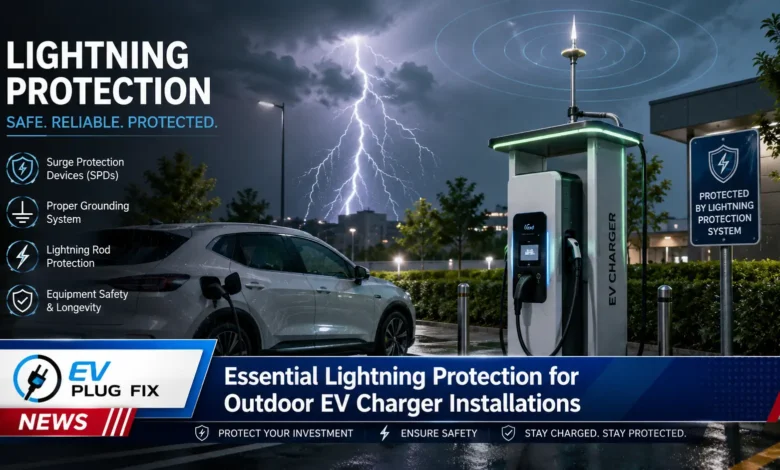
Lightning protection for outdoor EV charger installations is a critical safety consideration that many homeowners overlook until it’s too late. When installing an electric vehicle charging station outdoors, the question of whether lightning protection is mandatory depends largely on your location, local building codes, and specific installation circumstances. However, understanding the importance of lightning protection for your EV charging equipment is essential for long-term reliability and safety.
- Core Answer: Lightning protection is not universally mandated but is strongly recommended for outdoor EV chargers, with local codes often requiring surge protection.
- Key Highlight: Proper surge protection devices (SPDs) and grounding systems form the primary defense against lightning-induced damage to your EV charger.
- Practical Advice: Always consult a licensed electrician for professional installation and ensure your outdoor EV charging station includes proper SPDs and grounding.
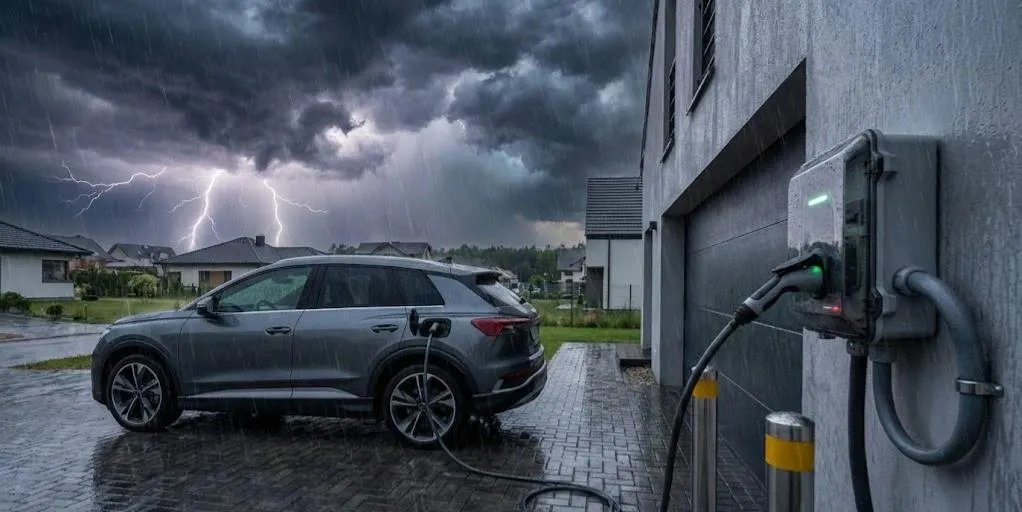
The sensitive electronics inside modern EV chargers are particularly vulnerable to power surges caused by lightning strikes. Even if a strike doesn’t directly hit your charging station, voltage surges can travel through power lines and cause immediate failure or gradual degradation of internal components. For outdoor EV charging stations, the risk is even more pronounced due to their exposure to the elements and potential proximity to taller structures that might attract lightning. Recent research published in IEEE Transactions on Industry Applications confirms that dedicated surge protective devices at the EV terminal are essential for protection under extreme lightning scenarios.
When lightning strikes nearby, it can induce voltage surges through power lines, potentially traveling to your residential EV charger and causing catastrophic damage to sensitive components. The vulnerability of EV charging equipment to lightning-induced transients has been well-documented, with studies showing that even indirect strikes can generate powerful surges capable of destroying power electronics, disrupting communication systems, and causing sudden charger failure.
Understanding the regulatory landscape, protection options, and best practices for safeguarding your EV charging investment is crucial for any homeowner considering an outdoor installation. While lightning protection requirements vary, the consensus among electrical safety experts is clear: adequate surge protection and proper grounding are non-negotiable for outdoor EV charging stations.
For detailed information on electrical safety standards, consult the National Electrical Code (NEC) and NFPA 780 lightning protection standards.
Regulatory Requirements and Building Codes
Whether lightning protection is mandatory for outdoor EV charger installations depends significantly on local electrical codes and regulations. In the United States, the National Electrical Code (NEC) provides comprehensive guidelines for electrical installations, including EV charging infrastructure. NEC Article 625 specifically governs EV charging installations and addresses critical safety requirements that affect outdoor installations.
While the NEC doesn’t explicitly mandate comprehensive lightning protection systems for all EV chargers, it does require adequate grounding and surge protection measures. Most building codes now require surge protection devices for outdoor electrical installations, which includes EV charging stations. This requirement reflects the growing recognition of the vulnerability of sensitive electronic equipment to transient overvoltages from lightning and switching events.
For commercial EV charging stations and public charging infrastructure, requirements are often more stringent due to higher liability concerns and increased equipment value. Many jurisdictions require Type 2 SPDs at minimum for these installations, with Type 1 devices recommended where external lightning protection systems are present. Property insurance policies may also influence whether lightning protection is effectively mandatory, as some insurers require documented lightning protection measures for outdoor electrical installations as a condition of coverage.
Understanding Lightning Risks for Electric Vehicle Charging Stations
EV chargers combine power electronics, sensitive control boards, and network connectivity, making them particularly vulnerable to surge-related damage. Lightning can affect charging equipment through multiple paths: direct strikes to the charger or nearby structures, indirect strikes causing induced voltages in long cable runs, conducted surges entering through the grid connection, and surges entering through communication lines like Ethernet or LTE antennas.
Research has demonstrated that surge protective devices installed on main and secondary distribution boards may not guarantee protection of residential chargers against fast-front overvoltages for lightning peak currents higher than 100 kA. This finding underscores the importance of dedicated SPDs at the charger location itself, not just at the main electrical panel. Additionally, studies indicate that SPDs installed on the residential charger may not be adequate for protecting the connected electric vehicle under severe conditions, such as high direct stroke current and high soil resistivity exceeding 700 Ωm.
For homeowners with Level 2 EV chargers, which are the most common public charging ports representing approximately 74.5% of all public charging ports in the U.S. and Canada, the risk from lightning-induced surges is significant. These chargers require a 208V to 240V AC input voltage and contain sophisticated power electronics that can be easily damaged by voltage spikes. The vulnerability of these systems has prompted increased attention to surge protection requirements in residential installations.
Types of Lightning Protection for EV Chargers
Surge Protection Devices (SPDs)
Surge protection devices are the primary defense against lightning-induced damage for EV charging equipment. These devices are designed to divert excess voltage away from sensitive equipment during power surges, protecting the charger’s internal electronics from damage. SPDs are classified into three types based on their intended installation point and the surge current waveform they’re designed to handle:
- Type 1 SPD: Designed for high-energy surges associated with direct lightning currents. Typically installed at the main incoming supply where external lightning protection exists or in high-exposure locations.
- Type 2 SPD: The most common SPD type for general distribution, designed for surges from indirect lightning and switching events. Usually installed in distribution boards feeding EV chargers.
- Type 3 SPD: Installed close to sensitive equipment for “fine protection” after upstream devices have already reduced surge levels. Typically placed at the point of use near sensitive electronics.
For residential EV charging stations, a coordinated approach using Type 2 SPDs at the main distribution board and Type 3 SPDs at the charger location is typically recommended. This layered approach ensures that even if the first line of defense is overwhelmed, subsequent protection stages can prevent damage to your electric vehicle charger installation.
Grounding Systems
Proper grounding is fundamental to lightning protection for any electrical installation. For outdoor EV charging stations, a robust grounding system creates a low-resistance path for lightning current to safely dissipate into the earth. This typically involves connecting the charger’s grounding system to a grounding electrode system, which may include ground rods, grounding plates, or a connection to the building’s existing grounding network.
When installing a home EV charger outdoors, electricians should ensure the grounding system meets or exceeds local code requirements. For optimal protection, the resistance to ground should typically be less than 10 ohms, though specific requirements vary by jurisdiction. Poor earthing quality reduces SPD effectiveness and can increase damage risk, making proper grounding an essential component of any lightning protection strategy. For more insights on EV charger grounding and related technical setups, refer to manufacturer-specific guidelines that often detail grounding best practices.
Lightning Rods and Air Terminals
For properties in high-lightning-activity areas, a complete lightning protection system may include air terminals (lightning rods) strategically placed to intercept lightning strikes. While not always mandatory specifically for EV charger installations, these systems provide the highest level of protection for the entire property, including your EV charging station.
In many sites, SPDs are applied in a coordinated “cascade” approach: Type 1 at the main incoming supply where lightning current risk is credible, Type 2 in distribution boards feeding charger groups, and Type 3 near sensitive electronics or critical devices where extra protection is needed. This coordination reduces stress on downstream devices and improves overall protection effectiveness.
Best Practices for Lightning Protection Installation
Location Considerations
When planning your EV charging station installation, location matters significantly. Avoid placing your Level 2 home EV charger near tall isolated structures that might attract lightning. If possible, install the charger closer to the main building where it can benefit from the structure’s lightning protection system. For those installing a high-powered Level 2 charger, consider placing the equipment on a wall that’s less exposed to open areas where lightning is more likely to strike.
Environmental conditions significantly impact the effectiveness of lightning protection systems. Outdoor installations may be exposed to lightning activity, temperature extremes, moisture, humidity, dust, and airborne pollutants. Each of these factors contributes to an elevated risk of transient overvoltages and accelerated component degradation. When selecting a location, consider these environmental factors and how they might affect your charger’s long-term reliability.
Quality Equipment Selection
Investing in a home EV charger that includes built-in surge protection can provide an additional layer of security. Many modern smart EV chargers incorporate advanced protection circuits that can withstand moderate power surges. When comparing EV charger brands, check specifications for surge protection ratings and look for products certified by recognized testing laboratories.
Transient voltage suppression is critical to protect sensitive power electronics, communications modules, and control boards. Effective suppression helps protect power conversion and control electronics, reduce downtime and service calls, prevent corrupted firmware states and communication dropouts, and improve resilience in harsh environments. When selecting equipment, prioritize models with robust built-in protection features.
Professional Installation
While some homeowners consider DIY approaches for simple portable charging solutions, outdoor EV charging station installation should always be performed by licensed electricians familiar with local codes. Professional installers understand the importance of proper grounding, appropriate surge protection device selection, and compliance with lightning protection standards.
A qualified electrician can assess your property’s specific lightning risk factors and recommend appropriate protection measures for your EV charger installation. They can also ensure proper coordination between multiple protection devices, verify correct earthing and bonding, and document the installation for insurance and inspection purposes. Understanding lightning protection EV nuances is part of a comprehensive safety approach that professional electricians bring to every installation.
| Protection Component | Primary Function | Typical Installation Location |
|---|---|---|
| Type 1 SPD | High-energy surge protection (direct lightning) | Main electrical service entrance |
| Type 2 SPD | Indirect lightning and switching surge protection | Sub-distribution boards feeding chargers |
| Type 3 SPD | Fine protection for sensitive electronics | At the charger or point of use |
| Grounding System | Safe dissipation of lightning current to earth | Ground rods, plates, or building grounding network |
Maintenance and Inspection Requirements
Lightning protection systems require periodic inspection and maintenance to ensure continued effectiveness. After any nearby lightning strike, have your EV charging equipment inspected for damage, even if it appears to be functioning normally. Surge protection devices can degrade over time or after absorbing surge events, potentially leaving your charger vulnerable.
Annual inspections of grounding connections, surge protection devices, and overall system integrity are recommended for outdoor installations. For residential EV charger setups, this inspection can typically be combined with general home electrical system maintenance. Proper maintenance includes:
- Periodic inspection of earthing connections and bonding points
- SPD status monitoring and replacement planning after surge events
- Post-storm checks when sites report increased fault rates or connectivity issues
- Documentation of earthing measurements and protection layout for troubleshooting
Common causes of lightning-related charger issues include missing or incorrectly sized SPDs in distribution boards, poor earthing continuity or high-impedance earth connections, long SPD leads or incorrect wiring that reduces effectiveness, unprotected communication lines acting as surge entry paths, and inadequate bonding between charger, foundation, and nearby metalwork. Regular inspection and maintenance can identify and address these issues before they result in equipment failure.
Cost Considerations and Investment Protection
The cost of lightning protection for your EV charger installation varies depending on the level of protection required and existing electrical infrastructure. Basic surge protection might add $200 to your installation cost, while comprehensive lightning protection systems can cost several thousand dollars. However, this investment should be weighed against the potential cost of replacing a damaged EV charger, which typically ranges from $500,000 for residential units, plus potential vehicle damage and safety risks.
For those installing expensive Level 2 home charging stations or commercial-grade equipment, comprehensive protection becomes even more cost-effective. The cost-benefit analysis favors protection when considering:
- Replacement costs for damaged EV chargers and potential vehicle repairs
- Downtime and inconvenience during equipment replacement
- Potential safety risks from damaged electrical equipment
- Insurance deductibles and potential premium increases after claims
Surge protection helps maintain stable electrical conditions, minimizing stress on electronic components that could be compromised by environmental factors. By preventing surge-related failures, proper protection reduces service calls, minimizes replacement costs, and extends maintenance intervals. This is especially valuable for homeowners who rely on their EV chargers for daily transportation needs.
Essential Questions & Expert Answers
Is lightning protection mandatory for all outdoor EV charger installations?
Lightning protection is not universally mandatory for all outdoor EV charger installations. The requirements depend on local building codes, specific installation circumstances, and insurance requirements. However, most jurisdictions require surge protection devices (SPDs) for outdoor electrical installations, which includes EV charging stations. While comprehensive lightning protection systems may not be mandatory, proper surge protection and grounding are essential safety measures that are typically required by code.
What type of surge protection device do I need for my home EV charger?
For residential EV charger installations, a coordinated approach using Type 2 SPDs at the main distribution board and Type 3 SPDs at the charger location is typically recommended. Type 2 SPDs protect against induced surges from indirect lightning and switching events, while Type 3 SPDs provide fine protection for sensitive electronics. In areas with external lightning protection or higher lightning exposure, Type 1 SPDs at the main incoming supply may also be required. Recent research indicates that dedicated SPDs at the EV terminal are essential for protection under extreme lightning scenarios.
How do I know if my EV charger is properly grounded?
Proper grounding requires a low-resistance path to earth, typically with resistance below 10 ohms. A licensed electrician can measure ground resistance using specialized testing equipment. Signs of improper grounding include frequent tripping of ground fault circuit interrupters (GFCIs), unexpected charger errors, or damage to the charger after electrical storms. NEC Article 625 governs grounding requirements for EV charging installations, and professional installation ensures compliance with these standards.
Can lightning damage my electric vehicle through the charger?
Yes, lightning can potentially damage your electric vehicle through the charger. Research indicates that surge protective devices installed on the residential charger may not be adequate for protecting the connected electric vehicle under severe conditions, such as high direct stroke current and high soil resistivity exceeding 700 Ωm. The battery is the most sensitive component requiring protection and exhibits the most catastrophic failure modes among vehicle components. This is why some experts recommend SPDs integrated into mission-critical vehicles, though this technology is still emerging.
What should I do after a nearby lightning strike?
After a nearby lightning strike, have your EV charging equipment inspected for damage, even if it appears to be functioning normally. Surge protection devices can degrade over time or after absorbing surge events, potentially leaving your charger vulnerable. Look for visible damage, test the charger’s functionality, and check for error codes or unusual behavior. If you suspect damage, disconnect the charger and have it inspected by a licensed electrician before resuming use.
Conclusion: Protect Your EV Charging Investment
While lightning protection may not be universally mandatory for outdoor EV charger installations, it represents essential protection for your investment and safety. The combination of proper surge protection devices, robust grounding systems, and strategic installation location provides reliable defense against lightning-related damage. Whether you’re installing a basic Level 2 EV charger for home use or a sophisticated smart charging system, consulting with professionals about appropriate lightning protection measures is crucial.
As electric vehicle adoption continues growing and charging infrastructure expands, understanding and implementing proper lightning protection will become increasingly important for homeowners and businesses alike. Recent research from multiple authoritative sources confirms that surge protection is not just an optional add-on but a critical component of safe and reliable EV charging infrastructure.
Don’t compromise on safety. Ensure your EV charging station installation includes adequate lightning protection measures appropriate for your location and specific circumstances. With proper protection, you can enjoy the convenience of home EV charging with confidence, knowing your equipment—and your vehicle—is protected from nature’s most powerful electrical events.