EV Charging Station Lifespan 2026: How Long Do EVSE Last?
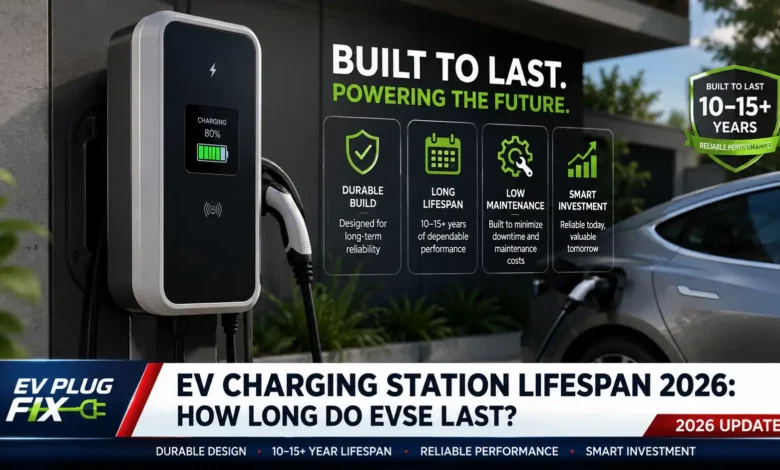
EV charging station lifespan expectations range from 5 to over 20 years, depending on the charger type, usage patterns, and environmental conditions. Understanding these variables helps EV owners make informed purchasing decisions and maximize their investment returns. The typical residential Level 2 charger lasts 10 to 15 years, while public DC fast chargers face heavier demands but are engineered for similarly long service lives with proper maintenance .
EV Charging Station Basics: What You’re Really Buying
An EV charging station—technically called Electric Vehicle Supply Equipment (EVSE)—does more than just deliver electricity to your vehicle. It’s a sophisticated piece of power electronics that manages current flow, communicates with your car’s battery management system, and ensures safe, efficient charging sessions.
The longevity of these systems depends heavily on their internal components. Premium chargers feature corrosion-resistant enclosures, industrial-grade relays rated for tens of thousands of connection cycles, and advanced thermal management systems that protect sensitive electronics from heat damage . Certified units meeting UL, CE, or IEC standards typically offer superior durability and weather protection.
Level-by-Level Lifespan: How Long Each Charger Type Lasts
Not all EV chargers are created equal when it comes to durability. Each charging level faces different demands and offers distinct lifespans.
| Charger Type | Power Output | Typical Lifespan | Best Use Case |
|---|---|---|---|
| Level 1 (120V) | 1.4 kW | 5-10 years | Occasional emergency charging |
| Level 2 (240V) | 3.7-22 kW | 10-15 years | Daily home and workplace charging |
| DC Fast Charger (Level 3) | 50-350 kW | 10-15 years | Public highway and commercial stations |
Level 1 chargers, while simple and portable, face durability challenges from frequent plugging and unplugging. Level 2 units represent the sweet spot for residential use, offering excellent longevity with moderate maintenance needs . According to industry data, Level 2 and 3 chargers can last 20 years or more in optimal conditions, though heavy public usage typically shortens this timeframe .
Research from Aalborg University confirms that reliability varies significantly based on how chargers are used. Their studies of 80 kW fast charging systems demonstrate that semiconductor switches and capacitors experience substantial stress during fast charging sessions, directly impacting overall system lifespan .
What Actually Determines EV Charger Lifespan?
Several critical factors influence how long your EV charging station will remain operational and reliable.
Environmental Exposure and Weather Protection
The environment where you install your charger plays a massive role in its longevity. According to Enphase Energy, environmental conditions—especially during hot, humid summers—represent the primary cause of charger wear and tear . Outdoor chargers face threats from UV radiation, rain, snow, extreme temperatures, and dust accumulation.
A study on tropical EV charging infrastructure revealed that consistently high ambient temperatures accelerate component aging. In Indonesian regions, over 67.7% of charging sessions were classified as aggressive, with high-power units delivering significant energy under thermal stress conditions . This research highlights how temperature exposure directly impacts charging equipment reliability.
Expert Tip: Installing your outdoor charger under a protective canopy or in a sheltered location can dramatically extend its lifespan. Even simple coverage protects internal electronics from direct UV exposure and reduces moisture intrusion risks.
Usage Frequency and Charging Cycles
How often you charge directly correlates with wear and tear. A residential charger used a few times weekly will outlast a public fast charger operating continuously with multiple daily users. Commercial units serving dozens of EVs daily face accelerated component fatigue.
Research published in IEEE Transactions on Power Electronics confirms that rest periods between charging sessions substantially influence reliability. Fast charging systems benefit from scheduled downtime, which allows internal components to cool and reduces thermal cycling stress . This finding explains why public chargers often incorporate maintenance schedules and component replacement programs.
Build Quality and Certification Standards
The quality of materials and engineering standards significantly impact durability. Certified chargers meeting rigorous safety and performance specifications offer superior protection against electrical faults, moisture ingress, and physical damage.
ABB’s maintenance documentation for the Terra 360 fast charger outlines detailed inspection schedules, emphasizing that environmental conditions and charging session frequency determine necessary maintenance intervals . Premium manufacturers design their equipment with serviceability in mind, enabling component replacement rather than complete unit replacement when issues arise.
Installation Quality and Ongoing Maintenance
Professional installation ensures proper grounding, correct electrical load balancing, and protection against electrical faults. According to Consumer Guide research, installing a Level 2 charger represents a one-time cost and inconvenience that pays dividends through decades of reliable service .
Regular maintenance—checking cable insulation, cleaning connector contact points, and updating smart charger firmware—prevents many common failures. The U.S. Department of Energy’s Clean Cities Coalition notes that Level 1 and 2 stations require minimal upkeep, but following recommended maintenance routines enhances durability .
Public DC fast chargers face the highest wear-and-tear demands but offer unmatched convenience for EV drivers
DC Fast Charging: The Reliability Trade-Off
DC fast chargers represent both the cutting edge of EV charging technology and the highest maintenance demands. These high-power systems (50 kW to 350 kW) deliver astonishing charging speeds but face unique reliability challenges.
Power electronic components in fast charging systems endure high electrical stresses that compromise overall system reliability . Temperature-sensitive components like semiconductor switches and capacitors degrade faster under continuous high-current operation. Advanced thermal management systems help mitigate these effects, but they cannot eliminate natural aging processes.
Interestingly, while frequent DC fast charging may affect your EV battery’s health, the chargers themselves require careful management. Studies confirm that high-power charging (over 100 kW) used for more than 12% of total sessions correlates with increased battery degradation, but this dynamic also affects charging infrastructure wear . Commercial operators must balance charging speed with equipment preservation through strategic maintenance scheduling.
How to Extend Your EV Charging Station’s Life
Practical maintenance habits can significantly extend your EVSE lifespan, whether you own a residential unit or manage commercial charging infrastructure.
Essential Maintenance Practices
- Keep connectors clean and dry: Use gentle cleaning methods to remove dust, debris, and moisture from plugs and sockets. Avoid abrasive tools or high-pressure water jets that can damage sensitive contacts .
- Inspect cables regularly: Check for damage, wear, or kinking. Replace damaged cables promptly rather than attempting repairs—cable integrity directly affects safety and performance .
- Install in sheltered locations: Protect outdoor chargers from direct weather exposure using canopies, dedicated enclosures, or garage installations.
- Schedule professional inspections: For commercial chargers, follow manufacturer-recommended maintenance intervals. ABB suggests quarterly visual inspections and annual internal checks for high-usage stations .
- Update smart charger firmware: Keep software current to benefit from performance improvements and security patches.
Important: Never attempt internal repairs on EV charging equipment unless you are a qualified technician. Hazardous voltages inside EVSE units pose serious safety risks. Always follow manufacturer guidelines and use certified professionals for maintenance.
Understanding Rest Periods and Usage Patterns
Strategic scheduling of charging sessions can benefit both your EV battery and charging equipment. Research from Aalborg University demonstrates that introducing rest periods into charging schedules substantially improves reliability for both wired and wireless fast charging systems . This finding applies to both commercial stations and home units.
For residential users, avoiding back-to-back charging sessions allows internal components to cool naturally. For public charging operators, implementing scheduled downtime or rotating charger usage across multiple units extends equipment life while maintaining service availability.
The Battery-Charger Relationship: A Two-Way Street
Your EV charging station’s performance directly affects your vehicle’s battery health, creating an interdependent relationship. Modern chargers use sophisticated algorithms to manage this dynamic.
The Constant Current-Constant Voltage (CCCV) charging method, widely used in EV charging, initially delivers steady current until reaching a voltage threshold, then switches to constant voltage while current gradually declines. Research from IEEE explores how varying current levels during the CC phase affects both charging time and overall system reliability . This interaction between charger settings and battery chemistry influences equipment longevity.
Studies show that high-quality chargers can actually protect your EV battery from premature degradation. Geotab research analyzing over 22,700 EVs found that Level 2 charging results in half the battery degradation rate compared to ultra-fast charging . Using Level 2 chargers for daily needs preserves both your EV battery and charging equipment.
Smart Charging and Future Technologies
Emerging technologies are reshaping EV charging infrastructure, with important implications for equipment reliability and lifespan.
Economic Model Predictive Control (EMPC)
Recent research published in the Journal of Energy Storage demonstrates that advanced control frameworks can significantly optimize off-grid EV charging station performance. An Economic Model Predictive Control system achieved a balanced battery lifetime estimate of 12.31 years while minimizing fuel costs . This technology enables systematic trade-offs between component wear and operational efficiency.
The EMPC framework offers particular benefits for renewable-powered charging stations, managing the interplay between solar generation, battery storage, and charging demand. These systems could extend equipment life by optimizing usage patterns and reducing stress on charging components.
Vehicle-to-Grid Integration
V2G systems that allow EVs to feed stored electricity back to the grid introduce new usage patterns that affect charging equipment durability. Bidirectional chargers face additional stress from reverse power flow, potentially impacting reliability calculations. Manufacturers are developing specialized V2G-capable equipment designed to handle these demands.
Unified Charging Standards
The North American Charging Standard (NACS) adoption by multiple manufacturers promotes interoperability and could improve charging infrastructure reliability by standardizing connector and communication protocols. Unified standards simplify maintenance and enable consistent quality across equipment types.
Making the Smart Investment
When considering an EV charging station purchase, look beyond initial cost to evaluate total ownership value. Premium chargers from certified manufacturers typically offer superior lifespan and lower long-term costs compared to budget alternatives.
Key considerations include:
- Certification marks: UL, CE, and IEC compliance ensure safety and durability standards
- Weather protection ratings: IP65 or higher for outdoor installations
- Warranty coverage: Longer warranties often indicate manufacturer confidence in product durability
- Smart features: Energy monitoring, scheduling, and remote diagnostics enhance convenience without compromising reliability
- Installation quality: Professional installation ensures optimal performance and safety
“Once installed, your charger will likely last for decades. Installing a charger is really a one-time cost and inconvenience.” – Consumer Guide research on Level 2 charging
Property value considerations also matter. Research indicates that operating Level 2 chargers improve home appeal and resale value. For businesses, installing reliable charging infrastructure attracts EV-driving customers and demonstrates environmental commitment.
Final Verdict: Expect 10-15 Years from Quality EV Chargers
Most EV charging stations deliver 10 to 15 years of reliable service when properly installed and maintained. Level 2 chargers for residential use often approach the longer end of this range, while public DC fast chargers may need more frequent maintenance but can achieve similar lifespans .
The key to maximizing longevity lies in choosing quality equipment, ensuring proper installation, protecting against environmental exposure, and following manufacturer maintenance guidelines. With careful attention to these factors, your EV charging station can provide dependable service well beyond a decade.
As EV technology continues evolving, today’s charging equipment investments will support tomorrow’s driving needs. Smart chargers with software upgrade capabilities offer future-proofing benefits, adapting to new standards and features without requiring hardware replacement.
Make informed choices about your EV charging infrastructure, and your station will serve as a reliable gateway to electric mobility for years to come. The electric future is here—charge it with confidence.