EV Charging Billing for Condos: 3 Fair Solutions for Shared Wallboxes (2026)
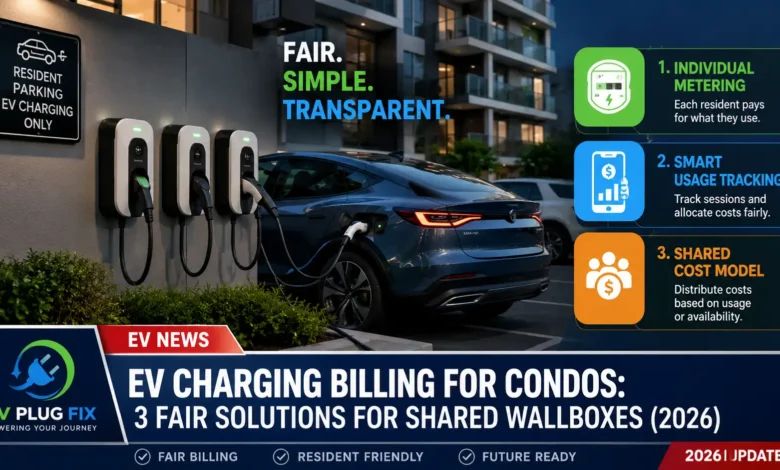
EV charging billing for condos can be a real headache. The installation of a shared wallbox is a great step towards sustainable living, but when the electricity bill arrives, the question of fair cost allocation among co-owners becomes a hot topic. In 2026, the solution largely depends on how your wallbox is connected to the building’s electrical system, with clear legal guidelines and smart technology, like the go-e Charger PRO, making the process more transparent than ever .
Property managers and condo owners across Europe are navigating this new terrain, but the good news is that there are established methods to ensure every kilowatt is paid for accurately. The key lies in understanding the three primary connection scenarios, each with its own billing method. Let’s break down the most common setups for electric vehicle charging in multi-unit residences, from the simplest individual connection to comprehensive multi-user systems.
“Personal charging is the future. Set it and forget it. No fees for being human.” — A principle that underscores the importance of dedicated, metered solutions for condo EV charging .
The Three Pillars of Condo EV Billing
When the consent of the co-owners is obtained and the wallbox is installed, the question becomes: “How is the electricity consumed billed?” The answer is found in three common scenarios, each reflecting a different level of complexity and user management. Understanding EV Charging Speed Factors can also help residents appreciate how different setups impact their overall charging experience and costs.
1. The Individual Solution: Wallbox at the Apartment’s Electricity Meter
This is the most straightforward approach. A wallbox, like the go-e Charger Gemini 2.0, is connected directly to the electricity meter of the individual apartment. Since this meter is already a legally calibrated measuring device, the wallbox itself does not need to be certified. The billing is handled directly by your electricity provider as part of your regular household energy consumption.
To protect your investment and electricity, it is highly recommended to activate access protection. Using an RFID card or a dedicated app prevents unauthorized usage by neighbors or guests. This setup is perfect for those with assigned parking spots and a desire for independent management. An employee who charges their company car at home, for instance, can easily track this consumption with a smart wallbox for reimbursement purposes . For homeowners considering a similar setup, reviewing Best Home EV Wallbox Chargers can provide valuable guidance on selecting the right model.
2. The Semi-Shared Solution: Wallbox at Common Meter with Dedicated Units
This scenario is ideal for residents with fixed, private parking spaces. The wallboxes are connected to the building’s common electricity meter, but each owner has their own dedicated wallbox. To ensure fair billing, each wallbox must be equipped with a MID-compliant meter. The go-e Charger PRO, for example, comes with this feature built-in .
This MID-compliant meter functions like a mini electricity meter for each charger, accurately recording the kWh consumed by each individual wallbox. Property management can then easily bill each apartment owner based on these precise readings. It’s a clean, fair, and compliant way to manage costs without the need for complex external systems. To ensure long-term accuracy and reliability, it’s worth understanding EV Charging Data Standards which govern how these meters communicate consumption data.
3. The Fully Shared Solution: Communal Wallbox for a Car Park
For residents using a communal car park with shared charging points, the billing structure requires more robust metering. In these setups, one or more wallboxes are connected to the general electricity supply. The ownership and billing of the electricity used by different co-owners become a primary concern. This is the most common setup in larger residential complexes where spaces are not individually owned or assigned.
In this scenario, legal metering and calibration standards are non-negotiable. In Germany, a wallbox must comply with strict legal metering requirements, often needing a MID-compliant meter to be deemed “eichrechtskonform.” This ensures that the data used for billing is legally sound. A solution like the go-e Charger PRO, or specifically its variants with integrated cable management, is designed for this exact purpose. Property managers should also consider Germany EV Electricity Prices when forecasting and communicating charging costs to residents.
“For businesses, a clean separation between private and business charging is a central issue. Using RFID cards, special apps, or other authentication methods is ideal for this.” — An approach that scales perfectly from company cars to condo co-owners .
Making Billing Simple: Backend and Automation
One of the biggest fears for property managers is the administrative burden of manual billing. However, modern smart wallboxes are designed to eliminate this headache. The charging data can be accessed and downloaded via a free backend through a browser. This allows property management to easily compile reports and allocate costs.
For larger operations, automated billing software can be integrated. Wallboxes like the go-e Charger PRO use open, standardized interfaces, enabling them to work seamlessly with third-party solutions. According to a recent Wallbox announcement for their Pulsar Pro, this is a key trend—where operators are moving beyond just installing chargers to deploying intelligent systems capable of energy monitoring and compliance reporting . This is the future of hassle-free EV management in condos. Leveraging EV Charger Standby Power data within these systems can further optimize energy consumption and reduce operational costs for the building.
“Wallbox’s new Pulsar Pro is built to simplify the EV charging reimbursement process for private car owners, businesses, fleet operators, and property managers .”
Choosing the Right Hardware for Your Condo
Selecting the correct wallbox is the most critical step in ensuring a fair billing process. For individual solutions, a “smart” wallbox like the go-e Gemini offers excellent connectivity and control. For shared solutions, a MID-certified model like the go-e Charger PRO is indispensable. Both units support static load management. For installations requiring dynamic load management—where charging power is adjusted in real-time based on the building’s total energy consumption—an additional energy management system, like a go-e Controller, is necessary.
The right solution prevents conflict, ensures legal compliance, and keeps the peace among residents. It’s a small price for a big step forward in sustainable living. Before finalizing any installation, it’s wise to review Home EV Charger Permits to ensure full compliance with local building codes and regulations.
Comparing Condo Billing Solutions
The table below provides a quick overview of the three main scenarios and their practical requirements for fair EV charging billing.
| Billing Scenario | Metering Requirement | Recommended Wallbox | Billing Method |
|---|---|---|---|
| Wallbox on Apartment’s Meter | Apartment’s calibrated meter | go-e Charger Gemini (or similar “smart” wallbox with RFID) | Handled by the resident’s utility bill |
| Private Parking with Own Wallbox | MID-compliant meter on each wallbox | go-e Charger PRO (with integrated MID meter) | Property management bills per kWh recorded |
| Communal Car Park with Shared Wallbox | MID-compliant & legal calibration | go-e Charger PRO CABLE ME | Property management via downloaded data or automated software |
Fair and Transparent EV Billing
Billing for electric vehicle charging in a condo setting doesn’t have to be a source of conflict. By understanding these three distinct scenarios and choosing the appropriate metering and wallbox technology, property managers and co-owners can ensure a fair, transparent, and legal system. Solutions like the go-e Charger PRO are purpose-built to meet the rigorous demands of shared residential charging, offering both the accuracy of a MID meter and the convenience of smart connectivity.
Key Takeaway: Fair EV charging billing in condos is achievable. The solution is always based on the connection to the common or individual meter, and the use of a MID-meter is vital for legally compliant billing for shared units.