REEV vs EV Real-World Driving Comparison 2026: Which Powertrain Wins?
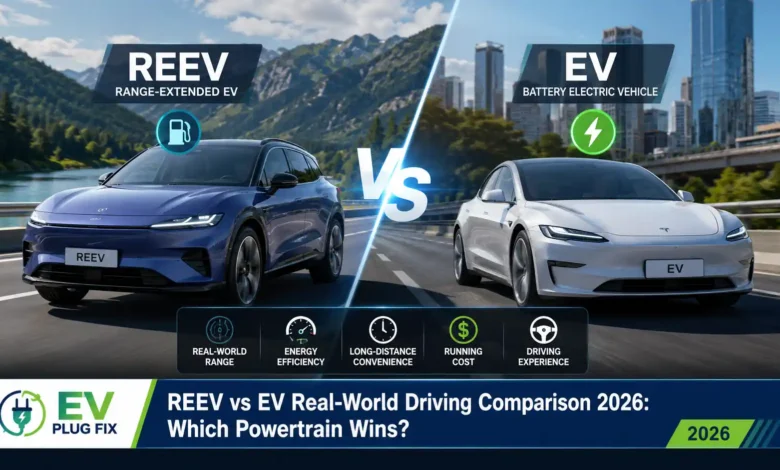
Understanding how a Range-Extended Electric Vehicle (REEV) performs against a pure Battery Electric Vehicle (EV) in 2026 requires more than just comparing official range figures. As every experienced driver knows, the numbers on a brochure and the realities of a road trip often tell two very different stories. We’ve analyzed real-world driving scenarios and the latest industry developments to settle the score.
⚡ Quick Comparison: REEV vs. Pure EV (BEV)
- REEV (Range-Extended EV): Powered 100% by electric motors, with a small onboard petrol generator to recharge the battery on the move. Delivers 100–150 km electric range and 800+ km total combined range.
- BEV (Pure Battery EV): Runs exclusively on high-voltage battery power with zero tailpipe emissions. Delivers 300–500+ km range per charge and relies on DC fast charging stops.
- Daily Commutes (<100 km): Identical driving performance—both run purely on electricity charged overnight at home.
- Long Road Trips (500+ km): REEVs eliminate range anxiety via rapid petrol refuels, whereas pure EVs require planned 15–30 minute DC fast charging breaks.
Scenario A: The Daily Commute (Under 100 km)
For the majority of daily driving, the debate between a REEV vs EV almost becomes a non-issue. Both vehicles deliver a nearly identical experience. Since most daily trips, from work commutes to school runs and grocery shopping, remain well under 100 kilometers, the REEV operates exclusively on its electric battery. The combustion engine stays off, meaning you enjoy the same quiet, smooth, and torquey instant acceleration that makes driving an EV so enjoyable.
In this scenario, the experience is nearly identical. The convenience of home charging via a smart wallbox cannot be overstated. Whether you have an EV or an REEV, plugging in overnight using a system like the go-e Charger ensures you start each day with a full charge, making range anxiety a distant memory.
Scenario B: The Spontaneous Road Trip (500+ km)
This is where the two powertrains start to diverge, and the REEV vs EV comparison becomes more interesting.
The Pure EV Experience
A pure EV driver will typically need to plan charging stops. However, automakers like Lexus and Toyota are introducing sophisticated native route planning to alleviate this stress. Modern cars with native EV route planning take the stress out of the equation, automatically identifying optimal charging stations and providing real-time availability. On a 500 km journey, most drivers would take a break after a few hours anyway, and a 15- to 20-minute fast-charging stop at a high-powered station can often provide enough energy to reach your destination.
🚗 Pure EV (BEV)
- Range: 300-500+ km
- Charging: Mandatory, 15-45 min for 80%
- Maintenance: Very low
- Best for: City drivers with home charging
⚡ REEV (Range-Extended EV)
- Range: 100-150 km electric, 800+ km total
- Charging: Optional; refuels in minutes
- Maintenance: Moderate (needs generator service)
- Best for: Mixed infrastructure, road-trippers
The REEV Advantage on Long Hauls
An REEV driver gets additional peace of mind. Once the battery drops below a certain level, the onboard generator automatically starts to produce electricity, maintaining the battery charge without requiring a stop. The trip continues seamlessly, without the need to alter your route for charging. Companies like XPENG are even refining this tech to ensure the driving experience remains consistent, with no jarring transition or power loss when the generator kicks in.
“The technology defaults to pure-electric driving. The range extender kicks in only as an emergency power source, activating during long road trips or when charging access is limited.”
However, the situation can vary. If both fuel and electricity run low, a short stop at a gas station solves the problem in minutes. In some cases, the REEV can even be refueled faster than it would take to find a fast charger that is working. This flexibility is a key advantage of the REEV vs EV dynamic, especially in areas where charging infrastructure is still developing.
Frequently Asked Questions: REEV vs EV
Does a REEV (Range-Extended EV) use gas to drive the wheels directly?
No. In a true Range-Extended Electric Vehicle, the wheels are driven 100% by the electric motor. The small gasoline engine acts purely as an internal generator to create electricity and recharge the battery on the go.
Is a REEV better than a pure electric vehicle for long road trips?
For drivers traveling through areas with limited fast-charging infrastructure, REEVs eliminate range anxiety by allowing petrol refueling in minutes. However, in regions with dense fast-charging networks, pure BEVs provide zero tailpipe emissions and lower long-term maintenance costs.
Can you charge a REEV at home using a normal EV wallbox?
Yes. REEVs feature standard charging ports and can be plugged into Level 1 or Level 2 home wallboxes (like the go-e Charger) to cover daily commuting needs entirely on electric power.
The Verdict: REEV vs EV in 2026
Ultimately, the choice comes down to your lifestyle. The EV is a pure, efficient, and low-maintenance champion for daily driving and a growing network of fast chargers. The REEV offers the best of both worlds: electric performance with zero range anxiety, making it a perfect bridge technology for 2026 and beyond.
One thing is clear: with the right home setup, like the advanced go-e Charger Gemini flex, the debate of REEV vs EV becomes a personal choice rather than a compromise.