EV Lithium Battery Technology: Why Lithium Powers Electric Cars in 2026
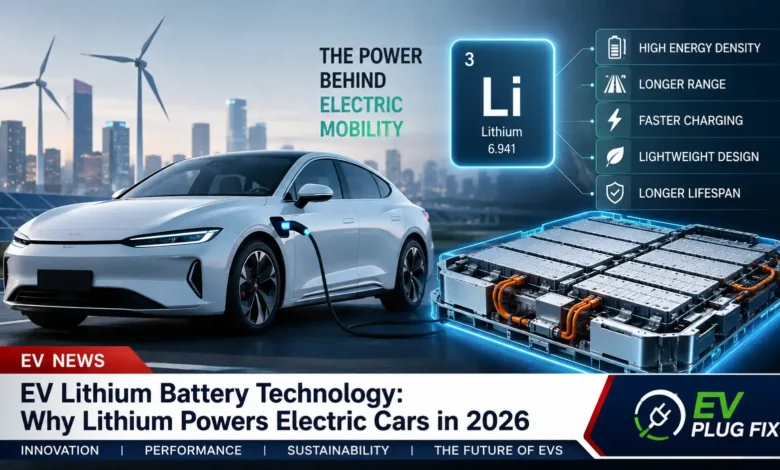
The question “why do electric vehicles use lithium batteries” is fundamental to understanding the modern automotive revolution. It’s a query that moves beyond simple chemistry into the realms of advanced engineering, economic viability, and consumer practicality. While various battery types exist, lithium-ion technology has emerged as the definitive solution for passenger EVs, meeting a unique set of stringent demands that other chemistries simply cannot match.
The short answer lies in an unmatched combination of high energy density, superior charging and discharging efficiency, and an exceptionally long cycle life. But to truly appreciate why lithium is the undisputed champion in 2026, we must investigate the science and engineering that makes it the perfect fit for the road. Let’s break down the core reasons powering this dominance.
⚡ Key Reasons EVs Use Lithium-Ion Batteries
- High Energy Density: Packs 150–250+ Wh/kg, delivering maximum driving range without adding excessive vehicle weight.
- Superior Efficiency: Exceeds 90–95% round-trip charge efficiency, minimizing energy waste compared to older battery types.
- Zero Memory Effect: Permits partial daily top-ups and shallow charging cycles without degrading overall storage capacity.
- Extended Lifespan: Retains 80%+ capacity after 1,000 to 6,000+ full charging cycles (lasting 10 to 15+ years of service).
The Critical Importance of Energy Density in EV Battery Technology
One of the primary challenges in building an electric vehicle is the inherent weight of the vehicle itself. Adding a battery pack only compounds this issue. This is where energy density—the amount of energy stored per unit of weight—becomes a critical performance metric. Lithium-ion batteries are among the best in the world in this regard.
By packing significantly more energy into a lighter package than older technologies like nickel-metal hydride (NiMH) or lead-acid batteries, lithium-ion allows automakers to design EVs with a practical range without turning the car into a heavyweight. A lead-acid battery delivering the same energy as a lithium-ion pack would occupy about three times more space and weigh considerably more, severely hampering range and performance.
Unrivaled Efficiency and Longevity: The Lithium Advantage
An EV battery must excel at two crucial tasks: charging quickly and discharging power reliably. Here, lithium-ion technology offers clear superiority. The round-trip efficiency of a lithium-ion battery—the percentage of energy put in that you can use—consistently exceeds 90%. This is a significant leap over lead-acid batteries, which often only return 70-80% of the stored energy, leading to substantial energy loss over the vehicle’s lifetime.
Furthermore, lithium batteries hold up remarkably well over hundreds or even thousands of charge-discharge cycles. With proper thermal management, a modern EV battery can retain 80% or more of its original capacity after well over 100,000 miles, a feat that was once considered impossible.
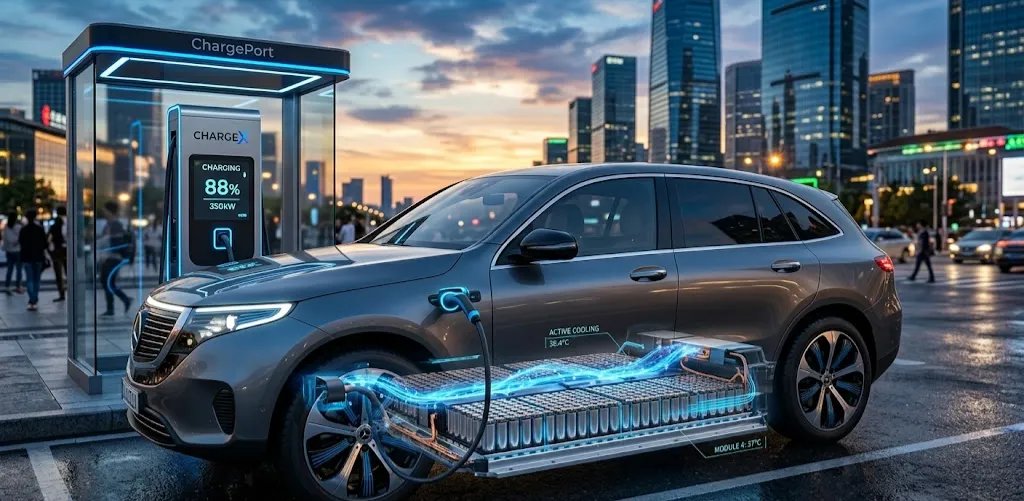
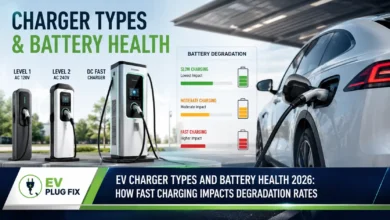
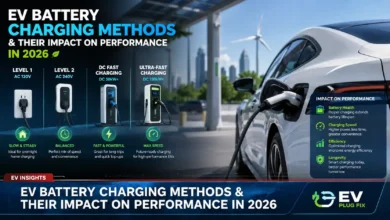
High-power DC fast charging leverages the high charge acceptance of lithium-ion batteries, adding significant range in under 30 minutes. (Image: EVPlugFix.com)
High Voltage Capability and the Absence of Memory Effect
Lithium’s electrochemical properties allow its cells to operate at a higher voltage—roughly 3.6 to 3.7 volts per cell compared to a NiMH cell’s 1.2 volts. This means fewer cells are needed to achieve the high voltage required for an EV drivetrain, simplifying engineering, reducing weight, and decreasing potential points of failure.
Additionally, lithium-ion batteries are free from the “memory effect,” a frustrating phenomenon that plagued older NiMH batteries. This memory effect caused a battery to lose capacity if it was repeatedly recharged before being fully discharged. With lithium-ion, drivers can “top off” their charge at any time without penalty, making EV ownership far more practical for daily life.
Advanced Thermal Management and System Scalability
While lithium-ion batteries are sensitive to extreme temperatures, modern EVs employ sophisticated thermal management systems. These systems actively heat or cool the battery pack to keep it within its optimal operating window, preserving performance and lifespan in both harsh winters and scorching summers. Research shows that effective thermal management can more than double the cycle life of a battery pack, from approximately 1,000 to over 2,200 cycles.
| Feature | Lithium-Ion | Lead-Acid | NiMH |
|---|---|---|---|
| Energy Density (Wh/kg) | High (150-250+) | Low (30-50) | Medium (60-120) |
| Efficiency | ~95% | ~85% | ~85% |
| Cycle Life | 1,000-6,000+ | 300-500 | ~500-1,000 |
| Self-Discharge Rate | Very Low (~0.02%/day) | High (~0.1%/day) | Moderate |
| Memory Effect | No | No | Yes |
One often-overlooked advantage of lithium-ion technology is its manufacturing maturity. Having been used in consumer electronics since the 1990s, a vast global supply chain and immense manufacturing expertise already existed when automakers began producing EVs in earnest. This scalability has driven down costs dramatically, with average pack prices falling over 93% from 2010 to 2025, making EVs more accessible than ever.
“It’s one thing to make a battery chemistry work in a lab, and quite another to manufacture billions of cells reliably and affordably. The lithium-ion industry has achieved this scale, which is its greatest asset.”
— Industry Analyst, EVPlugFix.com Research Team
Frequently Asked Questions: Why Electric Cars Use Lithium Batteries
Why are lithium-ion batteries better than lead-acid batteries for EVs?
Lithium-ion batteries store roughly three times more energy per kilogram than lead-acid batteries, charge significantly faster, have a longer cycle life (1,000+ cycles vs 300 cycles), and feature a superior round-trip efficiency exceeding 90%.
What is the difference between LFP and NMC lithium EV batteries?
LFP (Lithium Iron Phosphate) batteries offer higher thermal stability, longer cycle life, and lower cost but slightly lower energy density. NMC (Nickel Manganese Cobalt) batteries deliver maximum energy density and longer range for high-performance electric vehicles.
Do lithium EV batteries lose capacity if charged before reaching 0%?
No. Lithium-ion batteries do not suffer from the “memory effect” found in older battery chemistries like NiMH. You can safely top off a lithium EV battery at any charge level without degrading its total storage capacity.
Ongoing Evolution: Innovation Within the Lithium Framework
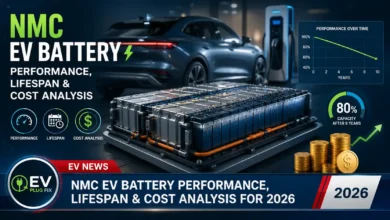
The lithium-ion landscape is far from static. Today’s market features a variety of chemistries, each optimized for different priorities. Lithium Iron Phosphate (LFP) batteries sacrifice some energy density for greater thermal stability, safety, and lower cost—making them the dominant choice for many entry-level EVs and stationary storage. Meanwhile, chemistries like Nickel Manganese Cobalt (NMC) and Nickel Cobalt Aluminum (NCA) push the boundaries of energy density for long-range and high-performance vehicles.
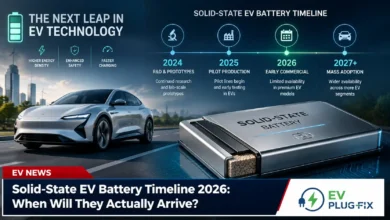
Looking ahead, innovations like quasi-solid-state and solid-state batteries promise to further enhance the performance and safety of lithium-based technology, potentially doubling current energy densities. This continuous improvement pathway is a key reason why lithium-ion will likely remain the leading EV battery technology for the foreseeable future.