NMC EV Battery Performance, Lifespan & Cost Analysis for 2026
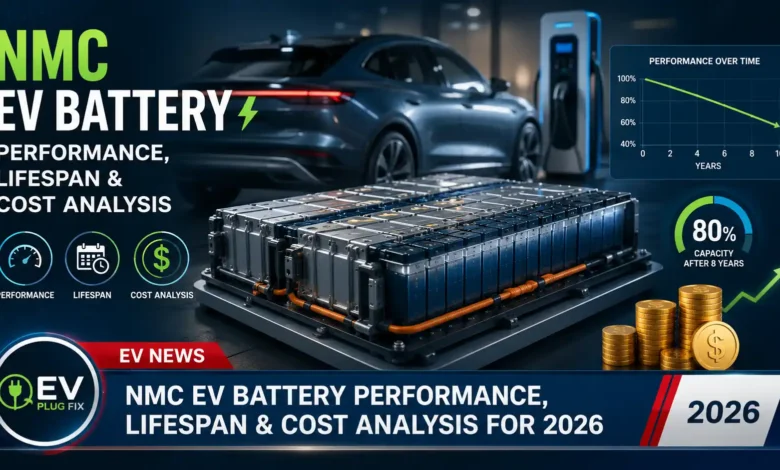
NMC batteries (Nickel Manganese Cobalt) have become a cornerstone of the electric vehicle revolution, powering everything from the BMW iX3 to the Volkswagen ID.3. This lithium-ion chemistry delivers a compelling mix of high energy density and improving cost-efficiency, making it a top choice for automakers looking to maximize driving range. But as we navigate through 2026, the landscape is shifting. New chemistries are emerging, cost pressures are mounting, and questions about safety and sustainability are more pertinent than ever. This article provides an investigative look into the current state of NMC battery technology, its real-world performance, and what it means for your EV and the industry as a whole. For those comparing different EV models and their charging capabilities, our Europe Best-Selling EVs guide provides valuable market context.
What Makes an NMC Battery Unique?
NMC batteries get their name from the chemical composition of their cathode, which is a blend of nickel, manganese, and cobalt. The specific ratio can vary—such as NMC 811, NMC 622, or NMC 532—directly influencing performance characteristics. Higher nickel content (like in NMC 811) boosts energy density for a longer range, while higher manganese or cobalt content enhances stability and lifespan.
- Composition: Lithium, Nickel, Manganese, Cobalt.
- Energy Density: 180 to 250 Wh/kg* at the cell level, which is significantly higher than LFP batteries .
- Maximum range potential: 1000+ km (achievable with advanced pack designs).
- Used in: BMW iX3, Audi A6 Avant e-tron, Fiat 500e, VW ID.3, and many premium long-range EVs.
Lifespan and Real-World Endurance
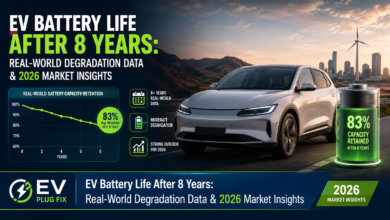
One of the biggest questions for any EV buyer is battery longevity. An NMC car battery is typically predicted to last for 1000 – 2000 charge cycles, which translates to roughly 8 – 10 years of average driving. However, real-world tests are showing even more impressive results. An extensive test by the German automobile club ADAC on the VW ID.3, which uses NMC cells, found that even after 160,000 kilometers, the battery still retained a remarkable 91% of its original capacity.
To put that distance in perspective, the average driver in Germany covers approximately 12,309 kilometers per year**. At that rate, a driver would need over 13 years of ownership to reach 160,000 kilometers, surpassing the predicted cycle life by a significant margin. This suggests that for most drivers, the battery’s lifespan will comfortably outlast their ownership of the vehicle. In moderate climates, an EV battery is expected to last 12 to 15 years or more, with many early Tesla Model S vehicles from 2013 still running on their original packs .
The primary concern remains battery degradation, where performance and range gradually decline over time. Research shows that degradation is a combination of loss of lithium inventory (LLI) early in its life, and later, loss of active material (LAM) after about 150,000 km . Effective battery management systems (BMS) and thermal management are critical to mitigating these effects, which is why understanding Constant Current EV Charging protocols can help optimize charging habits for better battery health.
The Cost Factor: Performance vs. Price
The cost of NMC batteries has come down substantially, a trend that has helped make EVs more accessible. By 2024, the cost of lithium-ion batteries fell 20% to $115 per kWh. However, this is where the comparison becomes crucial. The total cost of an NMC pack is now estimated to be around $111/kWh, compared to approximately $81/kWh for an LFP pack .
This price disparity is driven by the raw materials: nickel and cobalt are significantly more expensive than the iron and phosphate used in LFP batteries. The cathode active material (CAM) itself contributes to 31% of the cost of an NMC pack, versus just 18% for an LFP pack . For a complete financial perspective, our EV Charging vs Petrol Cost Com analysis helps contextualize these battery costs against overall vehicle ownership expenses.
Comparative Analysis: NMC vs. LFP Batteries
To understand the current landscape, it’s essential to see how NMC stacks up against its main rival, LFP (Lithium Iron Phosphate).
| Metric | NMC Battery | LFP Battery | Winner |
|---|---|---|---|
| Energy Density (Wh/kg) | ~250 | ~160-210 | NMC |
| Cycle Life | ~3,000 cycles | ~6,000 – 10,000 cycles | LFP |
| Cost per kWh (2025) | ~$128 | ~$81 | LFP |
| Thermal Runaway Temp | ~180-210°C | ~270°C | LFP |
| Fast Charging Speed | Superior | Good | NMC |
| Operating Temp Range (Discharge) | -10°C to +45°C | -10°C to +50°C | Tie |
“The data shows that NMC is the battery of choice when performance matters. Long-range travel and fast charging demand the strengths of NMC.” – Dr. Mark Mistry, Nickel Institute
Ethical, Safety, and Environmental Concerns
Despite its high energy density, NMC technology faces several challenges that automakers are working to address. The biggest concern is the cost and ethical implications of cobalt mining, which is often associated with unstable regions and poor labor practices. This has driven research into “high-nickel, low-cobalt” formulations like NMC 811.
Furthermore, NMC batteries have a lower thermal runaway threshold than LFP, meaning they can be more susceptible to fire under extreme abuse conditions . This requires robust and complex cooling and heating systems, which add to the cost, weight, and complexity of the vehicle. Real-world failures have been documented, emphasizing the need for stringent safety protocols. Proper EV Ground Fault Protection is one of the many safety measures that complement battery management systems in modern EVs.
Your Questions Answered: Battery Replacement
Understanding the potential costs of ownership is crucial. Here are the key factors that affect the cost of replacing an EV battery.
- Vehicle Make and Model: Luxury automakers typically charge more for OEM parts. A BMW i3 battery can cost over $18,000 through a dealer, while a Nissan Leaf’s smaller battery is significantly cheaper .
- Battery Size (Capacity): The higher the kilowatt-hour (kWh) rating, the higher the replacement cost. A 75 kWh pack can represent $8,000 to $10,000 in parts alone .
- Labor Costs: Replacing a battery pack is a complex job requiring specialized lifts and trained technicians. Labor rates range from $150 to $250 per hour, adding $1,000 to $3,000 to the total bill .
- Warranty Coverage: Most EV batteries have a warranty of 8 to 10 years. If a replacement is needed within this period due to a defect, the cost can be significantly subsidized or even free .
The Future: Sodium-ion and Solid-State on the Horizon
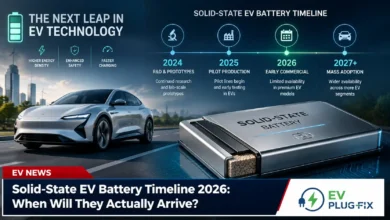
The battery world is not standing still. We are starting to see alternatives to lithium-ion entering the market. Sodium-ion batteries, for example, are beginning to appear in short-range EVs in China. They offer lower cost and better cold-weather performance at the expense of energy density . Meanwhile, solid-state batteries, which promise even higher energy density and improved safety, are on the horizon, with companies like Toyota and Factorial Energy planning to bring them to market by 2027-2028 . The evolution of battery technology goes hand-in-hand with advances in charging infrastructure, including the ISO 15118 Guide standards that enable plug-and-charge functionality for next-generation EVs.
However, NMC batteries are far from obsolete. They continue to improve and will likely remain the dominant technology for long-range and high-performance EVs for the foreseeable future.