Home EV Charger Maintenance Schedule 2026: Costs, Checks & Pro Tips
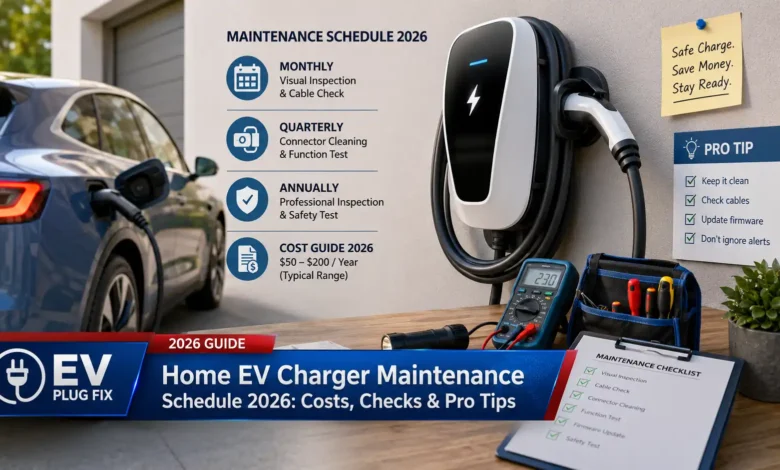
Home EV charger maintenance is a simple, yet often overlooked, routine that ensures your charging equipment remains safe, efficient, and reliable for years to come. While many new electric vehicle owners focus on the car itself, understanding how to care for your home charging station is equally vital to protect your investment and avoid unexpected disruptions. Fortunately, these chargers are designed to be low-maintenance, but a proactive approach is key to preventing costly breakdowns and ensuring peace of mind .
Compared to the complex machinery of a gas-powered car, or even the vehicle you’re charging, home electric vehicle supply equipment (EVSE) is relatively simple. With no moving parts and a straightforward job, it doesn’t ask for much. However, it’s a piece of high-voltage electrical equipment permanently connected to your home’s grid. According to the U.S. Department of Energy, while these units require minimal upkeep, following a consistent maintenance routine is the best defense against premature degradation . Think of it like any other major home appliance—a little care goes a long way.
Your 2026 EV Charger Maintenance Schedule: A Practical Routine
To keep your charger in peak condition, follow this clear and straightforward maintenance schedule. It breaks down into simple, manageable tasks that anyone can perform, with one crucial annual step for the professionals .
Weekly: The Visual Check & Clean
Make it a habit, perhaps when you take out the recycling or do your weekend chores, to give your charger a quick once-over. This five-minute routine is your first line of defense.
- Visual Inspection: Look for any obvious damage. Are there cracks in the housing, or is the cable kinked or frayed? Also, check the connector pins for any dirt or debris .
- Wipe It Down: Use a soft, dry cloth to gently wipe the charger unit, screen, and connector. If your charger is outdoors, it can accumulate dust and pollen, which a simple wipe will remove. Never use water or harsh chemicals unless your manufacturer explicitly states it’s safe .
- Store the Cable Properly: After each charging session, coil the cable loosely and place it on its holster. Avoid kinking it or leaving it where it could be driven over or become a tripping hazard .
Monthly: A More Thorough Inspection
Once a month, take an extra minute to look a little closer. You’re still in DIY territory, but you’re checking for the early signs of trouble that a weekly glance might miss .
- Check for Corrosion: Examine the metal pins on the connector. Do you see any green or white discoloration, rust, or oxidation? This could be a sign of moisture infiltration .
- Feel for a Secure Connection: When you plug in your EV, the connector should fit snugly. If it feels loose or wiggles, it might indicate wear and require professional attention.
- Listen During a Charge: Your charger should operate quietly. If you hear buzzing, humming, or crackling, it could indicate an electrical issue that warrants a closer look.
- Inspect the Full Cable: Carefully examine the entire length of the charging cable for cuts, abrasions, or damage to the outer sheath, paying special attention to the ends where it connects to the unit and the plug .
Quarterly: The Full Charging Test
Every three months, run a complete test cycle. This isn’t about taking anything apart, but verifying the whole system works as it should .
- Monitor Charging Speed: Does your car charge at its expected rate? A noticeable slowdown can be an early warning of a problem.
- Check All Indicator Lights: Ensure all the status LEDs on the charger are displaying the correct colors (often green for ‘ready’ and charging). A red or yellow warning light usually means something needs attention.
- Verify Proper Shutdown: Once your car reaches its charge limit, the charger should stop automatically and return to standby. If it doesn’t, that’s a sign of a potential fault.
Annual: The Crucial Professional Inspection
While your DIY checks handle the surface-level stuff, an annual professional inspection is non-negotiable for long-term safety and reliability. Schedule this at least once a year with a certified electrician or an EV charger specialist .
- What a Pro Will Do: A professional will go far beyond your visual checks. They’ll use specialized tools to test electrical safety features, tighten internal wiring connections, and verify the charger’s voltage and current output are within safe parameters . They can also use thermal imaging to detect hidden hotspots that could indicate a failing component .
- Why It’s Essential: Your home charger operates on a 240-volt circuit, carrying a significant amount of power. A professional inspection ensures everything is safe, code-compliant, and operating efficiently, protecting your home and family from potential electrical hazards. For smart charger owners, this is especially important as advanced features like go-e PV Surplus Charging require properly calibrated internal systems to function safely and efficiently.
Cost of EV Charger Maintenance: Professional vs. Emergency
An annual professional inspection typically costs between $200 and $400, depending on your location and the technician’s rates . This is a small price to pay compared to the cost of an emergency repair, which can easily run from $600 to over $1,000. Many electricians also offer package deals for yearly maintenance, which can be more cost-effective than one-off service calls. For a complete cost breakdown, including a comparison of DIY versus professional services, see the table below.
| Maintenance Type | Typical Cost (2026) | Frequency | Who Performs It |
|---|---|---|---|
| DIY Visual Inspection & Cleaning | $0 (Your Time) | Weekly | Homeowner |
| DIY Monthly/Quarterly Checks | $0 (Your Time) | Monthly/Quarterly | Homeowner |
| Annual Professional Inspection | $200 – $400 | Annually | Licensed Electrician / EV Specialist |
| Emergency Repair / Service Call | $600 – $1,500+ | As Needed | Licensed Electrician / EV Specialist |
| Complete EV Charger Replacement | $500 – $2,500+ | Every 10-15 Years | Licensed Electrician / EV Specialist |
Expert Tip: Don’t Forget Your Firmware
If your home EV charger is a “smart” model connected to Wi-Fi, keeping its firmware updated is a crucial piece of maintenance. Manufacturers regularly release updates to improve performance, fix bugs, and enhance safety features. Check the manufacturer’s app or website periodically for updates. Staying current with firmware is particularly important for chargers with advanced solar integration capabilities, such as those supporting go-e PV Surplus Charging, as updates often optimize energy management algorithms.
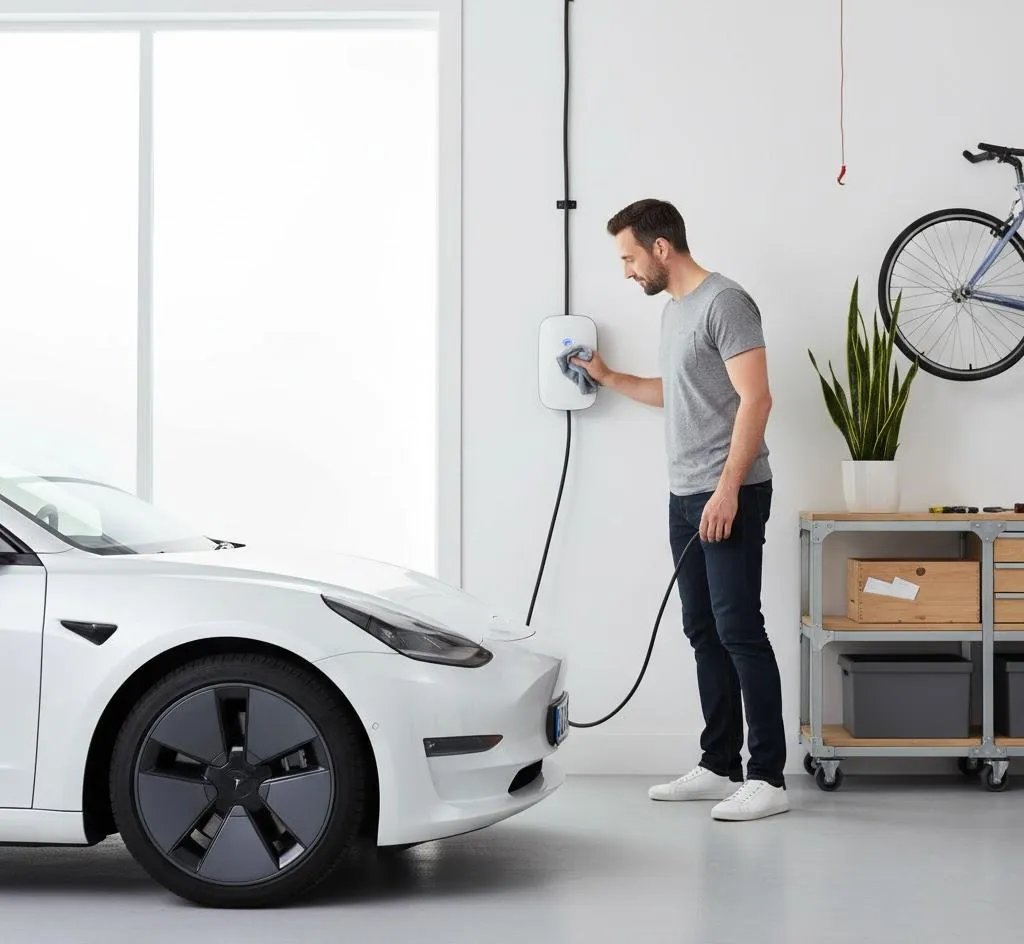
Investing $200-$400 in annual professional maintenance can save you from a $1,000+ emergency repair bill.
Warning Signs You Need Immediate Service
While following the maintenance schedule is vital, you should never ignore certain red flags. If you notice any of these, stop using your charger immediately and contact a professional .
- Overheating: The charger or its plug is too hot to touch comfortably.
- Burning Smell or Smoke: Any unusual odor or visible smoke is a serious fire hazard and requires immediate professional attention.
- Physical Damage: You see cracks, deep dents, burn marks, or exposed wires on the casing, cable, or plug .
- Persistent Error Codes: The charger displays a red warning light or error code that you can’t resolve by resetting it or consulting the manual.
- Frequent Circuit Breaker Trips: The breaker for your charger trips repeatedly, indicating an electrical fault .
- Intermittent Charging: The charging session stops and starts unpredictably on its own. This can sometimes be related to software glitches in smart chargers, which is why understanding features like go-e PV Surplus Charging setup can help you distinguish between hardware failures and configuration issues.
Important Notice: Commercial vs. Home Maintenance
The maintenance frequency for commercial or workplace EV chargers is much higher due to more frequent usage and public liability requirements. These units typically need professional servicing every six to eight months, compared to the annual check recommended for a home charger . Always follow the manufacturer’s specific guidelines for your charger model, especially if it includes specialized features like go-e PV Surplus Charging which may have unique maintenance requirements.
Frequently Asked Questions
Frequently Asked Questions About Home EV Charger Maintenance
How long should an EV charger last?
With proper maintenance and care, a quality home EV charger has a typical lifespan of 10 to 15 years. However, environmental factors like extreme heat, humidity, and physical wear can shorten this if it’s not looked after .
Can I perform maintenance on my EV charger myself?
Yes, homeowners can and should handle all external maintenance, including weekly visual inspections, cleaning, and cable management. However, any work that involves opening the unit, internal electrical testing, or wiring must be performed by a qualified and licensed electrician .
Is annual professional maintenance really necessary?
Absolutely. While your own checks are essential for catching obvious surface damage, a professional electrician can test for internal electrical faults, loose connections, and safety issues that are invisible to the untrained eye. This annual check is vital for safety and also helps protect your investment and warranty. For smart chargers with advanced capabilities, professional inspections ensure that features like go-e PV Surplus Charging are operating within safe electrical parameters.
What is the average cost to maintain an EV charger?
You can expect to pay between $200 and $400 for an annual professional inspection. This proactive cost is far less than the $600 to $1,500 you might pay for an emergency repair after a breakdown or a faulty component .
Do weather conditions affect my EV charger’s maintenance needs?
Yes. Outdoor chargers face more stress from temperature changes, rain, snow, and UV rays. You should conduct a seasonal check at the turn of every season, paying extra attention to moisture and ice protection in the winter and looking for corrosion from humidity in the summer .
“Our recovery specialists see more customers worried that their electric vehicle isn’t charging, but quite often the issue is with the charger rather than the vehicle.” – Lee Puffett, Managing Director of Start Rescue
Keep Your Charge Reliable for Years to Come
Caring for your home EV charger doesn’t require technical expertise—just a simple, consistent routine. By following this 2026 maintenance schedule, you’re not just performing chores; you’re actively protecting a significant investment, ensuring the safety of your home, and guaranteeing a smooth, reliable charge every time you plug in. A few minutes of attention now can save you from the headache and expense of an unexpected breakdown down the road. Make charger care a part of your routine, and you’ll be driving electric with confidence for years to come.