Plug and Charge EV Technology in 2026: How ISO 15118 Eliminates Charging Hassle
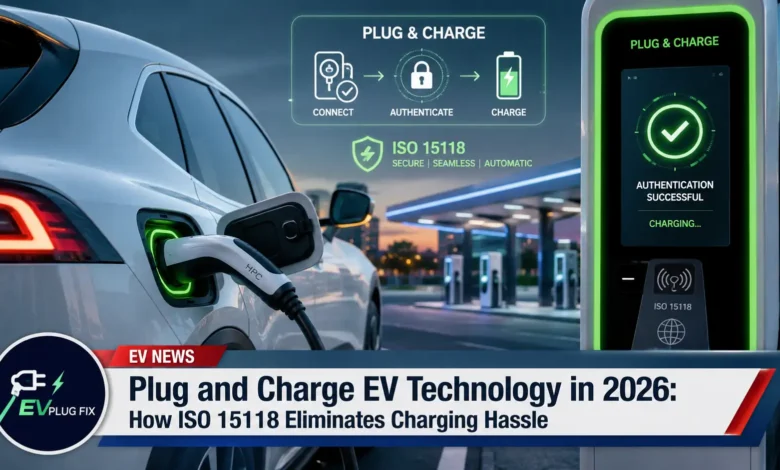
Plug and Charge EV technology fundamentally transforms the electric vehicle ownership experience by eliminating the frustrating ritual of app-swiping, QR-scanning, and payment-confirming that has plagued public charging for years. This isn’t a futuristic concept—it’s a tangible reality in 2026, driven by the robust ISO 15118 standard that allows your vehicle and the charger to communicate, authenticate, and transact entirely in the background as soon as you connect the cable.
As someone who works closely with charge point operators and fleet managers through Parwatt New Energy, I’ve witnessed firsthand how this friction disrupts adoption and frustrates even the most enthusiastic early adopters. The old way of charging—juggling multiple apps, standing in the rain fumbling with a phone, and praying for a stable signal—creates genuine barriers. It’s time to dissect why this technology matters, dispel the myths surrounding it, and explore how you can benefit from it in 2026.
Why Traditional EV Charging Still Feels Complicated and Time-Consuming
Let’s be honest: the current public charging ecosystem is a patchwork of standalone networks, each demanding its own digital key. The average driver doesn’t just “charge”—they navigate a labyrinth of steps before a single electron flows into their battery. This complexity is a silent killer of EV adoption, particularly for those not deeply invested in the technology.
Consider a typical scenario for a delivery driver or a family on a road trip. They park, locate the correct app amongst the chaos on their phone, attempt to scan a QR code that might be smudged or sun-bleached, enter payment details, and wait for authorization. A dead phone battery or poor cellular reception can turn a quick top-up into a logistical nightmare. These aren’t edge cases; they are daily realities.
| Step | Driver Action Required | Typical Time Lost |
|---|---|---|
| Locate & Arrive | Navigate to station; find available bay | 1-2 minutes |
| App Management | Search for correct app; log in or reset password | 1-2 minutes |
| Authentication | Scan QR code, tap NFC card, or input ID | 1 minute |
| Payment Processing | Enter card details, confirm, or authorize wallet | 1-2 minutes |
| Session Start | Wait for network verification and energy flow | 30-90 seconds |
As this table illustrates, the cumulative time lost is significant. For fleet managers, these minutes translate directly into lost revenue and reduced operational efficiency. This inherent friction isn’t just an inconvenience; it’s a major deterrent for potential EV buyers. It’s the number one complaint I hear from our partners at Parwatt, who are constantly seeking ways to streamline the user experience and reduce support overhead.
Debunking Common Misconceptions About ISO 15118 and Plug and Charge
Despite its growing availability, several misconceptions persist about ISO 15118 Plug and Charge, causing hesitation among drivers and infrastructure investors alike. Let’s clear these up with the facts as they stand in 2026.
The most persistent myth is that it works universally on any charger. In reality, both the vehicle and the charging station must actively support the ISO 15118 standard and possess the necessary digital certificates for a plug-and-play session to initiate. Without this mutual compatibility, the system gracefully falls back to manual methods.
Another significant concern revolves around security. The idea of automatically billing a car feels inherently risky to some. However, the technology employs robust Public Key Infrastructure (PKI) and TLS encryption. The vehicle presents a unique digital certificate issued by the mobility operator, which the charger verifies against a trusted certificate authority. This process is far more secure than traditional app-based logins, which are susceptible to phishing and password theft.
| Common Myth | Reality in 2026 |
|---|---|
| Works on every charger | Requires ISO 15118 support on both the car and charger |
| Security is a risk | Uses high-grade encryption and digital certificates; more secure than apps |
| Only for luxury EVs | Available on mainstream models from Ford, Hyundai, Kia, GM, and more |
| Requires costly hardware upgrades | Most new chargers can support it via software updates |
I’ve seen firsthand at Parwatt how these misconceptions can delay crucial infrastructure upgrades. The reality is that the technology is mature, secure, and rapidly expanding across vehicle makes and charger networks. The shift is no longer a question of “if” but “when.”
How ISO 15118 Plug and Charge Works: The Technical Breakdown
To appreciate the elegance of EV charging protocols, it’s helpful to understand what happens in the milliseconds after you plug in the connector. The process, governed by the ISO 15118 standard, is a sophisticated digital handshake that ensures a seamless and secure experience.
The Step-by-Step Authentication Flow
- Physical Connection and Pilot Signal: The cable connects the EV to the charger, establishing a basic physical connection and a low-level control pilot signal to confirm the link and available power capacity.
- Secure Communication Channel: The vehicle and charger initiate a secure TLS (Transport Layer Security) encrypted channel using Power Line Communication (PLC) technology. This ensures all subsequent data exchanges are protected from eavesdropping or tampering.
- Certificate Exchange and Authorization: This is the core of the system. The EV sends its signed contract certificate to the charger. This certificate, issued by the mobility operator, proves the car is associated with a valid account. The charger validates this certificate against a trusted public key infrastructure.
- Session Start and Energy Transfer: Once the contract is verified, the charger authorizes the session and begins the flow of electricity. The car and charger continuously exchange metering data in real-time, ensuring accurate billing.
- Session Termination and Billing: When the driver unplugs or stops the session, the charger records the final energy consumption. This data is sent securely back to the mobility operator, who processes the payment against the linked account without any further driver input.
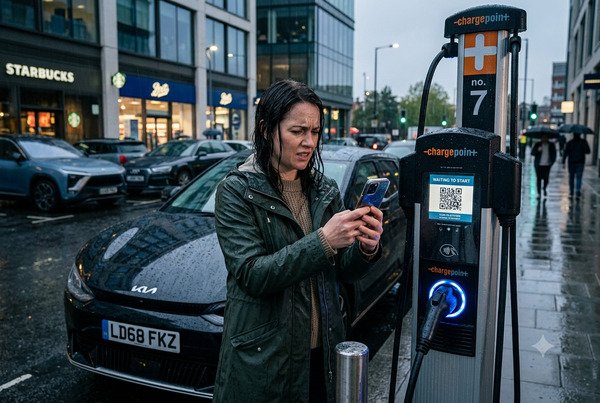
Chart showing the stark difference between manual app-based charging and seamless Plug and Charge automation
At Parwatt, our hardware is designed with this future in mind. We understand that ensuring compatibility with advanced protocols like ISO 15118 is essential for providing long-term value to our clients. Our range of DC fast chargers and power modules are built on open, adaptable platforms to seamlessly integrate with evolving industry standards.
“The first time you experience a true Plug and Charge session, you realize how fundamentally broken the old system was. It’s not just an upgrade; it’s a complete re-imagining of the user experience.”
Key Benefits of Plug and Charge for Drivers, Operators, and Fleets
The advantages of implementing automatic EV payment and authentication are profound, creating a win-win-win scenario for every stakeholder in the EV ecosystem.
🚗 For Drivers
- Ultimate Convenience: Park, plug in, and walk away. No app-switching, NFC card fumbling, or payment entry.
- Stress Reduction: Eliminates range anxiety related to payment or app failures, especially in poor weather.
- Faster Stops: Starts charging in under 30 seconds, compared to the 2-5 minutes typical of traditional methods.
🏢 For Charge Point Operators
- Reduced Support Costs: Fewer customer service calls about app issues, forgotten passwords, and failed payments.
- Increased Station Throughput: Faster session starts mean more cars can be served daily, increasing revenue potential.
- Enhanced Customer Loyalty: A frictionless experience encourages repeat business and positive word-of-mouth.
🚚 For Fleet Managers
- Maximized Uptime: Drivers spend less time charging and more time on the road, boosting productivity.
- Simplified Expense Tracking: Automatic and accurate billing to specific vehicle contracts streamlines accounting.
- Improved Driver Satisfaction: A seamless experience reduces driver frustration and improves job satisfaction.
Furthermore, the security enhancements are critical in a world of increasing digital threats. By replacing vulnerable app logins with secure digital certificates, Plug and Charge offers a more robust defense against fraud and unauthorized use. As more networks adopt this standard, it also paves the way for seamless roaming between different providers, a key element for the maturity of the EV market.
How to Start Using Plug and Charge EV Technology Today
Ready to experience the future of charging? Here’s a practical roadmap to getting started with Plug and Charge in 2026.
- Verify Your Vehicle’s Compatibility: Check your owner’s manual or vehicle settings for mentions of “ISO 15118,” “Plug and Charge,” or “Automatic Authentication.” Contact your dealer if you’re unsure. Many models from 2024 onwards feature this capability.
- Activate with Your Mobility Provider: Ensure your charging contract includes a valid digital certificate. This is usually a one-time activation step through your provider’s app or website.
- Identify Compatible Chargers: Look for the specific “Plug and Charge” icon on public chargers or use mapping apps that filter by this feature. The number of compatible stations is growing exponentially.
- Simply Plug In: Once both sides are compatible, you no longer need your app. Just plug the cable into your EV, and the session will start automatically.
- Monitor Your Session (Optional): While the process is autonomous, many drivers still like to use their provider’s app to monitor charging status in real-time.
For fleets and businesses, the process involves a more strategic approach. Partner with infrastructure providers who offer OCPP-compliant hardware that can be updated to support these new standards. Investing in future-proof technology, like the solutions we develop at Parwatt, is crucial for a successful long-term electrification strategy.
Conclusion: A New Era of Seamless EV Charging
Plug and Charge EV technology, built on the robust ISO 15118 standard, is eradicating the final barriers to a truly seamless electric driving experience. By automating the critical steps of authentication and payment, it empowers drivers, streamlines operations for charge point operators, and unlocks new levels of efficiency for fleets. The complex, multi-app nightmare of the past is being replaced by a future where charging is as simple as parking and plugging in.
At Parwatt New Energy, our mission is to drive this transition by providing smart, reliable, and future-ready EV charging solutions. We encourage you to check your vehicle’s capabilities and explore the growing network of Plug and Charge-compatible stations in your area. The future of EV charging is here, and it’s remarkably simple.