Tesla Model 3 Charging Time 2026: AC vs DC Speed & Cost Analysis
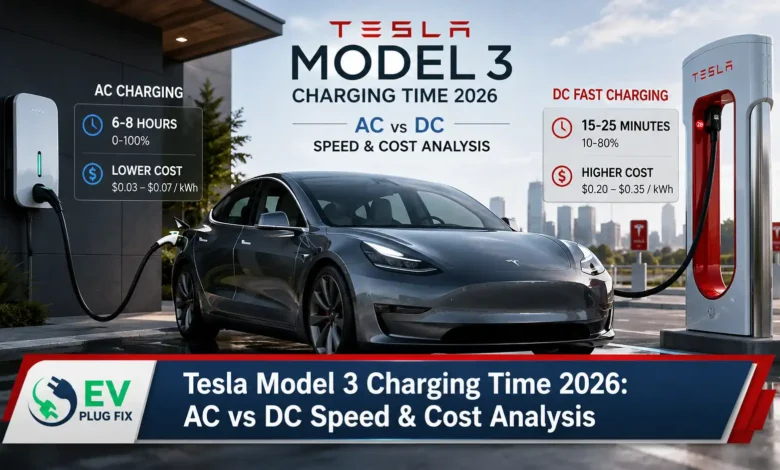
Tesla Model 3 charging time in 2026 depends heavily on the variant, battery size, and the power source you’re using—whether a single-phase household outlet or a high-voltage DC Supercharger. Based on extensive testing, a Tesla Model 3 can take anywhere from 6 hours with an 11 kW three-phase AC connection to just 27 minutes when using a 250 kW V3 Supercharger for a 10-80% top-up.
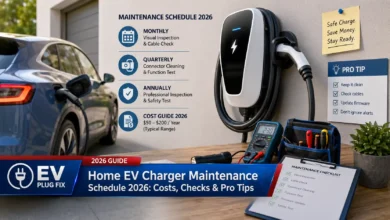
Recent ownership data from early 2026 confirms that the Model 3 Standard Range (RWD) with its LFP battery takes approximately 6 hours to reach a full charge using an 11 kW AC wallbox, while the Long Range AWD variant requires about 8 hours and 15 minutes to fully replenish its larger 78.1 kWh pack . The key variable is the onboard charger capacity, which is limited to 11 kW for most models and 7.7 kW for the standard RWD variant . To optimize your home charging setup and avoid common pitfalls, regular Home EV Charger Maintenance ensures your wallbox operates at peak efficiency.
Understanding these charging nuances is critical to maximizing your EV ownership experience, whether you are configuring a home station or planning a road trip. Let’s break down the exact charging times for every 2026 Tesla Model 3 configuration and connection type, backed by real-world testing data.
2026 Tesla Model 3 Charging Time by Variant
Charging performance varies significantly between the standard Rear-Wheel Drive and the more powerful Long Range or Performance versions. The main differences stem from battery size and the vehicle’s maximum AC charge rate.
- Tesla Model 3 RWD (Standard): Equipped with a 60 kWh LFP battery pack and a 7.7 kW (32A) onboard AC charger. This model typically requires 6 to 8.5 hours for a full charge on a Level 2 setup .
- Tesla Model 3 Long Range & Performance: Feature a larger 78.1 kWh NMC battery and a more robust 11.5 kW (48A) onboard charger. A full charge at home generally takes 8 to 11 hours depending on the amperage of the circuit .
Tesla Model 3 Charging Time & Speed Comparison (2026 Data)
| Model Variant | Battery Size | AC Max Charge Rate | Home (11kW) 0-100% Time | DC Fast (250kW) 10-80% Time |
|---|---|---|---|---|
| Model 3 RWD | 60 kWh | 7.7 kW / 11 kW | ~6 – 8.5 hours | ~23 – 27 minutes |
| Model 3 Long Range | 78.1 kWh | 11.5 kW | ~7.5 – 8.5 hours | ~27 – 30 minutes |
| Model 3 Performance | 78.1 kWh | 11.5 kW | ~8 – 9 hours | ~27 – 30 minutes |
Home AC Charging: go-eCharger and Wall Connector Speeds
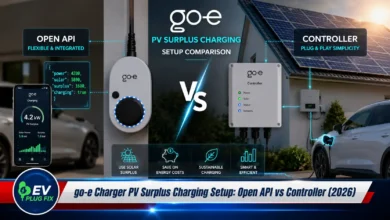
For daily driving, home charging is the most convenient option. Using the go-eCharger HOMEfix or Gemini stations, the experience varies based on whether you have a single-phase or three-phase connection. Data suggests that a single-phase 16A connection (3.7 kW) will charge the Model 3 in roughly 17 hours, which aligns with standard European household outlets . For those looking to maximize solar integration, implementing go-e PV Surplus Charging can significantly reduce your electricity costs by utilizing excess solar energy.
However, upgrading to a three-phase connection significantly reduces this time. Installing a Wall Connector or compatible high-power station at 11 kW or 22 kW (though limited by the car) provides the optimal at-home speed.
🔌 Home Setup: NEMA 14-50 vs Wall Connector
NEMA 14-50 (32A): This standard outlet provides ~7.7 kW, making it ideal for the RWD variant. Expect a full charge in roughly 8-9 hours .
Tesla Wall Connector (48A): Hardwired on a 60A circuit, this delivers a full 11.5 kW to the Long Range. It adds about 30-44 miles of range per hour, ensuring a full battery by morning .
DC Fast Charging: Tesla Supercharger V3 Speeds
When you are on the road, time is of the essence. The Tesla Supercharger network remains the gold standard for DC fast charging. The V3 Superchargers deliver up to 250 kW, allowing the Long Range Model 3 to add significant range quickly.
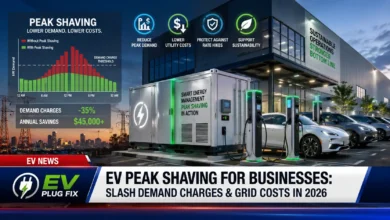
Data from EV databases confirms that a Tesla Model 3 Long Range can add approximately 10-80% battery capacity (around 250+ km of range) in as little as 27 minutes on a V3 Supercharger . The RWD version, limited to 170 kW peak, performs similarly, taking about 23-25 minutes for the same 10-80% session . For commercial fleet operators managing multiple charging stations, implementing EV Peak Shaving strategies can help reduce demand charges and optimize energy distribution during peak hours.
“Battery preconditioning is essential for optimal Supercharger speeds. Tesla owners should navigate to the charger using the in-car system to heat the battery, which allows the car to accept the highest possible power output.”
Real-World Charging Costs in 2026
Cost is a major factor in the EV transition. While charging at home remains drastically cheaper than gasoline, public fast charging costs have risen slightly heading into 2026. In Europe, the cost per kWh for a Supercharger is around €0.42, while home charging during off-peak hours can be as low as €0.14 to €0.25 per kWh .
Based on a simulation for driving 15,000 km per year, a Model 3 charged entirely at home during off-peak hours costs approximately €315 annually. In contrast, relying solely on Superchargers would bring that cost up to approximately €945—still cheaper than a comparable combustion engine vehicle consuming 6.5L/100km, which would cost roughly €1,803 . Regular Home EV Charger Maintenance ensures your home charging setup remains efficient, preventing energy loss and costly repairs over time.
💡 Cost-Saving Tip for US Owners
If you are using a NEMA 14-50 outlet or a dedicated Wall Connector, remember to claim the federal tax credit. You can receive a 30% credit on installation costs (up to $500) for residential EV charging equipment purchased through 2032 .
Frequently Asked Questions
Tesla Model 3 Charging FAQ
How long does the Tesla Model 3 take to charge to 80% on a Supercharger in 2026?
The 2026 Tesla Model 3 Long Range takes approximately 27 minutes to charge from 10% to 80% on a 250 kW V3 Supercharger. The Model 3 RWD is slightly quicker, taking about 23 minutes due to its smaller battery pack .
What is the cheapest way to charge a Tesla Model 3?
The most cost-effective method is charging at home using a Level 2 wallbox during off-peak electricity tariff hours. In European markets, this can cost as little as €2.10 per 100 km, making it significantly cheaper than public DC fast charging .
Why does my Tesla Model 3 charge slower than expected at home?
Home charging speed is often limited by the car’s onboard charger (11.5 kW max) and the circuit breaker capacity. If you have a NEMA 14-50 outlet, you are limited to ~7.7 kW, which will charge a Long Range slower than a hardwired Wall Connector on a 60A circuit .
Can the Tesla Model 3 use a 22 kW AC charger?
While the Tesla Model 3 is compatible with a Type 2 AC plug, the onboard charger limits the intake to 11 kW (or 7.7 kW for some RWD variants). Therefore, plugging into a 22 kW station will not charge faster than an 11 kW station; the car simply won’t draw more power .