Smart EV Charging Technology Benefits & Cost Savings 2026
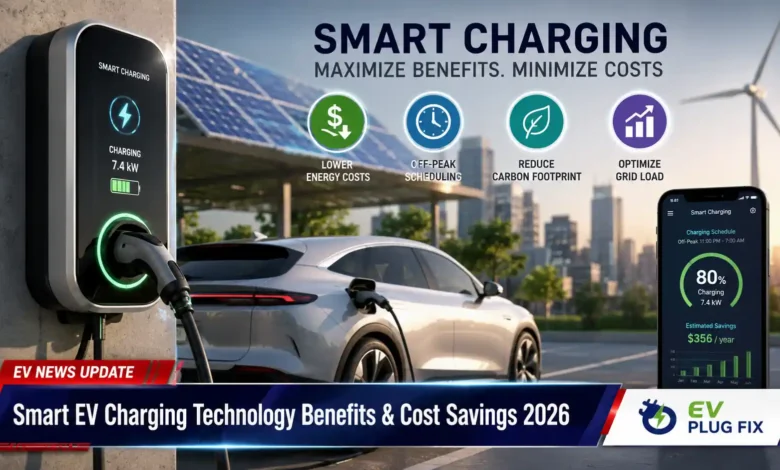
Smart EV charging technology is quietly transforming the electric vehicle ownership experience by turning a simple plug-in into an intelligent, cost-saving, and grid-friendly ecosystem. Moving beyond the passive model of merely supplying electricity on demand, smart charging represents a complete system where electric vehicles, charging stations, and power grids communicate with one another to optimize energy use, reduce costs, and enhance convenience for drivers. Data from real-world studies indicates that smart charging can reduce grid peak loads by an estimated 10–15%, making the overall energy infrastructure more resilient and efficient.
What Makes EV Charging ‘Smart’?
At its core, smart charging is about intelligent communication and real-time decision-making. When you connect your EV to a smart charger, the system immediately analyzes numerous data points: current grid demand, real-time electricity pricing, your personal driving habits, battery health, and even weather forecasts. This data enables the charger to make proactive choices on your behalf.
A central element of this is dynamic pricing. Unlike traditional flat electricity rates, dynamic pricing allows utility companies to adjust costs throughout the day based on demand. Off-peak hours—typically late at night—can cost 30–50% less than peak daytime rates. Smart chargers automatically schedule charging sessions during these cheapest periods, meaning lower electricity bills for you with zero extra effort.
Another vital component is demand-response management. When the grid experiences high demand, smart chargers can temporarily reduce charging power or pause it entirely to help stabilize the system. This collective adjustment significantly reduces strain on the grid and minimizes the risk of blackouts during energy shortages. This technology is so effective that experts estimate it could save the European Union energy system approximately €22 billion annually by 2040 .
For added convenience, remote monitoring and control via Wi-Fi and mobile apps allows you to check charging status, power usage, and remaining time from anywhere. You can start or stop charging remotely or even preset schedules—such as beginning a charge automatically at 2 a.m. and finishing right before you leave for work.
Key Features of Smart Charging Technology
Beyond connectivity, smart EV chargers come packed with features designed to enhance safety, efficiency, and usability.
Adjustable Charging Current
Unlike conventional chargers that supply a fixed current, a smart charger lets you set the output anywhere between 8 A and 32 A. This adaptability is crucial for older home circuits or when charging at a different location. The charger can automatically adjust to ensure safe and stable operation, preventing blown fuses or overloads.
Delayed Charging
This feature lets you take full advantage of cheaper nighttime electricity rates. Many smart chargers allow you to delay charging by 1 to 9 hours. Simply plug in your car in the evening and program the system to start automatically after midnight. Over the course of a year, these small optimizations can lead to significant savings.
Multi-Protocol Compatibility
Modern smart chargers often support multiple charging standards—Type 1 in North America, Type 2 in Europe, GB/T in China, and Tesla’s proprietary connector. This means one device can work seamlessly with nearly any EV brand, future-proofing your investment for your next vehicle.
Built-In Safety and Protection
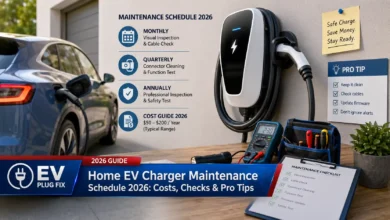
Safety is paramount in any EV charging system, and smart chargers are built with multiple layers of protection. These include over-current protection to shut off power during abnormal surges, over-voltage and under-voltage protection for a stable supply, and leakage protection to prevent electric shock. Advanced thermal management systems use heat-resistant materials and temperature sensors to ensure safe operation in all weather conditions, from -30 °C winters to +55 °C summers. This helps make smart charging not just more efficient, but safer. Regular Home EV Charger Maintenance is also essential to keep these safety systems functioning properly over time.
How Smart Charging Enhances Everyday Life
For daily commuters, the primary benefit of smart charging is pure convenience. Imagine your charger learns your schedule and knows you need a full battery for your morning commute. It can automatically plan the most efficient charging strategy—whether to charge immediately after work, wait for off-peak hours, or even prioritize solar energy if you have panels on your roof.
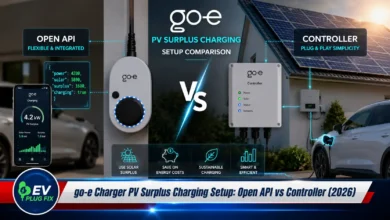
For homeowners with solar panels, smart charging opens up a world of possibilities. Your EV can charge directly using clean, self-generated solar power, reducing both costs and your carbon footprint. A solar-aware smart charger can detect when solar generation exceeds household demand and redirect that surplus energy into your EV battery. Systems like go-e PV Surplus Charging exemplify this capability, allowing you to maximize your solar investment. This transforms sunlight into a free fuel source for your car. For drivers in Europe, a smart charger that supplies 60% of their annual driving energy from solar could save roughly €482 per year compared with relying completely on the grid .
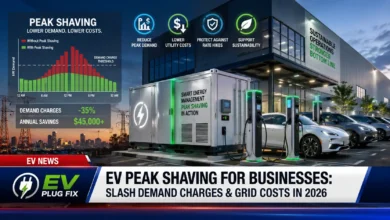
For fleet operators, such as delivery or taxi services, the benefits multiply. Smart scheduling and coordinated charging can dramatically cut operating expenses while keeping more vehicles on the road and operational for longer. Implementing EV Peak Shaving strategies helps commercial fleets avoid expensive demand charges, further reducing operational costs.
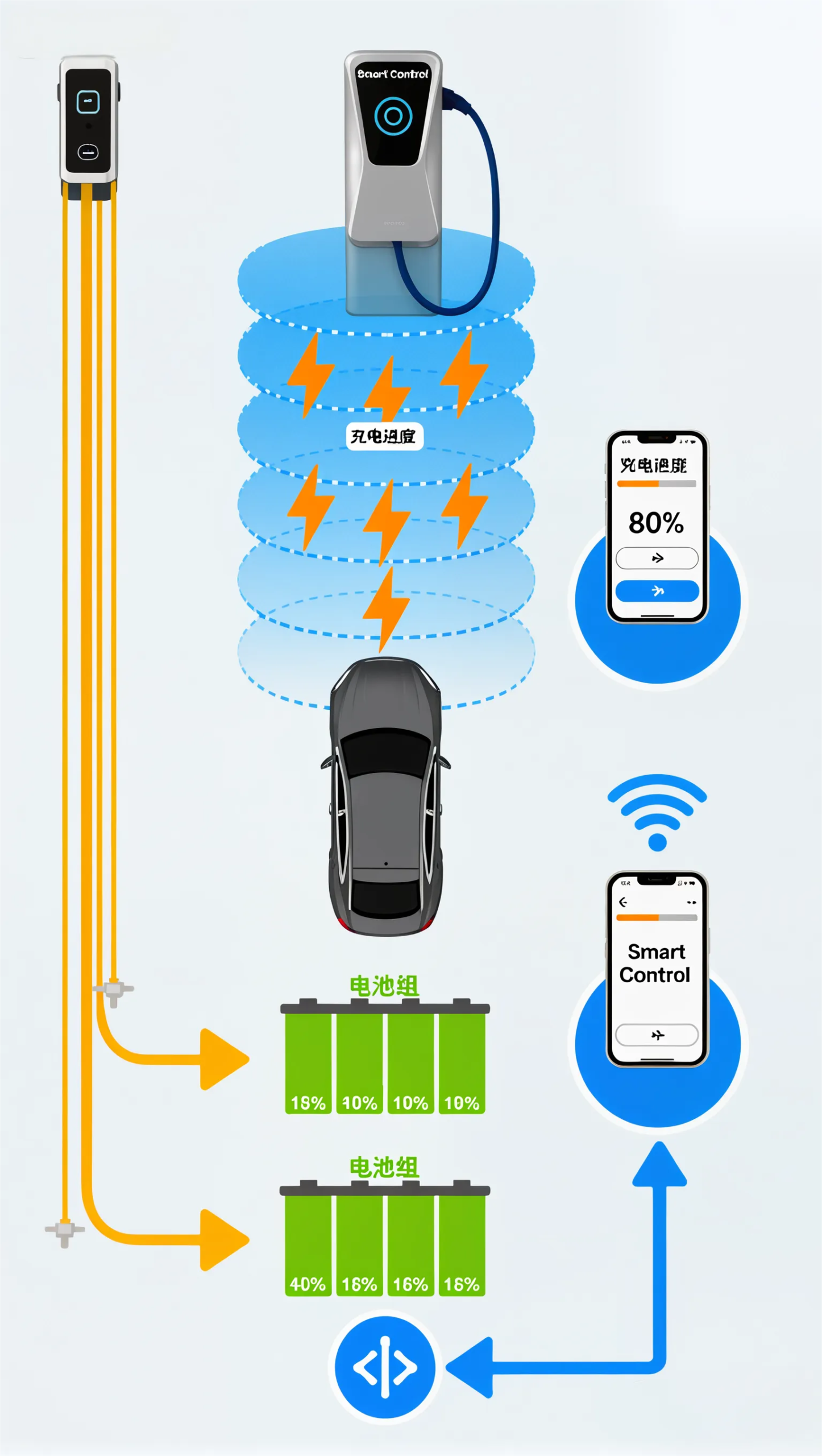
Integrate your EV charger with home solar to drive on sunshine and maximize your energy savings.
Vehicle-to-Grid (V2G) and The Future of Charging
Perhaps the most exciting frontier in EV charging is bidirectional charging, often called Vehicle-to-Grid (V2G) technology. This allows your EV not only to draw power from the grid but also to send electricity back when needed . The large battery capacity of EVs, combined with the ability to discharge, makes V2G the most flexible technology for load shifting and grid balancing .
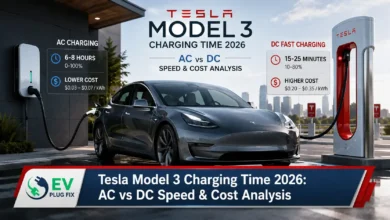
As of 2026, the number of V2G-capable EV models, while growing, remains limited, accounting for less than 1.5% of all models . However, with major players like Tesla, Hyundai, and others developing compatible vehicles, this technology is poised for significant growth. The Combined Charging Standard (CCS) now includes full V2G communication capabilities via the ISO 15118-20 standard, paving the way for a standardized and interoperable future . For Tesla owners, understanding specific charging parameters like Tesla Model 3 Charging Time can help optimize their home charging setup with these emerging technologies.
Other trends reshaping the landscape include ultra-fast charging, with chargers delivering up to 350 kW, allowing batteries to reach 80% capacity in just 20 minutes—comparable to a gas station stop. Additionally, a gradual shift from energy-based network tariffs (EBTs) to power-based network tariffs (PBTs) across Europe is making smart charging even more crucial. Under these new tariffs, smart EV control can generate nearly double the cost reductions compared to energy-based pricing, underscoring the critical role of active load management .
Comparison of Standard vs. Smart EV Charging
| Feature | Standard (Uncontrolled) Charging | Smart (Controlled) Charging |
|---|---|---|
| Charging Speed | Fixed, often slow (e.g., 3-pin plug) | At least 3x faster than 3-pin plug |
| Cost Optimization | Charges at standard electricity rates | Automatically uses off-peak, cheaper rates |
| Grid Impact | Can cause grid overload and instability | Reduces peak loads via demand response |
| Renewable Integration | Limited or non-existent | Optimizes use of home solar power |
| Remote Control | Manual operation only | Full app-based control and monitoring |
| Safety Features | Basic protections | Advanced load balancing, surge protection, thermal management |
Frequently Asked Questions About Smart EV Charging
What is the difference between a smart charger and a standard EV charger?
A standard EV charger is essentially a cable that supplies electricity on demand. A smart charger is a connected device that communicates with the grid and your vehicle to optimize charging times, adjust power output, and reduce costs. It offers features like remote control via an app, dynamic pricing integration, and load balancing to protect your home’s electrical system.
How much can I save with a smart charger?
Savings depend on your electricity tariff and driving habits. However, by automatically charging during off-peak hours, you can save 30-50% on the cost of electricity per charge. Home charging on an off-peak overnight rate could cost as little as the equivalent of $1.60 per litre for petrol, including road user charges . Over a year, these savings can amount to hundreds of dollars.
Do I need a smart charger if I have solar panels?
Absolutely. A smart charger can be programmed to charge your EV primarily from your solar panels, ensuring you use your own clean energy instead of exporting it to the grid for a low feed-in tariff. This significantly reduces your reliance on the grid and maximizes the return on your solar investment.
Is smart charging safe for my car battery?
Yes, smart charging is designed to be safe and can even be beneficial for battery longevity. By adjusting the charging current and timing, it can help manage battery temperature and avoid aggressive charging patterns that contribute to battery wear, especially when charging overnight or for extended periods .
What is Vehicle-to-Grid (V2G) and do I need it?
V2G technology allows your EV to send energy back to the power grid, effectively turning it into a mobile battery. It’s a future-facing feature that can potentially earn you money or credits by helping to stabilize the grid. While not all cars and chargers support V2G yet, it is a key technology to watch for in the coming years .
Looking Ahead: The Future is Smart
Smart EV charging is rapidly transitioning from an early adopter technology to a mainstream necessity. The widespread availability of 5G networks will make real-time communication between vehicles and the grid faster and more reliable, while artificial intelligence will further refine charging decisions to match each driver’s habits and preferences. Whether you’re considering your first EV or upgrading your current setup, investing in smart charging is a step toward a smarter, cleaner, and more efficient future on the road. For Australian EV drivers, resources like Origin Energy’s commissioning guides can help you get started with your certified smart charger.