EV Peak Shaving for Businesses: Slash Demand Charges & Grid Costs in 2026
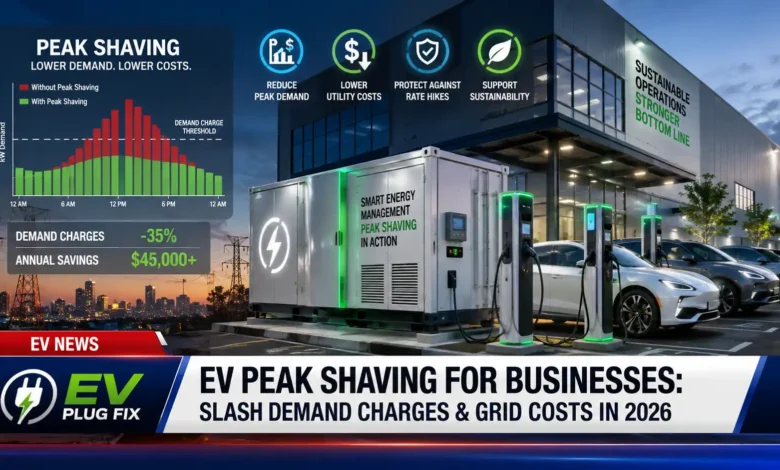
EV peak shaving is the strategic process of reducing electrical power consumption during periods of highest demand, and for businesses operating commercial electric vehicle charging stations, this technique has become a critical tool for slashing energy costs and protecting the stability of the local power grid. When multiple electric fleet vehicles or employee EVs plug in simultaneously, the sudden surge in electricity demand can dramatically spike a facility’s peak load, exposing the company to punitive utility demand charges that can significantly inflate monthly electricity bills.
What is EV Peak Shaving and Why Does It Matter for Your Business?
The concept of peak shaving is rooted in the challenge of grid overloading. Frequent power outages and grid instability caused by excessive demand can result in significant economic losses. However, upgrading the grid to increase its capacity requires massive, costly investments. To navigate this challenge, utilities encourage businesses to reduce their peak power usage by pricing electricity based on their highest maximum power load.
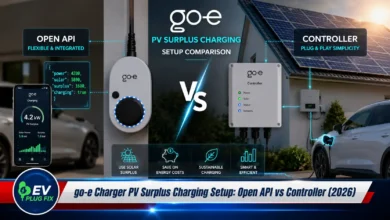
To illustrate, consider two companies that each consume 10,000 kWh per month. Company A uses a maximum of 30 kW at any given time, while Company B’s peak energy demand is 70 kW. Even if both use the same total energy, Company B will pay significantly more due to higher demand charges, as it places greater pressure on the grid. This pricing structure makes EV peak shaving an essential practice for any business looking to manage its energy budget effectively. For companies leveraging solar energy, integrating solutions like go-e PV Surplus Charging can further optimize energy usage by intelligently routing solar power to vehicles during peak production times.
Data from the Los Angeles Department of Water and Power (LADWP) shows monthly demand charges for commercial EV charging can range from $2.21 to $3.91 per kW, underscoring how quickly these fees can accumulate based on a facility’s peak load .
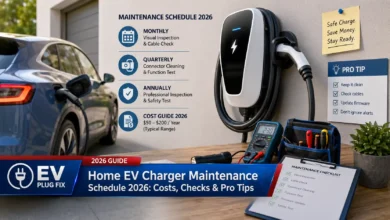
For companies adding EV charging, the stakes are especially high. Charging electric vehicles requires significantly more energy than conventional office equipment such as computers, printers, or projectors. A sudden influx of employees charging their cars at the same time can push a facility’s peak performance to new heights, leading to unexpectedly high utility bills. This is where intelligent load management and peak shaving strategies become invaluable. Regular Home EV Charger Maintenance practices, when scaled to commercial sites, ensure that charging equipment operates efficiently and doesn’t contribute to unnecessary power draw through faulty components.
Intelligent charging solutions, such as those offered by industry leaders like ChargePoint and Eaton, are making peak shaving more accessible and cost-effective. The new ChargePoint Express Grid, powered by Eaton, separates power conversion processes to dramatically reduce installation costs and enable higher power delivery across multiple vehicles. This can cut the total capital expenditure for a fast-charging site by nearly 30% .
How Smart Energy Management and V2G Enable Peak Shaving
Modern technology offers businesses two primary pathways to implement peak shaving: smart energy management software and Vehicle-to-Grid (V2G) technology.
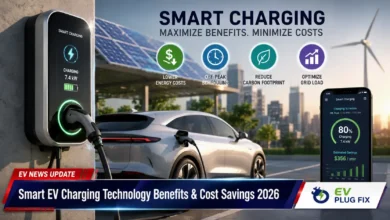
Smart EV Charging Management: This involves using an intelligent platform to dynamically control charging sessions. Instead of allowing all vehicles to charge at maximum power simultaneously, the system staggers charging, prioritizes vehicles, and throttles power output based on real-time energy loads. By proactively managing EVSE loads, businesses can ensure their building’s energy load is never exceeded, effectively flattening the demand curve and avoiding demand charges . For sites equipped with solar arrays, pairing smart management with go-e PV Surplus Charging allows for even greater control by prioritizing renewable energy when available.
Vehicle-to-Grid (V2G) Technology: This approach takes peak shaving to the next level by using the EV batteries themselves as a distributed energy source. During peak periods, V2G-capable vehicles can discharge power back to the facility or the grid, significantly reducing the facility’s net demand. This turns a fleet of electric vehicles into a mobile, flexible energy asset. Research has shown that fleets of 15 hydrogen fuel cell vehicles can cover a majority of overload events and cut peak load by nearly 48% .
Benefits of Peak Shaving Strategies for Commercial EV Charging
| Strategy | Key Benefit | Potential Impact |
|---|---|---|
| Smart Load Management | Flattens demand curve; avoids demand charges | Reduces daily peak demand by up to 38.6% |
| V2G Integration | Uses EV batteries as backup power source | Shifts peak load; improves grid stability |
| Solar + Storage Integration | Autonomously uses cheapest energy source | Lowers EV charging costs by up to 70% |
Demand Charges and the Financial Case for Peak Shaving
The financial case for peak shaving is rooted in demand charges. These charges are often calculated based on a facility’s highest power draw over a 15- to 30-minute interval during a billing cycle, meaning a few minutes of high demand can set the price for an entire month.
Over 70% of residential consumers in many countries now have smart meters that can support more nuanced pricing, and many experts argue that the traditional volumetric tariff (charging purely for energy consumed) fails to reflect the true cost drivers of the grid, which are often based on kW demand . This misalignment is leading to a rise in tariffs that include demand charge components.
For businesses, this makes EV peak shaving not just an environmental consideration but a financial necessity. By smoothing out the load curve, a company can significantly reduce its peak demand and, consequently, its electricity bill. Proactive Home EV Charger Maintenance at commercial scales ensures that energy management systems receive accurate data from all charging points, preventing miscalculations that could lead to unexpected demand spikes.
Frequently Asked Questions
Frequently Asked Questions
What is the difference between peak shaving and load shifting?
Peak shaving is the immediate reduction of power consumption during a peak demand event to flatten the overall load profile. Load shifting is a strategy that moves energy consumption to off-peak times when electricity is cheaper and less demand is placed on the grid. Both are complementary strategies in EV energy management.
How much can a business save with EV peak shaving?
Savings depend on the utility rate structure and the facility’s load profile. By avoiding high demand charges, which can run to several dollars per kW, many businesses can save thousands of dollars annually. Advanced systems have demonstrated cost reductions of up to 70% on EV charging costs .
Is V2G technology required for peak shaving?
No. While V2G technology can provide additional benefits like discharging power back to the facility, effective peak shaving can be achieved through smart, unidirectional charging management that simply delays or throttles charging sessions to avoid peak demand .
What equipment is needed for peak shaving at an EV charging site?
You will need smart EV charging stations that can communicate with a central energy management system (EMS). This EMS uses software algorithms to control charging power in real-time, often integrating with building energy data, solar inverters, and battery storage to optimize the process.